← All women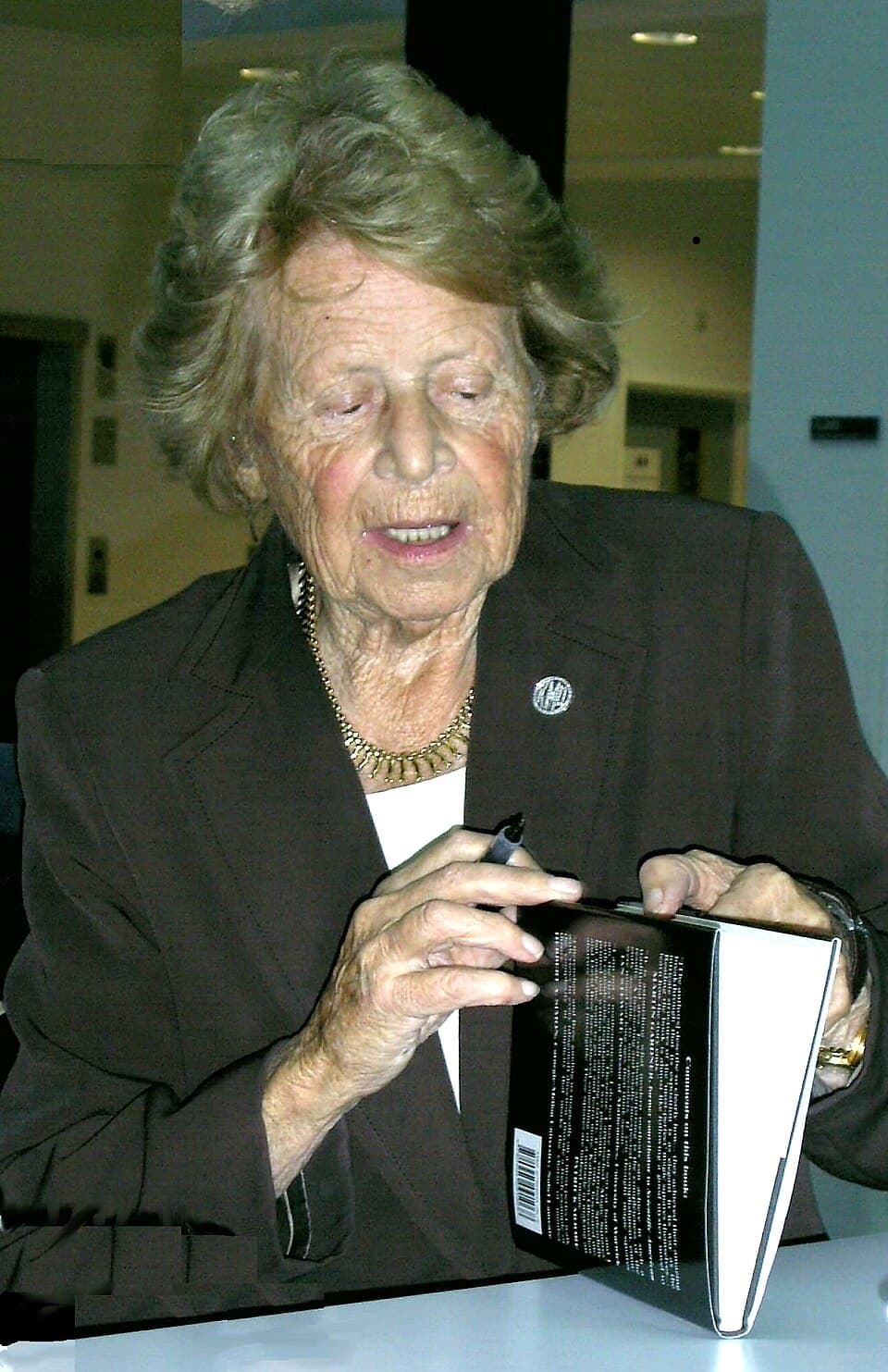
British · Science
Kathleen Ollerenshaw
October 1, 1912 – August 10, 2014
Early Life and Background
Kathleen Mary Timpson, better known as Dame Kathleen Ollerenshaw, was born on October 1, 1912, in Withington, Manchester, England. She was the daughter of Charles and Marjorie Timpson. Her childhood was marked by a severe hearing impairment, diagnosed when she was just eight years old. Despite this challenge, Kathleen excelled academically, developing a particular interest in mathematics. She attended the prestigious St. Leonard's School for Girls in St Andrews, Scotland, where her mathematical talents were honed. Her education continued at Somerville College, Oxford, where she obtained her doctorate in 1945, becoming the first person in her family to attend university.
Career Beginnings and Development
After completing her studies, Ollerenshaw embarked on a career that combined mathematical research with educational and civic engagement. Her early work focused on the theory of magic squares—a set of numbers arranged in a square grid where the numbers in each row, column, and diagonal sum to the same constant. This area of study was not only a testament to her mathematical ingenuity but also reflected her innovative approach to problem-solving.
Major Works, Discoveries, and Accomplishments
Ollerenshaw's work on the enumeration of pandiagonal magic squares was groundbreaking. In 1968, she published one of her seminal works, "Most-Perfect Pandiagonal Magic Squares: Their Construction and Enumeration," which established her as a leading figure in this specialized field. Her research demonstrated the vast number of possible configurations of such squares, contributing significantly to combinatorial mathematics.
Awards, Honors, and Recognition
Throughout her career, Ollerenshaw received numerous accolades for her contributions to mathematics and public service. In 1970, she was awarded an honorary fellowship at Somerville College. Her dedication to education and civic affairs was also recognized when she served as the Lord Mayor of Manchester from 1975 to 1976. Ollerenshaw was appointed a Dame of the British Empire in 1970 for her services to education and local government.
Personal Life
Kathleen married Robert Ollerenshaw in 1939, with whom she had a son and a daughter. Her personal life was deeply interconnected with her professional achievements, as she often navigated the challenges of being a woman in academia and public life.
Legacy and Historical Impact
Ollerenshaw's legacy is multifaceted, extending beyond mathematics to include educational policy and public service. Her work influenced the direction of educational reform in the UK, and her research in mathematics continues to be cited in academic studies. She was a role model for women in science and public service, demonstrating that personal challenges, like her hearing impairment, could be overcome with determination and intellect.
Later Life and Death
In her later years, Kathleen remained active in educational and civic projects until her health declined. She passed away on August 10, 2014, in Didsbury, Manchester, at the age of 101. Her contributions to mathematics and public service continue to inspire generations.
Dated achievements
2 indexed.
- Oct011912Science
Birth of Kathleen Ollerenshaw
Kathleen Ollerenshaw was born on October 1, 1912, in Withington, Manchester.
View details MacTutor History of Mathematics Archive - Aug102014Science
Death of Kathleen Ollerenshaw
Kathleen Ollerenshaw passed away on August 10, 2014, in Didsbury, Manchester.