← All women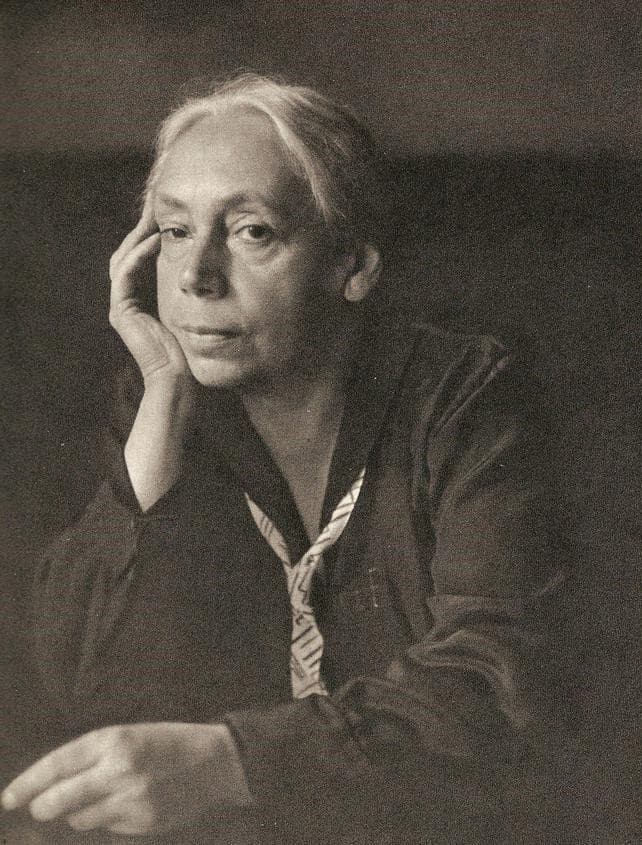
German · Arts · Activism
Käthe Kollwitz
July 8, 1867 – April 22, 1945
Early Life and Background
Käthe Kollwitz was born on July 8, 1867, in Königsberg, East Prussia (present-day Kaliningrad, Russia). Her family was liberal and supported women’s education, which greatly influenced her. Her father, Karl Schmidt, was a mason who became a builder, and her grandfather was a respected jurisprudent. Her family's intellectual atmosphere deeply impacted her artistic vision. She began drawing lessons at a young age, developing her skills and a deep appreciation for the expressive power of art.
Career Beginnings and Development
At just 12 years old, Kollwitz began formal art training. She moved to Berlin to study at the Women’s School of Art and then continued in Munich, where she mastered drawing and etching. Her early exposure to art by German Realists like Max Klinger emphasized social realism, which became a hallmark of her work. By 1891, she married Karl Kollwitz, a doctor in a working-class area of Berlin, whose patients inspired her depictions of poverty and struggle.
Major Works and Accomplishments
In 1898, Kollwitz gained recognition with the Berlin Art Exhibition, where her series "A Weavers’ Rebellion" was praised. She was the first woman elected to the Prussian Academy of Arts in 1919, although she resigned in 1933 when Adolf Hitler came to power. Her series "The Peasants' War" and "War" conveyed the horrors and emotional toll of conflict, particularly from a mother’s perspective. Notably, her woodcut series "War" (1922-23) and her sculpture "Mother with Her Dead Son" (1937) are considered masterpieces.
Awards, Honors, and Recognition
Kollwitz’s work earned her several prestigious accolades, including the Order of Merit of the Prussian Crown. Unfortunately, under the Nazi regime, her art was labeled degenerate, though she remained an influential figure. Her legacy still resonates, evidenced by the Käthe Kollwitz Prize, established by the Academy of Arts in Berlin.
Personal Life and Relationships
Her marriage to Karl Kollwitz was both a personal and artistic partnership. They had two sons, Hans and Peter, the latter dying in World War I, profoundly affecting her work’s thematic focus on grief and loss. Her life was intermixed with artistic and personal challenges.
Legacy and Historical Impact
Kollwitz's work remains influential for its emotional depth and commentary on social injustice and the human condition. Her depictions of maternal loss, poverty, and the working class enormously contributed to modern art and social consciousness. Museums and events worldwide, such as the Käthe Kollwitz Museums in Berlin and Cologne, cement her enduring influence.
Later Life and Death
In her later years, despite the Nazi oppression, Kollwitz continued to work and lived to witness the end of World War II. She died on April 22, 1945, in Moritzburg, just days before Germany's surrender. Her art continues to speak poignantly to generations about the universal sorrow and fortitude rooted in human experience.
Dated achievements
2 indexed.
- Jul081867Arts
Birth of Käthe Kollwitz
Käthe Kollwitz was born on July 8, 1867, in Königsberg, Prussia.
View details Käthe Kollwitz | German artist | Britannica - Apr221945Arts
Death of Käthe Kollwitz
Käthe Kollwitz passed away on April 22, 1945, in Moritzburg, Germany.
View details