← All women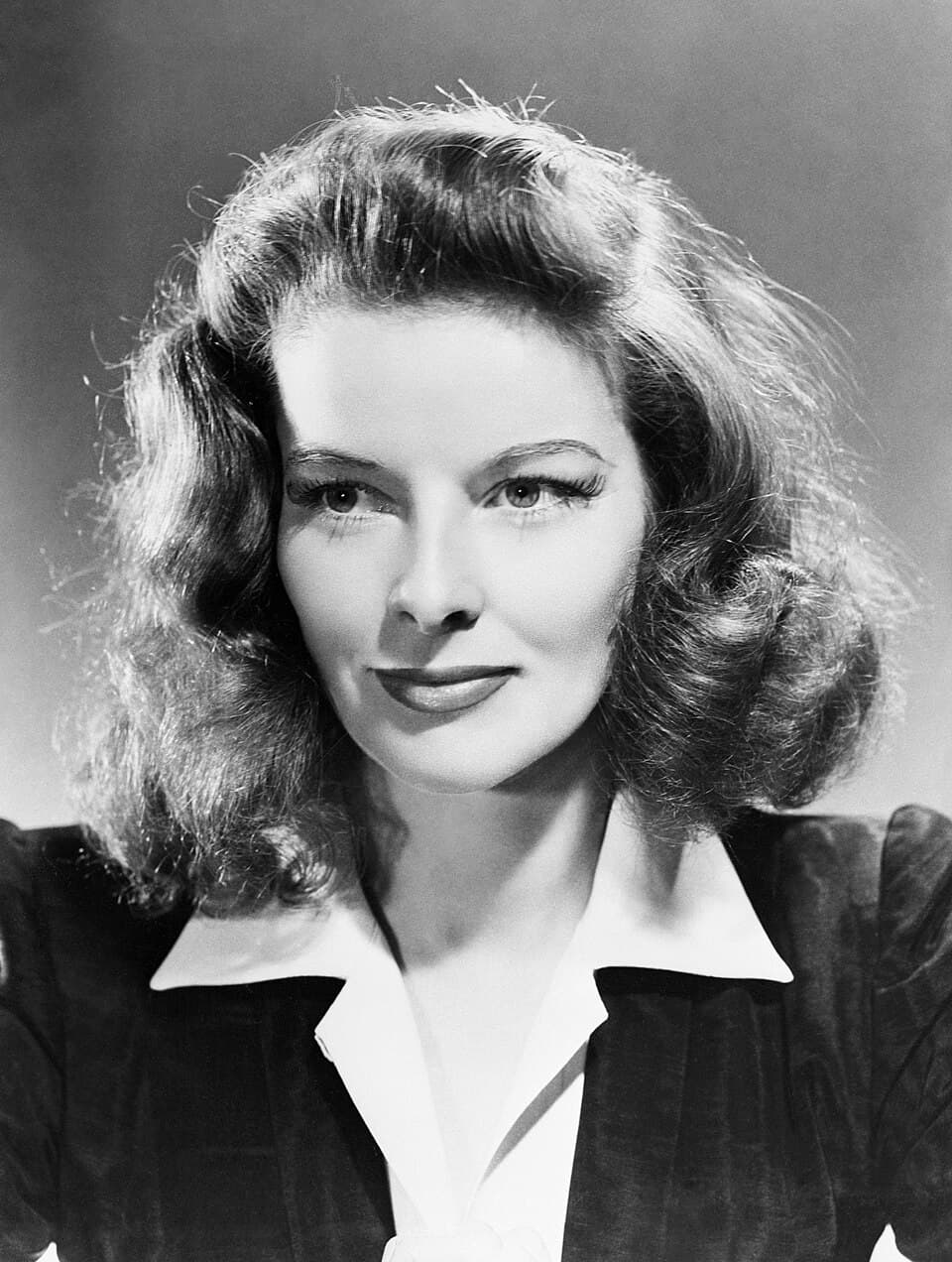
United States · Arts
Katharine Hepburn
May 12, 1907 – June 29, 2003
Early Life and Background
Katharine Houghton Hepburn was born on May 12, 1907, in Hartford, Connecticut, into a socially progressive and intellectually engaged family.[1][2] Her father, Dr. Thomas Norval Hepburn, was a prominent urologist affiliated with Hartford Hospital and an advocate for public health causes.[1][13] Her mother, Katharine Martha Houghton Hepburn, was a suffragist, feminist, and birth control activist, closely involved with the women’s rights movement and organizations such as the Connecticut Woman Suffrage Association.[1][8][13]
Hepburn was the second of six children, raised in an environment that encouraged independence, physical activity, and frank discussion of social issues.[1][13] The family’s openness about topics such as sexuality and women’s rights was unusual in early 20th‑century America and profoundly shaped Hepburn’s worldview. She later credited her parents with instilling in her the confidence to speak her mind and challenge conventional expectations for women.
As a child, Hepburn enjoyed sports and outdoor pursuits and developed a lifelong love of physical exercise that would become part of her public persona. Her early education included attendance at progressive schools, and she later studied at Bryn Mawr College, graduating in 1928.[1][2] College exposure to drama intensified her interest in acting; she appeared in student productions and decided to pursue a theatrical career after overcoming initial academic struggles.
A pivotal early trauma occurred in 1921 when Hepburn discovered the body of her older brother, Tom, who had died by suicide. The event deeply affected her, contributing to a period of emotional withdrawal and the development of a guarded, intensely private nature that persisted throughout her life.[1][15] She briefly adopted her brother’s birthday as her own, an indication of the profound bond and loss.
Career Beginnings and Development
Hepburn began her professional stage career in the late 1920s. In 1928, she made her Broadway debut in the play These Days, appearing under the name Katharine Burns.[15][16] Although the production was short‑lived, it marked her entry into the New York theater world. She continued to work in regional and Broadway productions, developing a reputation for her energy and distinctive presence, even as she contended with uneven early reviews and occasional dismissals from companies.
Her transition to film came with A Bill of Divorcement (1932), directed by George Cukor, which marked her screen debut.[1][16] Starring opposite John Barrymore, Hepburn impressed audiences and critics with her striking appearance, intelligent delivery, and emotional intensity. The film’s success quickly established her as a major new talent in Hollywood and led to a contract with RKO Pictures.
Throughout the early 1930s, Hepburn took on a variety of roles, often playing headstrong, unconventional women. She starred in Morning Glory (1933), Little Women (1933), and other films that reinforced her image as a spirited, independent performer.[1][16] Her work in Morning Glory earned her an Academy Award for Best Actress at the 6th Academy Awards in 1934, her first Oscar and an early sign of her staying power.[1][15][16]
Despite this success, Hepburn’s refusal to engage in typical publicity efforts and her selection of offbeat projects led to a period in the late 1930s when she was labeled "box‑office poison" in a exhibitors’ poll, reflecting commercial difficulties rather than a lack of artistic achievement.[1][15] She responded strategically, acquiring the film rights to The Philadelphia Story, a stage vehicle tailored to her strengths. The 1939 Broadway production and the 1940 film adaptation, co‑starring Cary Grant and James Stewart, revitalized her career and demonstrated her acumen in shaping her own trajectory.[1][16]
Major Works and Accomplishments
Hepburn’s filmography spans more than six decades and includes landmark performances in comedy, drama, and literary adaptations. Among her early triumphs were Little Women (1933), for which she won the Best Actress award at the Venice Film Festival in 1934, and the screwball comedy Bringing Up Baby (1938), where her pairing with Cary Grant showcased her flair for physical comedy and rapid‑fire dialogue.[1][16]
In 1940, she won the New York Film Critics Circle Award for Best Actress for The Philadelphia Story, further solidifying her reputation as a leading star.[16] Through the 1940s and 1950s, she alternated between sophisticated comedies and serious dramas, including The African Queen (1951), opposite Humphrey Bogart; Summertime (1955); and Suddenly, Last Summer (1959).[16] These roles demonstrated her ability to embody complex, mature women confronting moral, emotional, and social dilemmas.
Hepburn’s collaboration with actor Spencer Tracy became one of the most celebrated partnerships in film history. Beginning with Woman of the Year (1942), they made nine films together over more than two decades, including Adam’s Rib (1949), Pat and Mike (1952), and Guess Who’s Coming to Dinner (1967).[1][16] Their on‑screen chemistry, often centered on verbal sparring and mutual respect, helped define a new model of romantic partnership in cinema, with Hepburn’s characters frequently matching or surpassing their male counterparts in wit and professional competence.
In 1962, Hepburn shared a collective Best Acting award at the Cannes Film Festival for her role in Long Day’s Journey into Night, based on Eugene O’Neill’s play, underscoring her standing in more overtly literary drama.[16] Her work in the late 1960s brought renewed awards success: in 1968, she won the BAFTA Award for Best Actress for both Guess Who’s Coming to Dinner and The Lion in Winter, reflecting international recognition of her range.[1][16]
On March 16, 1934, Hepburn had received her first Academy Award for Best Actress for Morning Glory (1933). Decades later, on April 10, 1968, she won her second Best Actress Oscar at the 40th Academy Awards for her portrayal of Christina Drayton in Guess Who’s Coming to Dinner.[1][16] The following year, on April 14, 1969, she earned her third Best Actress Oscar at the 41st Academy Awards for The Lion in Winter, sharing the award in a historic tie with Barbra Streisand.[1][16]
Hepburn continued to work on stage and in television. In 1973, she starred in the television film Love Among the Ruins, which garnered wide acclaim.[2] On May 28, 1974, she won the Primetime Emmy Award for Outstanding Lead Actress in a Limited Series at the 26th Primetime Emmy Awards for this role, demonstrating her successful adaptation to the television medium.[1][2]
Her later career included notable performances in The Glass Menagerie (television, 1973), The Corn Is Green (1979), and, most famously, On Golden Pond (1981). In the latter, she starred opposite Henry Fonda as Ethel Thayer, in a story examining aging, family estrangement, and reconciliation. On March 29, 1982, at the 54th Academy Awards, Hepburn won her fourth Academy Award for Best Actress for this role, becoming the first performer ever to win four acting Oscars, all in the leading category.[1][16]
Awards, Honors, and Recognition
Hepburn’s awards record is one of the most distinguished in film history. She received 12 Academy Award nominations for Best Actress, winning four—for Morning Glory (1933), Guess Who’s Coming to Dinner (1967), The Lion in Winter (1968), and On Golden Pond (1981).[1][2] To date, no other performer has surpassed this total of four acting Oscars.[1][10]
Beyond the Oscars, her honors include the Venice Film Festival Best Actress award (1934) for Little Women, the New York Film Critics Circle Award (1940) for The Philadelphia Story, and the collective Best Acting prize at Cannes (1962) for Long Day’s Journey into Night.[16] In 1968, she won the BAFTA Best Actress award for her work in Guess Who’s Coming to Dinner and The Lion in Winter, affirming her international stature.[1][16]
On April 2, 1974, Hepburn made her only personal appearance at an Academy Awards ceremony, presenting the Irving G. Thalberg Memorial Award to producer Lawrence Weingarten at the 46th Oscars.[1] Later that year, on May 28, 1974, she received a Primetime Emmy for Love Among the Ruins, expanding her recognition beyond film.[1][2]
Hepburn was also honored for her lifetime contributions. On November 29, 1974, she received the Screen Actors Guild Life Achievement Award, recognizing both her professional excellence and humanitarian reputation.[1] On April 5, 1979, she was awarded the AFI Life Achievement Award at the 7th AFI ceremony, one of the highest honors in American cinema.[1]
In 1999, the American Film Institute released its list AFI’s 100 Years...100 Stars. On June 15, 1999, the televised announcement placed Hepburn as the greatest female star of classic Hollywood cinema, ranking her first among screen legends.[1] This designation has been widely cited in scholarship and popular media as an authoritative affirmation of her central place in film history.
Personal Life and Relationships
Hepburn’s personal life was characterized by independence and a deliberate separation between her public and private spheres. She married Ludlow Ogden Smith, a Philadelphia businessman, in 1928, but the marriage ended in divorce in 1934 as her career ascended and she increasingly prioritized her professional life.[1][11] She had no children.
Her most significant relationship was with actor Spencer Tracy. The two met while filming Woman of the Year (1942) and developed a long‑term partnership that lasted until Tracy’s death in 1967.[1][16] Although Tracy remained married, he lived apart from his wife, and his relationship with Hepburn was widely known but discreetly handled in public. They made nine films together, and Hepburn often described Tracy as the love of her life. Out of respect, she did not speak extensively about the relationship until after his widow’s death, reflecting her careful management of personal disclosure.
Hepburn was known for her unconventional style, favoring trousers and sportswear, which challenged gender norms in dress and contributed to evolving ideas about women’s fashion.[1] She maintained close ties to her family and to Connecticut, where she spent substantial time away from Hollywood. Her commitment to privacy meant that she rarely granted interviews and often avoided industry functions, reinforcing an image of a serious artist rather than a celebrity seeking attention.
Legacy and Historical Impact
Katharine Hepburn’s legacy in women’s history and film is multifaceted. Professionally, she is remembered as one of the greatest screen actors of the 20th century, with a record four Academy Awards and a large body of critically acclaimed work.[1][2] Her performances helped redefine the possibilities for female characters in cinema, moving beyond passive or ornamental roles toward portrayals of women who were intelligent, ambitious, and emotionally complex.
Hepburn’s public persona—athletic, outspoken, and resistant to conventional expectations of femininity—challenged mid‑20th‑century norms. Her preference for trousers, refusal to conform to studio publicity demands, and insistence on maintaining creative control over her projects contributed to broader cultural shifts in how women could present themselves in professional and public life.[1][19] She became a model of the independent woman who balanced artistic dedication with a refusal to compromise personal principles.
Her collaborations with Spencer Tracy offered a new vision of heterosexual partnership on screen, characterized by intellectual equality and mutual respect rather than dominance and submission.[16] In films like Woman of the Year and Adam’s Rib, Hepburn’s characters are professional women whose careers matter, engaging in debates about marriage, work, and law that anticipated later feminist discussions.
Institutions such as the Connecticut Women’s Hall of Fame highlight Hepburn as a figure whose career and life reflect the state’s history of social reform and women’s leadership.[8] The AFI’s 1999 designation of her as the greatest female star of classic Hollywood further entrenched her status as a benchmark in film history.[1] Her influence extends into contemporary acting, with many performers citing her as an inspiration for their own pursuit of strong, distinctive roles.
Later Life and Death
In her later years, Hepburn gradually reduced her workload but continued to act selectively in projects that interested her. She appeared in films and television productions into the 1980s and early 1990s, even as health issues, including tremors and episodes consistent with neurological conditions, affected her physical abilities.[1] She remained active and engaged, often spending time at her family home in the Fenwick area of Old Saybrook, Connecticut.[5][13]
Hepburn also turned to writing, publishing her memoir Me: Stories of My Life, in which she reflected on her upbringing, career, and relationships.[7] The book contributed to a deeper understanding of her perspective and helped shape posthumous interpretations of her life.
On June 29, 2003, Hepburn died at her home in Old Saybrook, Connecticut, at age 96.[1][2][11] Obituaries emphasized her status as a "monumental and enduring star" and celebrated her contributions to stage and screen. Tributes from fellow actors, critics, and audiences underscored the rarity of a career that combined sustained artistic excellence with significant cultural impact over more than six decades.
Following her death, interest in Hepburn’s work remained strong. Retrospectives, biographies, and academic studies continued to explore her films and influence, ensuring that her legacy as a pioneering figure in cinema and women’s history endures. Her record‑setting awards, iconic performances, and defiant individuality secure her place in the cultural memory as a symbol of what women in the arts can achieve.
Dated achievements
11 indexed.
- May121907Science
Birth in Hartford, Connecticut
Katharine Houghton Hepburn was born in Hartford, Connecticut, to Dr. Thomas Norval Hepburn and Katharine Martha Houghton Hepburn.
View details Katharine Hepburn - Wikipedia - Mar161934Arts
First Academy Award for Best Actress — Morning Glory
At the 6th Academy Awards, Hepburn won her first Best Actress Oscar for Morning Glory (1933), starting her record of four acting Oscars.