← All women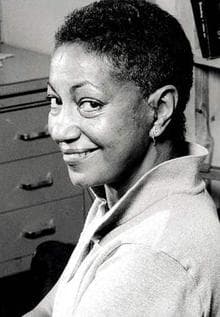
American · Arts · Activism · Literature
June Jordan
July 9, 1936 – June 14, 2002
Early Life and Background
June Jordan was born on July 9, 1936, in Harlem, New York City, to Jamaican immigrant parents. Her father, Granville, was a postal worker, and her mother, Mildred, was a domestic worker. Growing up in the Brooklyn neighborhood of Bedford-Stuyvesant, Jordan was immersed in an atmosphere rich in cultural and social diversity, which significantly influenced her perspective on race and identity.
Jordan's education began in the New York City public school system. She later attended Northfield Mount Hermon School in Massachusetts, where she initially confronted institutional racism that would inform much of her later work. She went on to enroll at Barnard College, changing her major several times before finding her voice in English literature. Although she did not complete her degree, her time at Barnard was pivotal in shaping her career as a writer and activist.
Career Beginnings and Development
After leaving Barnard, Jordan began to write in earnest, publishing her first book of poetry, "Who Look at Me," in 1969. Her poetry offered a powerful exploration of the African-American experience, marriage, and motherhood. She taught at various institutions, including City College of New York, Yale University, and later, the University of California, Berkeley, where she became an advocate for the development of a multicultural curriculum.
Major Works, Discoveries, or Accomplishments
Jordan was a prolific writer, with over 28 books spanning genres from poetry to political essays and children's literature. Some of her most influential works include "The Voice of the Children" (1970), "His Own Where" (1971)—which was nominated for the National Book Award—and "Civil Wars" (1981), a collection of essays on a range of issues from civil rights to feminism.
Awards, Honors, and Recognition
Jordan received numerous awards throughout her career, including the Rockefeller Grant for Creative Writing, the National Endowment for the Arts Award, the Lila Wallace-Reader's Digest Writers' Award, and the Chancellor’s Distinguished Lectureship from UC Berkeley. Her work also earned her placement in anthologies and academic curricula across the United States.
Personal Life
Jordan married Michael Meyers, a fellow student at Bucknell University, but the marriage ended in divorce. They had one son, Christopher, to whom Jordan was deeply devoted. Despite their separation, both individuals maintained a respect for each other's intellectual and personal pursuits.
Legacy and Historical Impact
Jordan's legacy is marked by her lifelong dedication to activism and advocacy. She was actively involved in civil rights, feminist, and anti-racist movements throughout her life, believing passionately in the power of language as a tool for change. Through her work, she aimed to give voice to the marginalized and address systemic inequalities. Her legacy as an educator, poet, and social activist continues to inspire many in the fight for social justice and equality.
Later Life and Death
In the later years of her life, Jordan continued to write and engage with social issues despite personal health challenges. She was diagnosed with breast cancer, which she battled courageously until her death on June 14, 2002, in Berkeley, California, leaving a profound impact on literature and activism.
Dated achievements
0 indexed.