← All women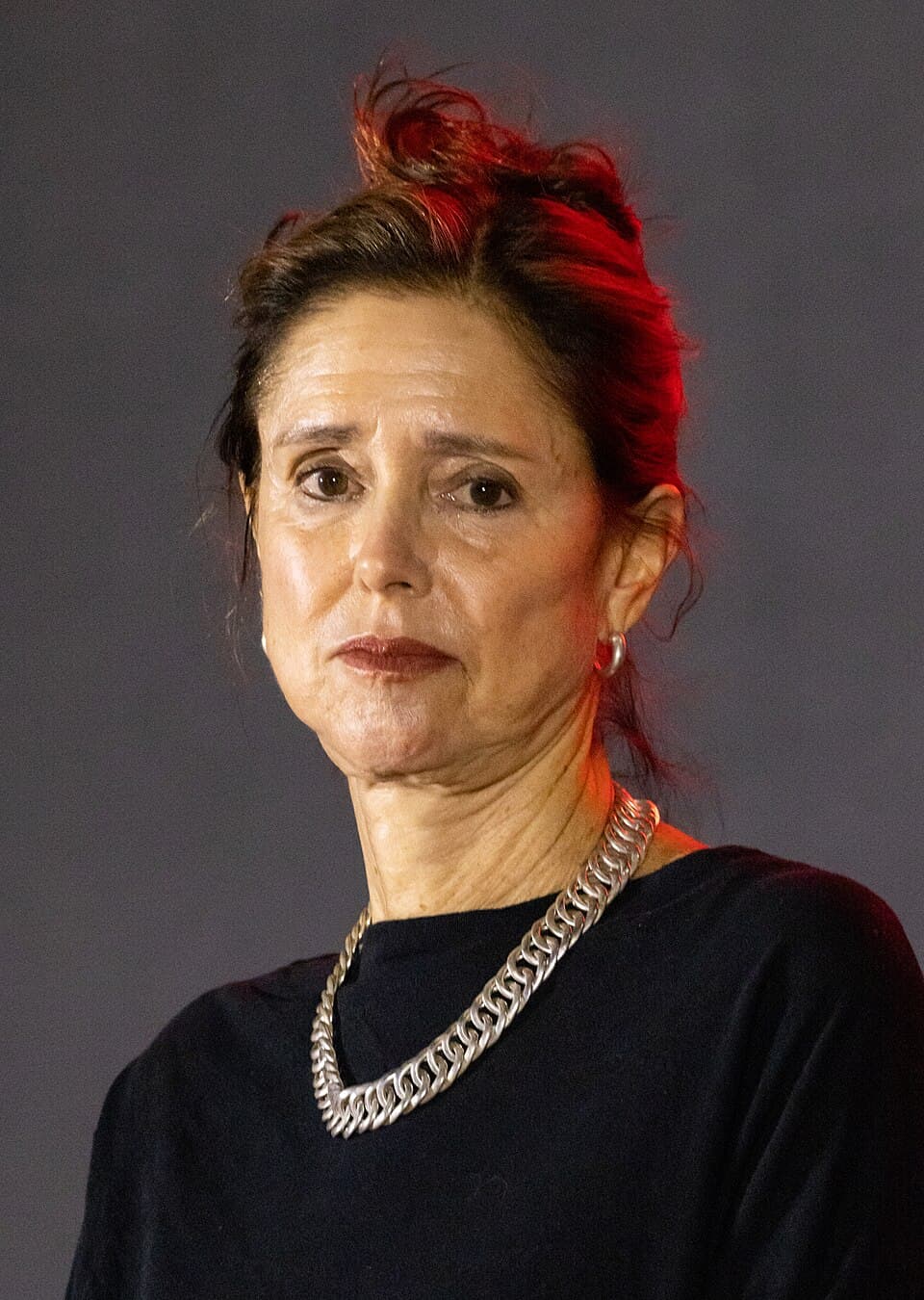
American · Arts · Literature
Julie Taymor
December 15, 1952 – present
Early Life and Background
Julie Taymor was born on December 15, 1952, in Newton, Massachusetts, a suburb of Boston in the United States.[2][3][4][17] She grew up in a culturally and intellectually engaged household. Her father, Melvin Lester Taymor, was a gynecologist, and her mother, Elizabeth Bernstein Taymor, taught political science.[8] The family’s middle‑class security and emphasis on education encouraged Taymor and her siblings to explore books, ideas, and the arts from an early age.
Taymor showed an early fascination with performance. As a child she staged plays in the family backyard and became involved in children’s theater in the Boston area.[8] By her teenage years she was participating in experimental theater workshops and traveling abroad, experiences that would later shape her cross‑cultural approach to directing. In 1969 she studied with the experimental troupe Theatre of Gesture and developed an interest in commedia dell’arte, mask work, and non‑realistic performance traditions.[5][13]
After high school, Taymor attended Oberlin College in Ohio, a liberal institution known for its arts programs and progressive politics. She graduated with a B.A. in 1974.[3][14] During this period she also studied anthropology at Columbia University and acting at HB Studio in New York, building a foundation that combined performance training, cultural theory, and visual design.[8][14] Her early travels were extensive: she spent time in Europe, Indonesia, and Japan learning about traditional theater forms and puppetry, especially in Java, where she ultimately lived and worked for several years.[6][13]
Formative International Work and Career Beginnings
In the mid‑1970s, Taymor’s interest in non‑Western theater deepened when she received a fellowship that allowed her to travel extensively. She spent a year studying puppetry and traditional theater in Eastern Europe, Indonesia, and Japan, then settled in Java for approximately four years.[6][13] There, she founded a company with local performers, immersing herself in wayang (shadow puppetry) and dance‑drama traditions. These experiences would permanently shape her visual vocabulary, especially her use of masks, articulated puppets, and stylized movement.
Upon her return to the United States, Taymor began building a career in avant‑garde and not‑for‑profit theater. In 1979, she designed her first major American production, The Odyssey, at a Baltimore venue often cited as the Theatre Project or Baltimore Stage.[6] Her work combined sculptural masks, puppetry, and mythic imagery, marking her as an artist willing to experiment far beyond conventional scenic design.
In 1980, Taymor received the American Theatre Wing’s Hewes Design Award for scenic, costume, and puppet design for The Haggadah.[6][13] The recognition affirmed her reputation as an innovative designer whose contributions to productions were as conceptually significant as the direction or the script. Throughout the early 1980s she directed and designed pieces such as Liberty’s Taken (1985) and an adaptation of Shakespeare’s The Tempest (1986).[10][13] These works often reimagined classic texts in visually driven stagings that emphasized ritual and allegory.
Emergence as a Distinctive Theater and Opera Artist
A major turning point came in 1988, when Taymor wrote and directed Juan Darien: A Carnival Mass, loosely based on a story by Horacio Quiroga.[6][10][13] The production blended Latin American folklore, puppets, masks, and choral music into a tale about a jaguar cub transformed into a human boy. Initially presented Off‑Broadway, it later toured internationally and earned a Hewes Award. The piece became emblematic of Taymor’s ability to meld myth, ritual, and political commentary through complex visual imagery.
Opera soon became another major arena for her work. In 1993, she directed Mozart’s Die Zauberflöte (The Magic Flute), applying her mask and puppet techniques to the operatic stage.[10][13] In 1995, she staged Wagner’s Der fliegende Holländer (The Flying Dutchman), further consolidating her international reputation as an opera director.[10] She also directed Oedipus Rex, Salome, and other works, frequently collaborating with the composer Elliot Goldenthal on original scores and adaptations.[9][10][14]
In 1996, the Lincoln Center Theater revival of Juan Darien: A Carnival Mass marked Taymor’s Broadway debut and received five Tony Award nominations.[10] This transition from downtown and international experimental stages to one of New York’s premier institutional theaters signaled that her hybrid aesthetic—once considered fringe—was now valued at the center of American theatrical culture.
The Lion King and International Breakthrough
Taymor’s breakthrough to a global popular audience came with her stage adaptation of Disney’s animated film The Lion King. In the mid‑1990s she was recruited by Disney Theatrical producer Thomas Schumacher to direct and design a Broadway version of the 1994 feature.[5] Drawing on African art, Indonesian and Japanese theater techniques, and her own longstanding use of masks and puppets, Taymor reconceived the animated story as a theatrical spectacle in which the mechanics of performance were visible.
The stage adaptation premiered in 1997 and opened on Broadway at the New Amsterdam Theatre on November 13, 1997.[3][5] Actors manipulated life‑size animal puppets and wore elaborate headpieces that suggested rather than concealed the performers’ faces. This approach turned the show into an exploration of storytelling itself, blending popular entertainment with sophisticated theatrical devices. The production quickly became both a critical and commercial success, earning eleven Tony Award nominations and establishing itself as one of Broadway’s longest‑running and highest‑grossing shows.[3][9]
At the 52nd Tony Awards on June 7, 1998, Taymor became the first woman ever to win the Tony Award for Best Direction of a Musical, and she also received the Tony Award for Best Costume Design of a Musical, both for The Lion King.[2][3][10][15] This dual recognition highlighted the integrated nature of her artistry and marked a historic breakthrough for women directors in commercial theater. The production later earned her a Laurence Olivier Award for Best Costume Design in London, further solidifying her international standing.[15]
The Lion King reshaped Broadway aesthetics by demonstrating that a family‑oriented musical based on a corporate property could also be a vehicle for experimental design and cross‑cultural theatrical practices. It paved the way for other visually adventurous productions and significantly expanded mainstream audiences’ familiarity with mask and puppet‑based performance.
MacArthur Fellowship and Other Early Honors
In 1991, prior to her mainstream fame, Taymor was awarded a MacArthur Fellowship, widely known as the "genius grant."[10][14] The fellowship citation praised her as a director and designer who was reinventing theater through the integration of puppetry, masks, and mythic storytelling. The funding provided her with greater freedom to develop ambitious projects without immediate commercial pressure.
Over the course of her career, Taymor has earned numerous additional honors. She received a Guggenheim Fellowship, an Emmy Award for costume design for the televised opera Oedipus Rex (1993), and multiple Tony and Olivier nominations and awards.[6][15] In 2011 she was featured by the National Endowment for the Arts as a leading innovator in American arts, with the NEA highlighting her contributions to theater, opera, and film.[9] Disney later recognized her impact on its theatrical brand by naming her a Disney Legend.[4]
Transition to Film: Titus and Frida
While continuing her work in theater and opera, Taymor increasingly turned to film in the 1990s. She directed the television film Fool’s Fire (1992), based on an Edgar Allan Poe story, which showcased her talent for gothic imagery and stylized adaptation.[14] Her feature film debut came with Titus, adapted from Shakespeare’s Titus Andronicus and released in the United States on December 24, 1999.[12][14] Starring Anthony Hopkins and Jessica Lange, the film mixed ancient Roman settings with twentieth‑century fascist design motifs, embracing the brutality and political allegory of the original play. It established Taymor as a director capable of bringing her visually dense theatrical style to the screen.
Taymor achieved wider cinematic recognition with Frida, her biographical film about Mexican painter Frida Kahlo, released in U.S. theaters on October 25, 2002.[12] Starring Salma Hayek, the film blended conventional biopic scenes with sequences that directly referenced Kahlo’s paintings, using animation and surreal tableaux to visualize her inner world. Frida received critical acclaim and multiple Academy Award nominations, ultimately winning Oscars for Best Makeup and Best Original Score.[9]
Taymor herself, together with Elliot Goldenthal, was nominated for an Academy Award for Best Original Song for "Burn It Blue" at the 75th Academy Awards on March 23, 2003, marking her first Oscar nomination.[3][12] The nomination underscored her multidisciplinary approach, as she was recognized not only for directing but also for contributing directly to the film’s music. Frida also played an important role in expanding the representation of a complex, disabled, bisexual woman of color in mainstream cinema, aligning with Taymor’s broader interest in stories of women artists and rebels.
Across the Universe, The Tempest, and Other Screen Work
Building on the success of Frida, Taymor made another ambitious foray into music‑driven cinema with Across the Universe, released in the United States on September 14, 2007.[3][9] The film uses more than thirty Beatles songs to tell an original story about young people navigating the turbulence of the 1960s, including the Vietnam War, antiwar protests, the civil rights movement, and the counterculture. Its heavily stylized sequences, surreal imagery, and elaborate choreography divided critics but attracted a devoted following. The film received a Golden Globe nomination for Best Motion Picture – Musical or Comedy, confirming its cultural impact.[3]
In 2010, Taymor returned to Shakespeare on film with The Tempest, casting Helen Mirren as a gender‑swapped Prospera.[9][10] The adaptation, notable for its visual effects and reimagining of the central magus as a woman, continued her interest in challenging canonical works through gender and visual transformation. Although not as commercially prominent as her earlier films, The Tempest contributed to ongoing conversations about representation and the possibilities of feminist reinterpretation of Shakespeare.
Her later screen work included a filmed version of her stage production of A Midsummer Night’s Dream, which premiered at the Toronto International Film Festival on September 11, 2013, and the biographical film The Glorias, about feminist leader Gloria Steinem. The Glorias ultimately received wide U.S. release via streaming and limited theaters on September 10, 2021, extending Taymor’s engagement with stories of women whose lives intersect art and activism.[3]
Spider-Man: Turn Off the Dark and Public Controversy
In the late 2000s, Taymor undertook one of the most ambitious projects in Broadway history: the superhero musical Spider-Man: Turn Off the Dark, featuring music and lyrics by Bono and The Edge. She served as the original director and co‑wrote the book with Glen Berger.[10] Previews for the show began on December 14, 2010, at the Foxwoods Theatre (later the Lyric Theatre) in New York.[3] The production attempted unprecedented aerial stunts, large‑scale projections, and a mythologizing of the Spider‑Man character that aligned with Taymor’s long‑standing interest in ritual and legend.
The show’s preview period, however, was marred by technical problems, serious injuries to performers, repeated postponements, and growing production costs. Media coverage focused intensely on the difficulties, and the musical became emblematic of both the possibilities and perils of high‑tech mega‑musicals. On March 9, 2011, producers announced that Taymor would no longer direct the show, and a new creative team was brought in to revise the production.[3]
This highly public departure was a significant episode in Taymor’s career. While it represented a professional and reputational challenge, it also highlighted the structural tensions between artistic ambition, commercial expectations, and safety in large‑scale entertainment. The controversy sparked broader industry discussions about leadership, risk, and accountability in Broadway productions, particularly in relation to women directors who helm high‑profile, high‑budget shows.
Continued Theater and Opera Work
Throughout her ventures into film and commercial Broadway, Taymor has maintained an active presence in theater and opera. Her stage credits include The Green Bird, Titus Andronicus, The Taming of the Shrew, and adaptations of Thomas Mann’s The Transposed Heads.[10][13] She has frequently revisited Shakespeare, exploring his plays across media, and has directed contemporary works such as Grounded (2015), about a female fighter pilot, reflecting a sustained interest in women’s narratives.[6]
In opera, Taymor has directed Oedipus Rex with Jessye Norman, Salome, The Magic Flute, The Flying Dutchman, and Elliot Goldenthal’s Grendel, among others.[9][10][13] Her productions are known for their sculptural costumes, intricate masks, and imaginative use of space, often challenging conventional staging practices in large opera houses. A 1988 National Endowment for the Arts grant supported her development of Grendel, underscoring institutional recognition of her experimental work.[9]
Her 2013 production of A Midsummer Night’s Dream for Theatre for a New Audience inaugurated the company’s new Brooklyn venue and became one of the most celebrated Shakespeare stagings of the decade, later preserved in the filmed version that premiered at TIFF.[3] Taymor’s ongoing projects in the 2010s and 2020s have included new theater, opera, and film ventures, reflecting a career that remains active and exploratory.
Awards, Honors, and Recognition
Beyond the MacArthur Fellowship and her historic Tony wins, Taymor’s work has garnered a broad array of honors. She is a Disney Legend, recognized for changing "the face of Broadway" through The Lion King and for her contributions across stage and screen.[4] She has received an Emmy Award for Outstanding Individual Achievement in Costume Design for a Variety or Music Program (for Oedipus Rex in 1993), and multiple Laurence Olivier Awards and nominations for work in London.[15]
The Jewish Women’s Archive profiles Taymor as a pioneering Jewish American woman in theater and film, noting her status as the first woman to win a Tony for directing a musical and highlighting her influence on the representation of women’s stories on stage and screen.[6] Institutions such as the Kennedy Center and the National Endowment for the Arts have celebrated her contributions, emphasizing her role in integrating global performance traditions into mainstream American culture.[9][10]
These honors reflect not only individual achievements but also the broader impact of her work on the fields of directing, design, and interdisciplinary performance.
Personal Life
Taymor has long made her home in New York City, a hub for her theater, opera, and film activities.[15] She has been in a longtime partnership with composer Elliot Goldenthal, with whom she frequently collaborates on stage and screen projects, including Juan Darien, Titus, Frida, Across the Universe, The Tempest, and Grendel.[8][9][10][14][15] The couple’s artistic collaboration has been central to the aural and musical identity of her productions, reinforcing her preference for deeply integrated creative teams.
While Taymor has spoken publicly about her work and artistic philosophy, she has generally kept the details of her private life—beyond her partnership and professional collaborations—out of the spotlight, a choice consistent with many theater and film directors whose work rather than personal narratives occupies public attention.
Artistic Vision and Legacy
Julie Taymor’s legacy rests on her distinctive synthesis of visual design, puppetry, and cross‑cultural performance traditions within mainstream theater, opera, and film. Influenced by years of immersion in Indonesian, Japanese, and other non‑Western forms, she has consistently foregrounded masks, puppets, and stylized gesture as central storytelling tools rather than decorative elements.[5][9][13] Her productions often explore myth, ritual, and the tension between violence and beauty, whether in Shakespearean tragedy, opera, or biographical cinema.
Historically, Taymor is especially significant as a trailblazer for women directors in commercial theater. Her 1998 Tony Award for Best Direction of a Musical broke a gender barrier on Broadway, demonstrating that women could lead large‑scale, technically complex productions while maintaining a highly individual artistic vision.[2][3][10] Her success encouraged theaters and producers to consider a wider range of candidates for directing positions and inspired younger women to pursue directing and design at the highest levels.
In film, Taymor has contributed to expanding the scope of what is possible in literary and biographical adaptations. Works like Titus, Frida, Across the Universe, and The Tempest exemplify how cinematic storytelling can incorporate theatrical stylization and surreal imagery without sacrificing emotional engagement. Her focus on complex women—Frida Kahlo, Gloria Steinem, and various Shakespearean heroines reframed through casting and design—has helped diversify the narratives available in mainstream culture.
Her career has not been without controversy, particularly in the case of Spider-Man: Turn Off the Dark, but even that episode has become part of her legacy, prompting industry‑wide reflection on the balance between innovation and safety, vision and collaboration. Overall, Taymor stands as one of the most influential stage and screen directors of her generation, recognized for pushing the boundaries of form while securing an enduring place within the institutions of Broadway, opera, and international cinema.
Later Life and Ongoing Work
As of the 2010s and early 2020s, Julie Taymor remains an active and influential artist. She continues to direct theater and opera productions, develop new film projects, and participate in conversations about innovation in the arts through interviews, public talks, and institutional collaborations.[1][9] Her website and institutional profiles describe her as an Academy Award–nominated and Emmy‑ and Tony‑winning director whose work ranges from Shakespeare and classical opera to contemporary musicals and politically engaged cinema.[1][2][4]
With The Glorias and ongoing stage work, Taymor shows no sign of retreating from ambitious projects or from the cross‑media experimentation that has defined her career. Her enduring influence is visible in the generations of directors and designers who draw on her example to integrate puppetry, non‑Western forms, and heightened visual storytelling into both experimental and commercial contexts.
Dated achievements
12 indexed.
- Dec151952Science
Birth of Julie Taymor
Julie Taymor was born in Newton, Massachusetts, later becoming an acclaimed director and designer in theater, opera, and film.
View details Julie Taymor - Wikipedia - Jun141991Science
Awarded MacArthur Fellowship
Julie Taymor was named a 1991 MacArthur Fellow, recognizing her innovative theatrical direction and design work.