← All women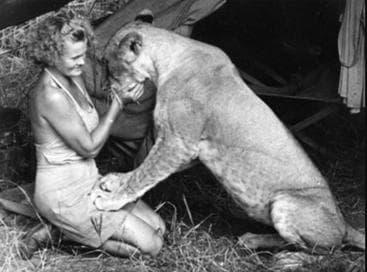
Austrian, Kenyan · Activism · Arts · Literature
Joy Adamson
January 20, 1910 – January 3, 1980
Early life and background
Joy Adamson was born Friederike Victoria Gessner on 20 January 1910 in Troppau, Silesia, then in Austria-Hungary and now Opava in the Czech Republic. She came from a wealthy Austrian family and grew up in a Central European environment that included art, music, and strong cultural traditions. Later biographical accounts identify her parents as Viktor Gessner, a civil servant, and Traute Greipel, an artist, a family setting that helped shape her early interest in drawing and visual expression.
Her early life unfolded during a period of political upheaval in Europe. The collapse of empires after World War I and the shifting borders of Central Europe formed the background to her youth. She was educated in Vienna, where she developed artistic skills and a cosmopolitan outlook that would later distinguish her as a painter, photographer, and writer. As a young woman she married three times over the course of her life; these marriages, and especially her third marriage to George Adamson, would become central to her public story.
Move to Kenya and the beginning of her African career
In 1937, Adamson moved to Kenya, then part of British colonial East Africa. This move marked the decisive turning point in her life. In Kenya she encountered landscapes, wildlife, and local communities that inspired much of her later art and writing. She gradually became known as both a visual artist and an observer of African flora and fauna, producing paintings and photographs that documented wildlife and indigenous people.
Adamson’s early work in Kenya reflected the conditions of colonial East Africa, where opportunities for women in field-based natural history were limited and where the roles of artist, naturalist, and conservation advocate often overlapped. She was not trained as a zoologist in the formal academic sense, yet she developed an authoritative field presence through careful observation, patience, and close collaboration with game wardens and conservation workers. Later reference works describe her as a naturalist, artist, and author whose reputation rested on direct experience rather than institutional credentials.
Marriage to George Adamson and conservation partnership
Adamson married George Adamson, a game warden, in 1944. Their marriage created one of the best-known conservation partnerships of the twentieth century. George’s work in wildlife management and Joy’s writing and artistic skills complemented one another, and together they became publicly associated with the protection and rehabilitation of African animals, especially lions.
The Adamsons lived and worked in Kenya’s northern reserves, where they were involved in game wardenship, wildlife observation, and conservation advocacy. Their relationship was not simply personal; it also became professional and public. Joy’s books and artwork drew international readers into the world of East African wildlife, while George’s field role gave their story practical conservation authority. In an era when women were often excluded from formal wildlife management, Adamson’s partnership with George gave her access to the field while also allowing her to build a distinctive voice of her own.
Elsa, Born Free, and international fame
Adamson’s most famous conservation story began in 1956, when she and George adopted an orphaned lion cub named Elsa after George killed a marauding lion. Over time they raised Elsa, cared for her as she matured, and eventually helped prepare her for life in the wild. The story became the basis of Adamson’s landmark book Born Free, published in 1960.
Born Free was more than an animal memoir. It presented wildlife as subjects with individual personalities and emotional lives, while also making a case for humane conservation grounded in close contact rather than domination. The book became an international bestseller and one of the most influential wildlife books of the twentieth century. Its success helped change public attitudes toward lions, captivity, and habitat preservation. For many readers, Adamson’s storytelling made conservation emotionally accessible, especially at a time when popular environmental awareness was still developing.
The book’s impact was amplified by the 1966 film adaptation, which introduced the Elsa story to an even larger audience. Through the combined force of book and film, Adamson became a globally recognized figure in conservation culture. Her work resonated because it combined scientific observation, narrative skill, and visual documentation. She helped demonstrate that a woman without formal scientific authority could nonetheless shape public environmental consciousness on a world stage.
Later writing, art, and public recognition
Adamson followed Born Free with additional books, including Living Free and Forever Free, which continued the Elsa story and the broader themes of animal independence and conservation ethics. These works reinforced her reputation as a writer who could translate field experience into accessible prose for a mass audience. They also deepened the public’s emotional connection to African wildlife, especially lions and other large mammals facing pressure from hunting and habitat loss.
She was also widely recognized as an artist. Sources associated with her publishing record note that she painted and photographed African subjects, and that some of her work was commissioned in Kenya. Her visual art reinforced the same themes that ran through her writing: close observation, respect for the natural world, and the documentation of a rapidly changing East African environment. In this sense, Adamson’s career crossed multiple fields—literature, visual art, and activism—long before interdisciplinary environmental work became common.
In 1977, Adamson received the Austrian Decoration for Science and Art, a major honor recognizing her broader cultural contribution. The award reflected not only her literary fame but also the prestige her work had acquired as a symbol of wildlife conservation. By then, she was widely known as an Austrian-born writer and naturalist whose name had become inseparable from the global conservation movement.
Personal life
Adamson’s personal life was complex and at times difficult. Biographical sources identify multiple marriages; among them, her marriage to George Adamson was the most historically significant because it shaped her public identity and her conservation work. Their life together was rooted in the practical realities of living in remote Kenya, where the demands of wildlife management, travel, and fieldwork often overshadowed conventional domestic life.
Although she is most often remembered through the lens of Born Free, Adamson was also a woman shaped by migration, reinvention, and the challenge of creating a career across national and gender boundaries. Her move from Europe to East Africa, and her later rise to international fame, placed her among the notable twentieth-century women who established public authority in male-dominated domains through persistence, skill, and media visibility.
Legacy and historical impact
Joy Adamson’s legacy rests on the rare combination of literary success, conservation advocacy, and popular influence. Through Born Free, she helped make wildlife preservation emotionally legible to a mass audience. She did not merely describe animals; she framed them as individual living beings whose survival depended on human restraint and responsibility. That message had enduring consequences for public attitudes toward zoos, wildlife sanctuaries, and African conservation more broadly.
Her work also matters in women’s history because she achieved international prominence in a field where women were often marginalized. She built a career as an artist and writer in a colonial and postcolonial African setting, and she did so by combining domestic knowledge, field observation, and narrative craft. Her life illustrates how women could shape environmental thought through forms of expertise that were not always formally credentialed but were nevertheless powerful and influential.
Adamson’s public memory has endured through books, film adaptations, museum and archival exhibitions, and continued interest in the Elsa story. Even as conservation science has evolved, her name remains associated with a formative moment in the history of wildlife advocacy, when a personal story about one lioness helped transform global imagination.
Later life and death
Adamson spent her later years continuing her work in Kenya. On 3 January 1980, she was murdered at or near her camp in the Shaba National Reserve. Accounts differ on the precise details, but they agree that the killing was violent and occurred in a remote conservation setting. Her death ended a career that had already become legendary in wildlife literature and environmental history.
In the years after her death, Adamson continued to be remembered through the ongoing popularity of Born Free and related works. Her life remains important not only because of the fame of the Elsa story, but because she helped popularize a human-centered language of conservation at a crucial moment in the twentieth century. For readers interested in women’s history, her career shows how a woman could move from Central European origins to become an internationally influential environmental writer and artist in Africa.
Dated achievements
2 indexed.
- Jan201910Science
Birth of Joy Adamson in Troppau, Austria-Hungary
Friederike Victoria "Joy" Gessner was born in Troppau, Silesia, Austria-Hungary (now Opava, Czech Republic).
View details Joy Adamson - Wikipedia - Jan031980Science
Death of Joy Adamson in Shaba National Reserve, Kenya
Joy Adamson was murdered near her camp in Shaba National Reserve, Kenya, on 3 January 1980.