← All women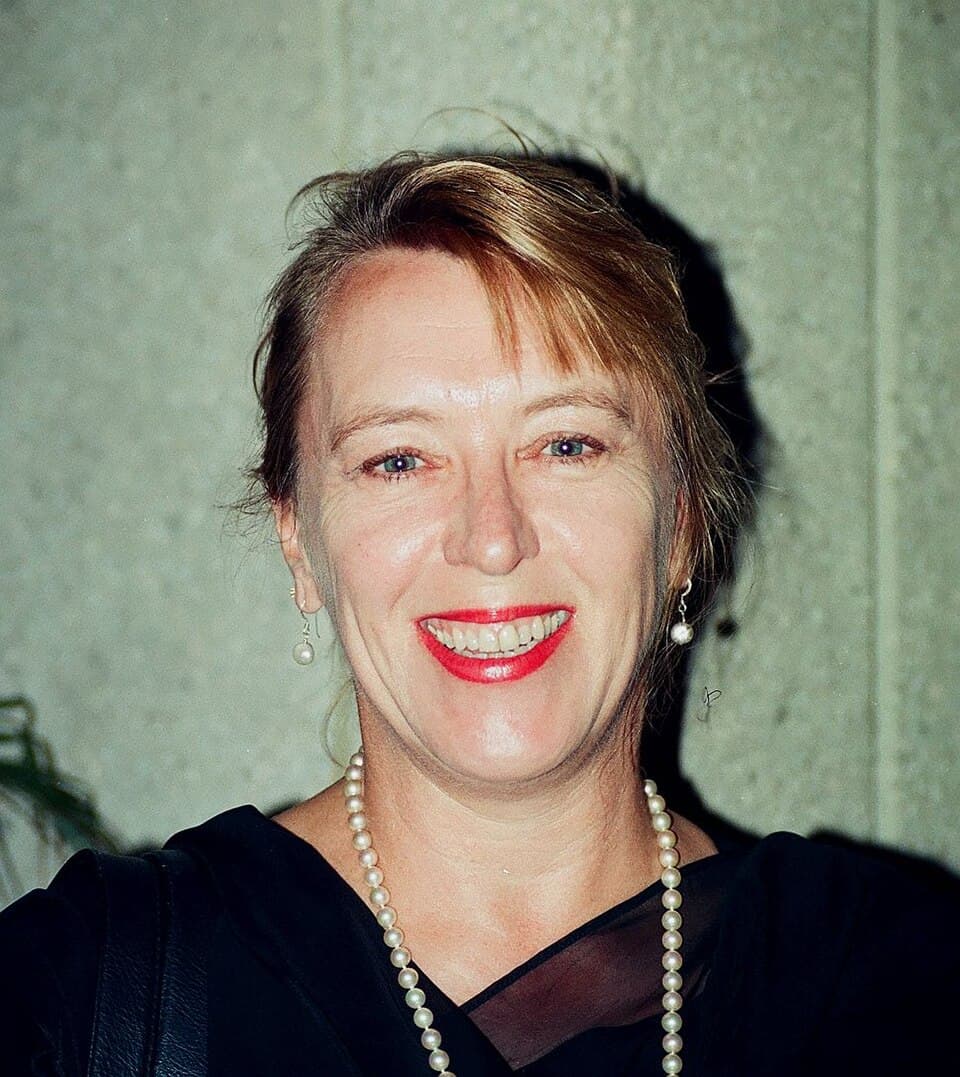
American · Activism
Jody Williams
October 9, 1950 – present
Early Life and Background
Jody Williams was born on 9 October 1950, in Rutland, Vermont, United States, and grew up in a working‑class family in southern Vermont.[1][5][9][10] She spent much of her childhood in towns such as Poultney and Brattleboro, attending public schools and experiencing the tight‑knit social fabric of rural New England.[10] Born Jo‑Anne Williams, she later became known internationally as Jody.[10] Her upbringing during the Cold War, the civil rights movement, and the Vietnam War exposed her to debates over militarism, social justice, and U.S. foreign policy, themes that would profoundly shape her activism.
Williams pursued higher education at the University of Vermont, where she earned a B.A. in 1972.[10] She then completed a master’s degree in Spanish and teaching English as a Second Language at the School for International Training in Brattleboro in 1976.[10] Seeking deeper engagement with international affairs, she later obtained a second master’s degree from the Johns Hopkins University School of Advanced International Studies (SAIS) in 1984, focusing on international relations.[10] These academic experiences grounded her in languages, pedagogy, and global politics, equipping her with skills that would later prove critical in building transnational advocacy networks.
Career Beginnings and Development
Williams’s early career was rooted in Central America during a period of intense conflict. In the mid‑1980s she served as co‑coordinator of the Nicaragua‑Honduras Education Project (1984–1986), working to inform U.S. citizens about the realities of U.S. policy and war in the region.[10] She then became deputy director of the organization Medical Aid for El Salvador (1986–1992).[10] In this role she coordinated humanitarian assistance to communities affected by the Salvadoran civil war, engaging directly with issues of political violence, displacement, and trauma.
These experiences in Central America sharpened Williams’s understanding of how weapons and foreign intervention shape everyday life for civilians. They also connected her with veterans and activists critical of U.S. military policy. In 1991 she was approached by the founder of the Vietnam Veterans of America Foundation (VVAF) to work on the emerging problem of anti‑personnel landmines, which remained active long after wars ended and continued to kill and injure civilians.[10][1] She was tasked with building a coalition to combat the widespread international use of landmines, a challenge that would soon define her career.
Founding the International Campaign to Ban Landmines
In 1992, Williams became the first coordinator of the International Campaign to Ban Landmines (ICBL), which was formally launched in October of that year.[5][10] Initially, the campaign consisted of six nongovernmental organizations.[10] As its sole staff member, Williams took on the intensive work of networking, advocacy, and coordination, drawing on her experience in grassroots organizing and her fluency in Spanish and international relations.[4][10]
Under her leadership, the ICBL rapidly expanded. By 1997, Nobel Prize records note that the campaign encompassed around 1,000 organizations from 60 countries, and other sources cite more than 1,300 organizations.[1][4] Williams cultivated partnerships among human‑rights groups, medical organizations, veteran associations, and development agencies, all united by the goal of banning anti‑personnel mines and supporting survivors. She became known for her blunt, uncompromising style and her insistence that affected communities—particularly women and children—be central to policy discussions.[6]
Williams and the ICBL worked closely with sympathetic governments and international organizations to push landmine issues onto diplomatic agendas. The campaign gathered data on civilian casualties, coordinated survivor testimonies, and highlighted the economic and social costs of mine‑contaminated land. It framed landmines as a humanitarian crisis, not merely a military issue, helping to reorient disarmament debates toward human security.[1][2]
The Ottawa Process and the Mine Ban Treaty
Through sustained advocacy, the ICBL became a decisive force in what came to be known as the Ottawa Process, an accelerated diplomatic initiative to create a comprehensive ban on anti‑personnel landmines. In September 1997, at a conference in Oslo, Williams and the campaign saw their objective of an international treaty against landmines accepted by participating states.[11] The resulting Convention on the Prohibition of the Use, Stockpiling, Production and Transfer of Anti‑Personnel Mines and on Their Destruction—commonly called the Ottawa Convention or Mine Ban Treaty—was opened for signature in December 1997.[1][10]
When opened, the treaty was signed by approximately 120 states, and it entered into force in 1999.[1][10] The agreement prohibits the use, production, stockpiling, and transfer of anti‑personnel mines and obliges states to clear mined areas and assist victims. Nobel Prize and Britannica entries emphasize that the convention "will always be associated with the names of Jody Williams and the ICBL," underscoring her central role in translating grassroots pressure into binding international law.[1][5]
Williams’s strategy combined insider and outsider tactics: she and the ICBL organized public pressure campaigns while engaging directly with diplomats, using evidence and moral argument to push for a categorical ban rather than incremental regulation. The Ottawa process is now widely cited as a model of how civil society can drive norm change in international security.
Nobel Peace Prize and International Recognition
On 10 October 1997, the Norwegian Nobel Committee announced that Jody Williams and the International Campaign to Ban Landmines were awarded the Nobel Peace Prize for their work "for the banning and clearing of anti‑personnel mines."[1][2][4][13] The award recognized both the success of the campaign and the broader humanitarian principle that weapons causing disproportionate harm to civilians should be outlawed.
At the time of the award, Williams became only the tenth woman—and the third American woman—in the nearly 100‑year history of the Nobel Peace Prize to receive it.[2][4][11] This milestone is consistently highlighted in Nobel Women’s Initiative and encyclopedic entries as an important marker in women’s history, reflecting the gradual acknowledgment of women’s leadership in international peace efforts.[4][11]
On 10 December 1997, Williams participated in the formal Nobel ceremony in Oslo, where the prize was presented to her and representatives of the ICBL.[3][14] Her Nobel lecture, delivered there, further articulated her view that peace must be grounded in justice, human rights, and active citizenship rather than idealized rhetoric.[3] The award dramatically increased public awareness of landmine issues and strengthened momentum toward widespread adherence to the Mine Ban Treaty.
Some contemporaneous accounts noted that Williams’s decision to retain her half of the Nobel prize money for herself, rather than donate it entirely to the campaign, drew criticism from some quarters. Encyclopedia sources record this reaction in order to illustrate the complex expectations placed on activists who receive high‑profile awards.[10] Nonetheless, the award is overwhelmingly portrayed as a major victory for grassroots humanitarian disarmament and for women’s activism.
Transition from ICBL Coordination and Academic Career
Williams served as coordinator of the ICBL from its launch in 1992 until February 1998.[4][5][10] During this period she was the campaign’s principal organizer and strategist. In February 1998, she stepped down from the coordinator role, marking a transition from intensive campaign management to broader advocacy and teaching.[4][10] The network she helped build continued, supporting treaty implementation and monitoring compliance.
After leaving the coordinator position, Williams expanded her work into academia and public education. She has held positions at institutions including the University of Houston Graduate College of Social Work, where she is listed as a faculty member engaged in teaching about peace, human rights, and social work in global contexts.[0] She has also been active as a lecturer and visiting professor at other universities, using her experience to explore how social movements influence international norms.
Nobel Women’s Initiative and Later Activism
In 2006–2007, Williams joined with fellow women Nobel Peace laureates to establish the Nobel Women’s Initiative.[4][15] The initiative, formally founded in 2006 and publicly launched in 2007, brings together female peace laureates to promote peace, justice, and equality through collaborative campaigns, fact‑finding missions, and public advocacy.[4] Williams has served as chair of the organization, helping to connect local women activists to international platforms.[15]
Through the Nobel Women’s Initiative, she has supported movements addressing issues such as sexual violence in conflict, corporate accountability, and environmental justice. The organization intentionally centers women’s voices from conflict zones and marginalized communities, seeking to redistribute the visibility and influence that come with the Nobel title.
In more recent years, Williams has also become involved in emerging debates over new weapons technologies. Nobel Prize interviews note her efforts to prevent the development and deployment of "killer robots," or lethal autonomous weapons systems, advocating for pre‑emptive regulation before such systems become widespread.[6] This work extends the logic of the landmine campaign—placing humanitarian concerns at the forefront of weapons policy—into the realm of artificial intelligence and robotics.
Public Intellectual and Author
Williams has used writing and public speaking as key tools in her activism. In 2013, she published a memoir titled "My Name Is Jody Williams: A Vermont Girl’s Winding Path to the Nobel Peace Prize", reflecting on her life, political formation, and the complexities of international campaigning.[7] The book traces her journey from Vermont to Central America and then to the global disarmament stage, emphasizing the role of anger at injustice as a motivating force.
On 4 March 2013, she delivered a talk at TED2013 entitled "A realistic vision for world peace".[15] In the talk, she argued that peace should be understood not as an abstract ideal but as the outcome of sustained action on human rights, economic justice, and gender equality. She highlighted the landmine campaign as proof that ordinary people, working collectively, can change international law and state behavior.[15] The TED platform helped bring her ideas to a wide global audience beyond specialist circles, reinforcing her role as a public intellectual on issues of war and peace.
Personal Life
Sources note that Williams has spent much of her adult life based in Vermont
Some encyclopedic accounts mention her family background, naming her parents as John and Ruth Williams, but provide limited information about her personal relationships or children.[10] In women’s‑history scholarship, this relative silence is sometimes noted as indicative of how female activists’ domestic lives are documented less extensively than their male counterparts, even when their public achievements are widely recognized. Jody Williams’s legacy is closely tied to the International Campaign to Ban Landmines and the Mine Ban Treaty. The campaign is widely regarded as one of the most successful examples of civil‑society‑driven humanitarian disarmament. By 1999, the Ottawa Convention had entered into force, and over time, its membership expanded to encompass the majority of the world’s states.[1][5] The treaty has led to the destruction of millions of stockpiled mines and to large‑scale clearance operations, reducing the threat to civilians in many post‑conflict regions. Historians of international relations often cite the landmine campaign as a paradigmatic case of "norm entrepreneurship"—where non‑state actors use advocacy and coalition‑building to create new international norms that constrain state behavior. Williams is frequently identified as a central "entrepreneur" of the anti‑landmine norm, demonstrating how a determined activist can mobilize dispersed organizations into an effective transnational network.[1][2][5] For women’s history, Williams’s 1997 Nobel Peace Prize stands out as a significant milestone: as the tenth woman laureate, she occupies a specific numerical place in the lineage of female peace leaders.[2][4][11] Her award helped normalize the presence of outspoken, grassroots women activists in high‑level peace and security discourse, challenging more traditional, elite‑diplomatic models of peace leadership. Beyond landmines, Williams’s advocacy on issues such as lethal autonomous weapons and broader human rights contributes to ongoing debates about how technological change intersects with humanitarian law. Her work with the Nobel Women’s Initiative has amplified the voices of women in conflict zones, reinforcing the idea that sustainable peace requires attention to gendered forms of violence and exclusion.[4][6][15] Williams continues to be active in global advocacy, writing, and public speaking. She has participated in initiatives like the Normandy Manifesto for Peace, a 2019 document co‑authored with other Nobel laureates and public intellectuals that calls for renewed commitment to peace in an era of resurgent nationalism and technological risk.[15] Her later work increasingly engages with emerging threats such as autonomous weapons while maintaining focus on the core principles that guided the landmine campaign: prioritizing civilian protection, survivor assistance, and the centrality of justice in definitions of security. As of the mid‑2020s, Williams remains a prominent figure in discussions of humanitarian disarmament and feminist approaches to security. She frequently underscores that winning the Nobel Prize did not end the struggle for a more just world; instead, it provided a platform that must continually be used to support those fighting injustice at local levels.[6][7] Her life’s trajectory—from a Vermont childhood to global activism—continues to be cited in educational and scholarly materials as an example of how persistent grassroots work can reshape international norms and open space for women’s leadership in peace movements.Legacy and Historical Impact
Later Life
Dated achievements
5 indexed.
- Oct091950Activism
Birth in Rutland, Vermont
Jody Williams was born in Rutland, Vermont, United States, and became a leading American peace activist.
View details Nobel Prize Biography - Jody Williams - Dec101997Activism
Nobel Peace Prize Ceremony
Jody Williams received the Nobel Peace Prize medal and diploma at the formal ceremony in Oslo, Norway.