← All women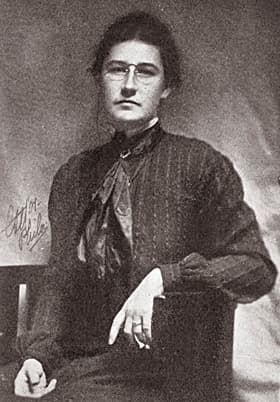
American · Arts
Jessie Wilcox Smith
September 6, 1863 – May 3, 1935
Early Life and Background
Jessie Willcox Smith (September 6, 1863 – May 3, 1935) was an American illustrator whose work helped define the visual language of childhood and domestic life during the Golden Age of American illustration.[1][3] She was born in the Mount Airy neighborhood of Philadelphia, Pennsylvania, the youngest child of Charles Henry (often cited as Henry) Smith, an investment broker, and Katherine DeWitt Willcox Smith.[1][7][9] Her family’s middle‑class stability and interest in education created an environment in which artistic training was possible at a time when professional careers for women were constrained.
Smith attended private elementary schools in Philadelphia.[3] At sixteen, reflecting both educational ambition and family support, she was sent to live with cousins in Cincinnati, Ohio, to complete her schooling.[3][4] While in Cincinnati, she trained as a kindergarten teacher—a relatively new field in the United States, rooted in progressive ideas about early childhood education.[4][7] Her initial work with small children would later inform the sensitivity and observational detail evident in her illustrations of childhood.
According to later biographical accounts, her path shifted when she sat in on a cousin’s art lesson and discovered both enjoyment and aptitude for drawing.[9][11] This moment of recognition, occurring when she was around twenty, pushed her away from teaching and toward formal artistic study—a critical transition for a woman who would become one of America’s most recognized illustrators of children.[5][9]
Art Education and Formation as an Illustrator
After returning to Philadelphia, Smith undertook structured art training across several institutions that were central to the city’s artistic life. She enrolled at the Philadelphia School of Design for Women, an institution specifically created to provide women with professional art and design education, addressing barriers that kept them from the broader art academies.[4][11] She then studied at the Pennsylvania Academy of the Fine Arts (PAFA), one of the oldest and most prestigious art schools in the United States, where she was a student of the influential realist painter Thomas Eakins.[1][5][8]
PAFA records and biographical sources indicate that she graduated around 1888, marking the completion of a rigorous academic training that included life drawing and anatomy—subjects often considered controversial for women students in the era.[5][6][8] Eakins’ emphasis on realism, careful observation, and the human figure shaped Smith’s technical facility and her later ability to convey complex emotional states in the faces and postures of children and adults.
Seeking further specialization in illustration, Smith studied under the celebrated illustrator Howard Pyle at the Drexel Institute of Art, Science, and Industry (later Drexel University).[1][6][11] Pyle’s classes were foundational for what became known as the "Brandywine school" of illustration, and Smith was among the many artists—along with N.C. Wyeth and others—who absorbed his narrative approach and strong compositional sense.[6] Pyle encouraged his students, including Smith, to think of illustration as both art and storytelling, an orientation that would be central to her career.
Career Beginnings: Magazine and Advertising Work
Smith’s professional career emerged during a period when mass‑circulation magazines and illustrated books were transforming American visual culture. Around the late 1880s and early 1890s, she began contributing illustrations to leading periodicals, a common entry point for artists of her generation.[1][11] By 1894, she had joined the advertising department of the influential magazine Ladies’ Home Journal under editor Edward Bok, solidifying her position within the expanding field of magazine illustration.[1][3][6][9]
Working at Ladies’ Home Journal allowed Smith to produce images for a broad, largely female readership, addressing themes of home, childhood, and moral uplift that were central to late‑Victorian and Progressive Era middle‑class culture.[1][3] Biographical sources note that she held this position for several years before leaving to study more intensively with Howard Pyle, indicating a balance between professional demand and continuing education.[6]
Beyond editorial illustration, Smith created advertising art for major consumer brands. The National Museum of American Illustration emphasizes her work for companies such as Kodak, Procter & Gamble, and Ivory Soap, all of which used her gentle, idealized images of children and domestic scenes to market household and technological products.[5] Such commissions reveal both her commercial adaptability and the way advertisers leveraged feminine and maternal imagery to build trust with consumers.
The Red Rose Girls and Women’s Artistic Community
An important chapter in Smith’s life was her participation in a pioneering women’s artistic household known as the Red Rose Girls. In the late 1890s, she formed a close professional and personal alliance with fellow illustrators Elizabeth Shippen Green and Violet OakleyHenrietta Cozens, they established a communal living and working arrangement, first at a house called Red Rose Inn near Villanova and later at Cogslea in the Chestnut Hill area of Philadelphia.[2][9]
This all‑female household was significant as an experiment in artistic collaboration and domestic independence for women at the turn of the century. Rather than marrying and forming conventional families, the Red Rose Girls created a supportive environment where they could share studio space, resources, and social networks.[2][9] Art historians have highlighted the group as a key example of women artists resisting restrictive gender expectations while pursuing serious professional careers.
Within this circle, Smith honed her focus on children and domestic subject matter, while Oakley became known for murals and Green for elegant magazine illustration. Their success demonstrated that women could achieve national prominence in illustration and mural painting, even though many institutional and patronage systems remained male‑dominated.[2][9]
Major Works and Contributions to Children’s Literature
Smith’s reputation today rests largely on her extensive contributions to children’s literature and family‑oriented magazines. She illustrated more than sixty books over the course of her career.[3] Among her most celebrated projects were new illustrated editions of classic works, including Little Women and An Old‑Fashioned Girl by Louisa May Alcott, Evangeline by Henry Wadsworth Longfellow, A Child’s Garden of Verses by Robert Louis Stevenson, The Water‑Babies by Charles Kingsley, Heidi by Johanna Spyri, At the Back of the North Wind and The Princess and the Goblin by George MacDonald, and holiday staple ’Twas the Night Before Christmas.[3][11]
Her illustrations are distinguished by soft outlines, subtle yet luminous color, and a keen attention to the emotional interiority of children.[4] She typically portrayed her subjects in natural, unforced poses: reading, playing, or engaging with caregivers, rather than in stiffly sentimental tableaux. This approach gave her work a psychological depth that resonated with both child and adult viewers and helped redefine modern depictions of childhood as a period of imagination, vulnerability, and moral significance.[4][5]
In the realm of magazine illustration, Smith worked for influential publications including Century, Collier’s, Leslie’s Weekly, Harper’s, McClure’s, Scribner’s, and Ladies’ Home Journal.[1][3] Her images accompanied stories and articles, visually shaping readers’ experiences of fiction and domestic advice alike. She also produced a long‑running series of covers and interior illustrations for Good Housekeeping, one of the United States’ most widely read women’s magazines.[3][5][7]
Spanish‑language sources note that between 1915 and 1933, Smith contributed regularly to Good Housekeeping, including a series based on Mother Goose and iconic covers that often featured idealized mothers and children.[3] Over two hundred covers have been attributed to her, making her visual style nearly synonymous with the magazine’s early‑20th‑century brand.[5] These works reinforced and sometimes gently idealized contemporary views of domesticity, but they also elevated the everyday care of children to a suitable subject for fine illustration.
Awards, Honors, and Professional Recognition
Smith’s skill was widely recognized by her contemporaries, and she received several major awards and honors during her career. Biographical accounts mention a bronze medal for illustration at the South Carolina Interstate and West Indian Exposition (also known as the Charleston Exposition) in 1902.[3] This world’s fair provided regional and national exposure for artists, and the medal acknowledged Smith’s excellence in a field still dominated by male illustrators.
In 1903, she received a prize—often described as a bronze medal or similar distinction—from the Pennsylvania Academy of the Fine Arts, the institution where she had trained.[3] Such recognition from a leading fine‑arts academy helped legitimize illustration as an art form worthy of institutional honor and demonstrated PAFA’s willingness to honor women practitioners.
Further accolades followed: in 1911, Smith was awarded the Beck Prize from the Philadelphia Water Color Club for excellence in watercolor painting.[3] In 1915, she received a silver medal for illustration at the prestigious Panama–Pacific International Exposition in San Francisco, a major world’s fair that showcased global achievements in art, industry, and technology.[3] These awards collectively mark Smith as a leading figure in American illustration, capable of winning national and international recognition.
French biographical sources also cite her receipt of the Mary Smith Prize, an award given through PAFA that was specifically designated for women artists.[10] The prize was an important mechanism for honoring women at a time when they often competed in separate categories. Although exact dates of some awards are not consistently documented, the pattern of honors underscores Smith’s respected status within professional artistic circles.
Artistic Style and Themes
Smith worked in multiple media, including oil, watercolor, and pastel, but she is most closely associated with watercolor and mixed‑media techniques that produced soft, atmospheric effects.[4] Her compositions often employed gentle modeling of form, impressionistic color, and a subtle use of light to create intimacy between viewer and subject. Children in her images are typically rendered with round faces, expressive eyes, and natural gestures, avoiding extremes of sentimentality while remaining sympathetic.[4][5]
Critics and historians describe her as "one of the greatest pure illustrators" of her era, a phrase widely quoted in institutional profiles.[1][9] This assessment points not only to technical prowess but also to her ability to fuse narrative clarity with emotional nuance. In advertising and magazine work, she translated everyday domestic moments into images that carried persuasive, aspirational messages for readers.
Smith’s work intersects with broader cultural currents, including the rise of the "cult of childhood" in the late 19th and early 20th centuries and the consolidation of middle‑class ideals around home, motherhood, and consumption. Her images could both affirm traditional gender roles and give visual dignity to the labor of caregiving, particularly maternal care.
Personal Life and Relationships
Smith’s personal life was closely intertwined with her professional practice and the community of artists around her. Multiple sources emphasize that she never married and had no children.[1][5][7] Instead, she devoted herself to an intensive, sustained career and to relationships within the Red Rose Girls circle and the broader Philadelphia art community.
She lived for many years in shared households with Elizabeth Shippen Green, Violet Oakley, and Henrietta Cozens
Although the specifics of Smith’s private sentiments, romantic feelings, or sexual orientation are not well documented in the sources used, her decision not to marry and to build long‑term, collaborative relationships with other women artists has made her an important figure in discussions of women’s autonomy and artistic communities. By the 1910s and 1920s, Smith had achieved a remarkable level of professional success. She produced famous series of covers for Good Housekeeping, focusing on idealized images of mothers and children that became iconic in early‑20th‑century American magazine illustration.[1][3] Her illustrations for popular children’s classics continued to be reprinted, keeping her work in circulation among new generations of readers. Biographical sources indicate that she retired from commercial illustration work around 1925, though she continued to paint privately.[1][3][6][9] By this time she was widely recognized as one of the foremost American illustrators of children, and her stylistic influence was evident in the broader visual culture of children’s books and family magazines. In her later years, Smith remained in the Philadelphia area, living at Cogshill near Cogslea. She continued to cultivate relationships with fellow artists and admirers, and her earlier achievements ensured continued interest from publishers and collectors. On May 3, 1935, Jessie Willcox Smith died at Cogshill, the home she shared with friends in the Chestnut Hill section of Philadelphia, adjacent to the Red Rose Girls’ former residence at Cogslea.[1][2][9] She was seventy‑one years old. Following her death, she was buried at The Woodlands Cemetery in Philadelphia, a historic rural cemetery that is home to the graves of many notable Philadelphians.[9][10] Her burial at The Woodlands, and the continued presence of her name in its records and commemorative materials, reflect the city’s recognition of her as part of Philadelphia’s cultural heritage. Institutional collections, including the Pennsylvania Academy of the Fine Arts and the National Museum of American Illustration, preserve her works and document her contributions.[5][7] Smith’s legacy is multifaceted, encompassing artistic innovation, commercial success, and significance in women’s‑history narratives. She is widely remembered as one of the most important illustrators of children’s books in the United States; the National Museum of American Illustration describes her as "considered by many to be the greatest children’s book illustrator."[5] Her rendition of Little Miss Muffet has been called "the Mona Lisa of children’s book illustrations," highlighting the iconic status achieved by some of her images.[5] More broadly, Smith helped to define the visual representation of childhood in the early 20th century. Her work contributed to a shift away from purely didactic or sentimental portrayals toward more psychologically nuanced, affectionate depictions. Through magazines such as Good Housekeeping and Ladies’ Home Journal, her images reached millions of readers, influencing how families imagined parent‑child relationships and domestic life.[1][3][5] In the context of women’s history, Smith stands out as part of a cohort of professional women illustrators who established long‑term careers and formed alternative domestic arrangements to support their work. The Red Rose Girls are often cited as a pioneering women’s artistic community, and Smith’s success within that group underscores the importance of collaboration and mutual support among women in overcoming structural barriers.[2][9] Internationally, her significance is reflected in biographical entries across multiple languages, including Spanish, German, French, and Japanese encyclopedias, which document her birth and death dates, major works, and awards.[3][6][8][10] Contemporary scholarship on illustration history, children’s literature, and gender studies continues to reference Smith as a key figure of the Golden Age of American illustration. While not associated with specific legislative or institutional "firsts" that can be precisely dated, Smith’s career nonetheless represents a broader kind of pioneering work: she demonstrated that a woman could build an enduring, nationally celebrated career in illustration, shape mainstream visual culture, and choose communal artistic life over traditional marriage—all within the constraints of late‑19th‑ and early‑20th‑century American society.Later Career and Retirement
Later Life, Death, and Burial
Legacy and Historical Impact
Dated achievements
2 indexed.
- Sep061863Arts
Birth of Jessie Willcox Smith
Jessie Willcox Smith was born in the Mount Airy neighborhood of Philadelphia, Pennsylvania, to Henry Smith and Katherine DeWitt Willcox Smith.
View details Jessie Willcox Smith - Wikipedia - May031935Arts
Death of Jessie Willcox Smith
Jessie Willcox Smith died at Cogslea, her home in Chestnut Hill, Philadelphia, and was buried at The Woodlands Cemetery.