← All women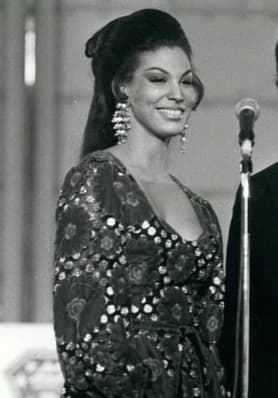
Grenadian · Arts · Activism
Jennifer Hosten
October 31, 1947 – present
Early Life and Background
Jennifer Joséphine Hosten was born on 31 October 1947 in St. George’s, Grenada, the capital of the Eastern Caribbean island nation.[1][3][4][6][8] She grew up in the tropical, hilly port city with her parents Lyle and Phyllis Hosten and four siblings.[2][6][13] Sources describe her as the youngest of five children, raised in a close-knit family in a small society where formal opportunities for women and for Black Caribbean people were limited, but where radio and education opened windows onto the wider world.[5][2]
Hosten’s childhood in St. George’s exposed her to both the beauty and the constraints of colonial and post‑colonial Caribbean life. As she later recounted, she developed early interests in broadcasting, public speaking and travel.[2][10][14] These interests led her to London for training with the BBC and to work for the BBC’s Caribbean service, a rare path for a young woman from Grenada at the time.[3][6][13] Her formative experiences in media and international travel would prove central to her public persona and future diplomatic career.
Education and Training
After completing her schooling in Grenada, Hosten studied in London, where she trained in broadcasting with the BBC and worked for its Caribbean radio service.[3][6][13] Her official site notes that she "trained with the BBC" and worked as a broadcaster before pursuing a career as an airline hostess.[2][10] The combination of professional voice training, exposure to international news, and work in aviation helped her develop poise, multilingual communication skills, and familiarity with cross‑cultural environments.
Following her Miss World reign, Hosten continued her formal education in Canada. French and German-language sources record that she obtained a master’s degree in political science and international relations at Carleton University in Ottawa, Ontario.[3][4][6] She later completed additional studies in social sciences and psychotherapy, ultimately becoming a registered psychotherapist in Canada.[2][10][9] This shift from pageant queen to graduate student and mental-health professional underscores her long-term commitment to intellectual development and public service.
Career Beginnings: Broadcasting and Aviation
Before entering the world of beauty pageants, Hosten built a career in broadcasting and as an airline hostess (flight attendant).[1][2][10][14] She worked for the BBC’s Caribbean Service, a prestigious position that allowed her to engage with regional audiences and hone her skills as a radio announcer.[3][6][13] Her BBC training included voice, presentation and technical skills that later proved invaluable on international stages.
Hosten also worked as an airline hostess, a role that took her across the Atlantic and familiarized her with global travel.[1][10][14] According to her memoir and interviews, she enjoyed exploring different cultures and people, and this curiosity about the wider world became a hallmark of her later diplomatic and development career.[2][10][12] Her background in aviation and broadcasting placed her at the intersection of modern Caribbean mobility and media, foreshadowing her future presence in international public life.
Path to Miss World 1970
In 1970, a friend encouraged Hosten to enter the Miss Grenada competition, which served as a stepping stone to the Miss World pageant in London.[14] She agreed, and went on to become the first woman crowned Miss Grenada, representing her island at the global event a few months later.[11][13] At the time she was working as a flight attendant and had an interest in broadcast journalism, making her an unconventional contestant in a field often associated with traditional notions of femininity.[14]
Hosten has said she entered the contest partly "for fun" and to enjoy the experience.[7] Nonetheless, she prepared seriously, drawing on her professional training, poise and public speaking skills. In November 1970 she traveled to London to compete at the Miss World 1970 pageant, held at the Royal Albert Hall and broadcast live to an enormous global audience.[5][1] Her participation coincided with intense public scrutiny of pageants, especially in Britain, where feminist activists and anti‑racist campaigners were increasingly vocal.
Miss World 1970: Historic Victory and Controversy
On 20 November 1970, Jennifer Hosten was crowned Miss World 1970, representing Grenada, at the Royal Albert Hall in London.[5][1][7] She thereby became the first Black woman and widely recognized as the first woman of colour to win the Miss World crown, and the first representative of Grenada to capture the title in the pageant’s history since its founding in 1951.[1][2][5][10][11][12][14] This made her one of the most prominent Black women in international popular culture at the time.
The event itself was highly charged. Women’s liberation activists, including members of the British Women’s Liberation Movement, disrupted the live broadcast, throwing smoke bombs and flour and shouting slogans to protest the objectification of women and the commodification of female beauty.[14][13] Hosten’s win occurred against this backdrop of feminist critique, placing her at the center of debates about whether pageants could coexist with the emerging women’s movement.
Her victory also sparked racial controversy. The television audience included viewers who booed when she was announced as the winner, and newspapers in some countries questioned the judging.[13][9] Additional tension arose because her runner‑up was Pearl Jansen, a Black contestant representing apartheid South Africa, and because Grenada’s political leader, Prime Minister Eric Gairy, sat on the judging panel.[13][14] Some critics alleged bias in favor of Grenada; supporters, however, emphasized Hosten’s eloquence, performance in interviews and stage presence as decisive factors.
Despite controversy, Hosten’s coronation represented a major milestone in the history of Black women in global media. As Time and other outlets have noted, she was the first Black woman to win the international beauty pageant since its inception, symbolizing a significant break with the pageant’s overwhelmingly white and Eurocentric record.[14][1] For Grenada, her win brought unprecedented international attention and pride, showcasing a small post‑colonial nation on a world stage.[1][2]
Reign as Miss World and Public Appearances
During her year as Miss World, Hosten undertook extensive international travel and public engagements. Her official site recounts that winning Miss World "was a significant turning point" that led to tours in a "diverse array of countries," including visits to U.S. troops during the Vietnam War.[2] These appearances blended celebrity with soft diplomacy, as she acted as a representative of Grenada and an unofficial ambassador of Black Caribbean womanhood.
Hosten’s reign required her to navigate complex expectations: she was expected to perform traditional pageant duties, such as attending charity events and media appearances, while also being a symbolic figure in global debates about race and gender. The early 1970s were marked by civil-rights movements, Black Power activism, and growing feminist critique, which meant that her presence as a Black woman on a global beauty throne carried political resonance, whether she sought it or not.[9][14]
Diplomatic and Development Career
After completing her Miss World responsibilities, Hosten shifted her focus toward diplomacy, international development and trade. She lived in Bermuda until 1973 before moving to Ontario, Canada.[3] In Canada, she pursued higher education and later worked in various roles involving diplomatic representation and development work.[1][2][10][12]
French and German-language biographies state that Hosten served as Grenada’s High Commissioner to Canada from 1978 to 1981, representing Grenada in the Commonwealth diplomatic community.[3][4] She additionally worked in international development and trade negotiation, engaging with projects and organizations focused on economic cooperation and social progress.[1][2][10][12] Her transition from beauty queen to diplomat made her an early example of a woman whose pageant fame evolved into substantial political and development work.
Throughout her professional life, Hosten combined roles: she has been described as a radio announcer, diplomat, trade adviser, development worker, academic and hotelier.[1][2][9][10] She founded and ran an inn in Grenada, reflecting an interest in hospitality and tourism—sectors vital to Caribbean economies.[10] Later, she trained as a psychotherapist and practiced in Canada, further diversifying her contributions to public life and community well‑being.[10][2]
Writing, Memoirs, and Intellectual Work
Hosten has authored at least two books reflecting on her life and experiences. One earlier work, often cited as "Beyond Miss World", explores her journey of moral strength, dignity and educational success and discusses the racism and controversy surrounding her 1970 win.[13] It situates her story within broader Caribbean struggles and the global women’s movement.
In 2020 she published the memoir "Miss World 1970: How I Entered a Pageant and Wound Up Making History", which offers a detailed account of her path from Grenada to the Miss World stage and beyond.[10][14][2] Her official site notes that the book was launched in the United Kingdom on 10 March 2020, and that it recounts her varied life in broadcasting, diplomacy, trade negotiation, international development, business ownership, hospitality and academia.[2] The memoir has been reviewed by outlets such as Avocado Diaries, which highlight her reflections on racism, feminism, Caribbean nationalism and personal resilience.[10]
Hosten’s writing contributes to women’s history by providing a first‑person narrative of what it meant to be a Black Caribbean woman navigating global beauty culture, colonial legacies, and professional ambitions in diplomacy and psychotherapy. Her books offer the kind of nuanced account that academic historians and activists alike can draw upon to understand how individual agency interacts with structural inequalities.
Misbehaviour (2020) and Cultural Representation
Hosten’s story reached a new generation through the 2020 feature film "Misbehaviour", which dramatizes the events of the 1970 Miss World contest.[10][12][14] The film portrays the feminist protests, the racial dynamics of the competition, and Hosten’s historic win, drawing heavily on her memoir as a source.[12][14] In the film, her character is depicted balancing personal aspirations with the heavy symbolic burden placed on her shoulders by race, nationality and gender politics.
Media coverage of the film and interviews with Hosten re‑centered her in contemporary conversations about beauty standards and political protest. Outlets such as Time, Chatelaine, and The Guardian revisited her story in 2020 and 2023, emphasizing both her groundbreaking achievement and the contested context in which it occurred.[14][9][5] These retrospectives helped situate her legacy within a longer arc of Black women’s representation in global media, and within the ongoing debates about whether pageants reinforce or challenge sexist and racist norms.
Awards, Honours, and Recognition
Hosten’s most widely recognized honour remains her Miss World 1970 title, with its associated status as the first Black woman, first woman of colour, and first Grenadian to win the crown.[1][2][5][11][12][14] Beyond the pageant, her diplomatic role as High Commissioner and her work in international development have earned her respect within Caribbean and Canadian circles, though specific decorations are less prominently documented.
Her continuing recognition comes through media and scholarly attention. Articles in Chatelaine, Time, The Guardian, Caribbean feminist blogs and diaspora outlets mark her as a "groundbreaking" and "iconic" Caribbean woman.[9][14][5][13] She is included in lists and essays on "iconic Caribbean women" and "firsts" in Black history, emphasizing the symbolic importance of her 1970 win as well as her later professional service.[13][11]
Personal Life
Hosten has built a family and personal life primarily in Canada. Her official site notes that she is "a proud mother" of two children, Sophia and Beau, and grandmother to five grandchildren.[2][10][6] She lives in Oakville, Ontario, where she has worked as a registered psychotherapist and remained active in community and professional networks.[9][10][2]
Her personal narrative emphasizes lifelong learning, resilience, and service. She has spoken about wanting to "give back to those around her" and about embracing new challenges, whether in academia, diplomacy, hospitality or therapy.[2] The combination of family life and public engagement reflects a broader pattern among women who broke barriers in the mid‑20th century and then sought to craft multifaceted lives beyond their defining public achievements.
Legacy and Historical Impact
Jennifer Hosten’s legacy in women’s and Black history is multifaceted. Her 1970 Miss World victory marked a turning point in the representation of Black and Caribbean women in global beauty culture, challenging a two‑decade‑long pattern of white winners.[1][5][14] As the first Black woman and first woman of colour to hold the title, she has been cited as an inspiration for subsequent generations of contestants and for women who seek recognition in spaces historically dominated by white beauty standards.[11][12][13]
Her story also illuminates the complex relationship between beauty pageants and feminism. The Miss World 1970 contest became a flashpoint for feminist activism, with protests disrupting the broadcast and raising questions about objectification and commodification.[14] Hosten’s win, occurring in the midst of those protests, reveals how individual women can simultaneously benefit from and be constrained by patriarchal structures. Her later work in diplomacy, development and psychotherapy further complicates simplistic narratives about pageant participants, demonstrating that they can and do pursue serious professional and intellectual lives.
From a Caribbean perspective, Hosten stands as a symbol of national pride and global visibility. Her win placed Grenada—then a small, relatively unknown island nation—on the world map in a new way.[1][2] Her subsequent diplomatic career and business initiatives underscore how Caribbean women have leveraged cultural fame into roles in governance, trade and development.
In recent years, major media retrospectives and her own memoir have ensured that her contributions remain part of public memory. A 2023 profile in The Guardian revisited her story as the first Black Miss World, reflecting on how attitudes toward race and beauty have changed and how her experiences still resonate.[5] Interviews and discussions, such as the "Grace and Gumption" episode on YouTube, further disseminate her reflections on representation, resilience and opportunity.[12]
Later Life and Ongoing Work
In later life, Hosten continues to live in Canada, working as a registered psychotherapist and participating in public conversations about race, gender, and mental health.[9][10][2] She remains active as an author and speaker, discussing her memoir, the film "Misbehaviour", and her experiences in diplomacy and development.
Her 2020 memoir and associated media appearances underscore her ongoing role as an interpreter of her own history, rather than simply a subject of others’ narratives.[2][10][14] By reflecting on the ways beauty, race, and politics intersected in her life, she contributes to a richer understanding of how Black women navigated the late 20th century’s shifting structures of opportunity and constraint.
As of the mid‑2020s, Hosten is still alive and continues to engage in community and intellectual work, embodying the long arc of a life that began in a small Caribbean capital and traversed global media, diplomacy, and therapeutic practice.[1][2][9][10]
Dated achievements
2 indexed.
- Oct311947Science
Birth of Jennifer Hosten
Jennifer Hosten was born in St. George's, Grenada, later becoming a radio announcer, beauty queen, diplomat, and author.
View details Jennifer Hosten - Wikipedia - Nov201970Arts
First Black woman and first Grenadian to win Miss World
Jennifer Hosten, representing Grenada, was crowned Miss World 1970 at the Royal Albert Hall, becoming the first Black woman to win the title.