← All women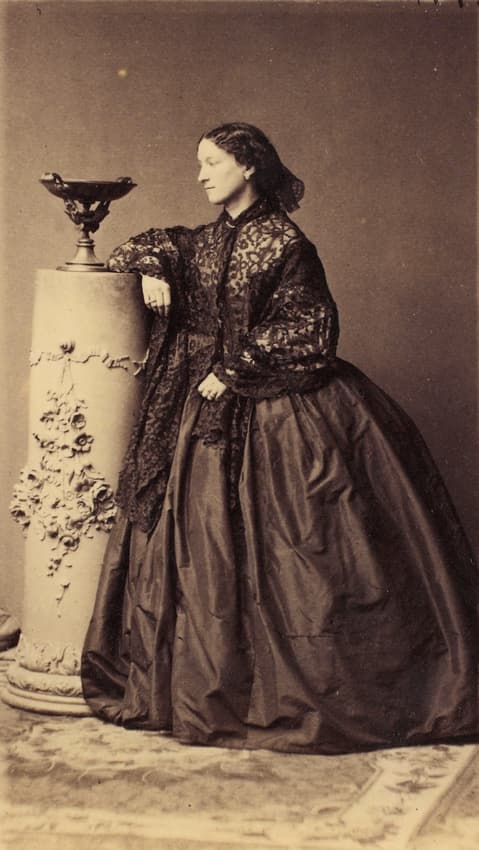
French · Science
Jeanne Villepreux-Power
September 25, 1794 – January 26, 1871
Early Life and Background
Jeanne Villepreux-Power, born Jeanne Villepreux, entered the world on 25 September 1794 in the village of Juillac in Corrèze, in the Limousin region of France. She was the eldest daughter of a shoemaker father and a mother who worked with linen or as a seamstress, placing her firmly within the rural working class of post-Revolutionary France. Her early life unfolded in modest circumstances, with limited access to formal education, a common reality for girls and for children of artisans in provincial communities at the time.
Biographical accounts agree that Villepreux’s childhood was marked by hardship and emotional loss: her mother died when she was still young, leaving her to navigate adolescence in a family under economic strain. In an era when girls’ schooling beyond basic literacy was rare in rural France, she appears to have received little structured education. Later sources note that she largely taught herself to read and write, reflecting both her intellectual curiosity and the barriers facing women of her social class.
Despite these constraints, observers have emphasized that Villepreux demonstrated unusual determination and creativity from an early age. Her eventual move from Juillac to Paris as a teenager—walking much of the way, according to several narratives—illustrates the boldness with which she sought opportunity beyond the narrow roles typically assigned to rural women. This background of self-reliance and marginalization would profoundly shape her scientific career, making her later achievements in marine biology both technically innovative and socially remarkable.
Journey to Paris and Career Beginnings
Around the age of seventeen, in the mid-1810s, Jeanne Villepreux left Juillac for Paris, then the intellectual and artistic center of France. Accounts describe her journey as largely undertaken on foot, underscoring her limited means and determination to overcome geographic and social boundaries. On arrival she found employment as a dressmaker’s assistant, entering a trade that, while poorly paid and physically demanding, offered avenues for women to develop specialized skills and artistic expression.
In Paris, Villepreux refined her talents in needlework, embroidery, and garment design. She reportedly taught herself reading and writing more systematically during this period, using her wages and spare time to compensate for the formal schooling she had never received in Juillac. Becoming literate and numerate was crucial: it would later allow her to read scientific works, correspond with scholars, and author her own publications.
Her artistic and technical skill as a dressmaker soon attracted attention. By the late 1810s she obtained commissions of increasing prestige, culminating—according to several sources—in designing or embroidering a wedding gown for Princess Marie-Caroline, Duchess of Berry, a member of the French royal family. While details of this commission vary across retellings, the episode illustrates the degree to which a self-taught rural seamstress could, through talent, briefly cross class boundaries in the artistic sphere.
Villepreux’s dressmaking career in Paris provided income, but more importantly it developed the meticulous manual dexterity, patience, and observational skills that would later prove essential in her work as a naturalist. The precision required to design and sew elaborate garments foreshadowed the precision she would later apply to scientific illustration, specimen handling, and the design of experimental apparatus.
Migration to Sicily and Transition to Natural History
In the later 1810s, Villepreux’s path took a decisive turn. Around 1818 she traveled from Paris to Sicily, where she settled in the port city of Messina on the island’s northeastern coast. There she married an English merchant, James Power, integrating herself into a transnational commercial and social network that was unusual for a woman of her origins.
Messina proved a fertile environment for her intellectual development. The region offered rich opportunities for the study of marine life, fossils, geology, and archaeology. While continuing her work as a dressmaker—gaining local renown and presumably maintaining clientele connected to her earlier royal commission—she began to study the island’s natural history systematically.
Villepreux collected specimens from local fishermen, explored coastal ecosystems, and examined shells and marine organisms with growing curiosity. Over time she assembled her own natural history collection, an effort demanding keen observation and organizational skill. Through self-directed reading and correspondence, she deepened her understanding of zoology and geology, gradually transforming herself from artisan to naturalist.
The intellectual climate of early nineteenth-century Sicily, with emerging scientific societies and access to Mediterranean biodiversity, played a crucial role in her development. She became associated with the Accademia Gioenia di Scienze Naturali in Catania and other learned circles, though women were rarely admitted as members. These networks provided channels through which her research would later reach wider European audiences, including scientists in London and Paris.
Invention of the Aquarium and Experimental Marine Biology
Villepreux-Power’s most influential contribution to science was her invention of the modern aquarium in the early 1830s, particularly around 1832. Working in Messina, she sought techniques to observe marine animals alive and under controlled conditions, rather than solely as preserved specimens. This ambition required both technical ingenuity and a conceptual shift in how naturalists studied organisms.
She developed at least three distinct types of apparatus that are now considered early forms of aquaria:
- A glass tank or box used indoors to keep and observe small marine animals alive, the prototype of the familiar domestic and laboratory aquarium.
- A glass box surrounded by a protective cage, submerged in the sea. This device allowed seawater to flow freely around the container while protecting the specimens and facilitating longer-term observation of small mollusks and other organisms in their natural environment.
- A
that could be anchored at specific depths, used to study larger marine animals under semi-natural conditions.
By designing these devices, Villepreux-Power pioneered the systematic use of aquaria as experimental tools for marine biology. Contemporary sources such as the Giornale Letterario della Accademia Gioenia di Catania credited her as the inventor of the aquarium and the first to employ it consistently in scientific research. Later commentators, including the British biologist Richard Owen, would refer to her as the "mother of aquariophily"—the mother of aquarium keeping.
Her aquarium designs facilitated sustained observation of living animals, revolutionizing marine biology by enabling behavioral studies, controlled experiments, and long-term ecological investigations. In contrast to the static, often distorted perspective afforded by preserved specimens, aquaria allowed Villepreux-Power to see how animals moved, fed, interacted, and built structures, propelling her toward her most famous discovery.
Research on Argonauta argo and Resolution of a Classical Puzzle
Villepreux-Power’s best-known scientific work focused on the cephalopod Argonauta argo, commonly called the paper nautilus. For centuries, naturalists had debated whether the animal created its delicate shell or occupied one produced by another creature. The question dated back at least to Aristotle, whose writings on marine animals heavily influenced subsequent zoological thought.
Using her aquaria in Messina, Villepreux-Power conducted a series of live experiments on Argonauta in the early 1830s. She observed female argonauts in controlled conditions as they secreted and expanded their shells over time, allowing her to document the process directly rather than infer it from static specimens. Her experimental approach—following individual animals longitudinally—was innovative for nineteenth-century zoology.
Through these observations, she gathered compelling evidence that the argonaut’s shell was indeed produced by the animal itself. She noted the secretion of material, growth patterns, and repair processes that would be impossible if the creatures merely inhabited shells made by others. Her findings overturned the long-standing belief that argonauts were opportunistic occupants of borrowed shells.
Villepreux-Power communicated her results to scientific societies, including the Zoological Society of London, where her work was presented by Sir Richard Owen on her behalf. This method of communication reflects both the barriers women faced in personally addressing learned societies and the respect some male scientists held for her research.
Her resolution of the Argonauta puzzle had broad significance. It demonstrated the value of aquarium-based experimentation, showed the importance of observing organisms throughout their life cycles, and helped reorient cephalopod research toward behavior and physiology rather than solely morphology. It also offered a visible example of a woman contributing original insights to a domain dominated by male scholars.
Publications and Broader Scientific Work
Villepreux-Power was not only an experimentalist but also an author. In 1839 she published a major scientific work, Observations et expériences physiques sur plusieurs animaux marins et terrestres (Physical Observations and Experiments on Several Marine and Terrestrial Animals). This text documented her aquarium-based studies of marine invertebrates and other animals, including detailed descriptions, illustrations, and experimental protocols.
The book is noteworthy for its blend of observational natural history and experimental methodology. She described cephalopods, mollusks, and other marine species, often highlighting their behaviors under different conditions. Her treatment of terrestrial animals further showed her wide-ranging curiosity and willingness to cross traditional disciplinary boundaries.
Beyond this scientific monograph, Villepreux-Power contributed to wider cultural and natural history scholarship. In the 1840s she authored a guide to Sicily that integrated historical, archaeological, geological, and biological information about the island. This work reflected her deep engagement with local landscapes and ecosystems, offering a holistic view that foreshadowed later interdisciplinary approaches in environmental studies.
She also continued to write and correspond about conservation and aquaculture. During the mid-nineteenth century she advocated for techniques to restock overfished rivers with fish and crayfish, revealing an early sensitivity to human impacts on aquatic ecosystems. Her observations that certain octopus species used tools—such as manipulating shells to gain access to prey—anticipate modern research on animal cognition and problem-solving.
Recognition, Scientific Societies, and Barriers
The scientific establishment of Villepreux-Power’s time was largely closed to women, particularly in formal memberships and speaking opportunities. Despite this, she attained notable recognition. Sources report that she became the first female member of the Accademia Gioenia di Scienze Naturali in Catania, an Italian scientific academy concerned with natural history. She is also said to have been admitted to several other Italian scientific societies.
Although precise dates and documentation for some of these memberships remain sparse, the pattern is clear: her research compelled institutions traditionally restricted to men to acknowledge her contributions and grant her formal roles. This recognition was unusual in the mid-nineteenth century and underscored both her scientific achievements and the slowly changing attitudes toward women in science.
Internationally, her work was cited by prominent scientists. Richard Owen, one of Britain’s leading comparative anatomists, presented her findings to the Zoological Society of London and described her as a pioneer of aquariology. French zoologist Edmond Perrier later characterized her as a precursor of marine biological stations, recognizing how her aquarium-based work anticipated the systematic study of marine organisms in dedicated research facilities.
Nevertheless, Villepreux-Power faced obstacles. Her gender meant she often had to communicate through male intermediaries. Some scientific societies were skeptical of her conclusions, particularly regarding Argonauta, and she had to defend her results against entrenched views. The loss of much of her research collection and notes in a shipwreck in the 1840s further limited her ability to reinforce and expand her findings, leaving her later career partly defined by work that could no longer be directly examined.
Personal Life and Character
Jeanne Villepreux’s marriage to James Power, an English merchant active in Sicily, provided financial stability and a cosmopolitan milieu that were essential to her scientific pursuits. The couple lived for roughly two decades in Messina, a location that offered proximity to rich marine environments and trade networks that facilitated her specimen collection and intellectual connections.
Biographical sources do not consistently document whether the couple had children, and surviving accounts focus more on Jeanne’s intellectual activities than on domestic details. What emerges clearly is that James Power supported, or at least did not obstruct, her research and writing—a support that was by no means guaranteed for wives in the early nineteenth century. Her adoption of the hyphenated surname Villepreux-Power symbolized both her French origins and her connection to the Anglophone world.
Descriptions of her personality emphasize persistence, curiosity, and independence. From walking to Paris as a teenager to building a scientific career without formal education, she consistently crossed boundaries of gender and class. Her simultaneous proficiency as a dressmaker and a scientist challenges conventional separations between "feminine" domestic arts and "masculine" scientific labor, showing how skills developed in one sphere can underpin excellence in another.
Her later years included periods in Italy, France, and possibly elsewhere in Europe, reflecting a life increasingly shaped by intellectual and family networks rather than by the geographic limitations of her youth. Even after the loss of her collections, she continued to write and correspond, maintaining an identity as a naturalist until her death.
Later Life, Loss of Collections, and Death
In the 1840s, a devastating event struck Villepreux-Power’s scientific legacy: a shipwreck destroyed much of her natural history collection, drawings, and notes while they were being transported. This loss truncated the material record of her decades of work in Messina and complicated the subsequent reception of her research, as future scholars had limited access to her original specimens and documentation.
Despite this setback, she remained engaged with scientific and literary activities. She continued to publish and correspond, and her ideas about aquaria, conservation, and marine life circulated among European naturalists. However, the destruction of her collections likely contributed to her relative obscurity in twentieth-century histories of marine biology, which often focus on institutional laboratories and male scientists whose archives were preserved more fully.
In her later years, Villepreux-Power returned to Juillac, the village where she had been born. There, she lived out her remaining time, far from the Mediterranean shores that had shaped her scientific work. On 26 January 1871 she died in Juillac, at approximately seventy-six years of age, closing a life that had spanned the aftermath of the French Revolution, the rise and fall of Napoleonic rule, and the transformations of nineteenth-century science.
Legacy and Historical Impact
Jeanne Villepreux-Power’s legacy is multi-faceted, encompassing technical invention, experimental practice, institutional breakthroughs, and cultural symbolism. Most concretely, she is now widely recognized as the inventor of the modern aquarium for scientific research. Her glass tanks and submerged cages enabled a new paradigm in marine biology, one based on the long-term observation of living organisms in controlled environments.
Her Argonauta argo experiments exemplified this paradigm, resolving a classical zoological question and demonstrating the power of live experimentation. In doing so, she helped shift the study of cephalopods toward behavior and development, prefiguring approaches that would become central to marine biology and ethology in the twentieth century.
As a self-taught woman scientist from a poor rural background, Villepreux-Power also occupies an important place in the history of women in science. Her admission to Italian scientific academies, the presentation of her work to the Zoological Society of London, and her recognition by figures like Richard Owen show that women’s research could penetrate elite institutions even in periods of formal exclusion. At the same time, the uneven documentation of her life and the long neglect of her achievements reflect enduring gender biases in historical record-keeping and scientific memory.
In the late twentieth century, her significance received new symbolic affirmation when a crater on the planet Venus was named Villepreux-Power by the International Astronomical Union, honoring her contributions to science and aligning her with other historically important women commemorated in planetary nomenclature. This gesture connects her name to a landscape beyond Earth, echoing the way her aquarium extended human vision into underwater worlds.
Contemporary writers, historians, and educators have increasingly highlighted her story. Biographies, children’s books, and essays on women in STEM now present Jeanne Villepreux-Power as a model of perseverance and innovation: a dressmaker who became a distinguished marine biologist; an inventor whose apparatus transformed scientific practice; and a woman who navigated and challenged the barriers of her time.
Her life underscores several broader themes: the value of self-education, the continuity between craft skill and scientific technique, the importance of experimental tools in reshaping disciplines, and the need to recover overlooked contributions in order to construct a more inclusive history of science. For students of marine biology and women’s history alike, Jeanne Villepreux-Power stands as a central figure whose work continues to inform both scientific methods and historical understanding.
Dated achievements
2 indexed.
- Sep251794Science
Birth of Jeanne Villepreux-Power
Born in Juillac, Limousin, France, to a shoemaker father and a linen-worker mother.
View details Jeanne Villepreux-Power - Britannica - Jan261871Science
Death of Jeanne Villepreux-Power
Died in Juillac, France, on 26 January 1871, having pioneered aquarium-based marine biology and invented the aquarium.