← All women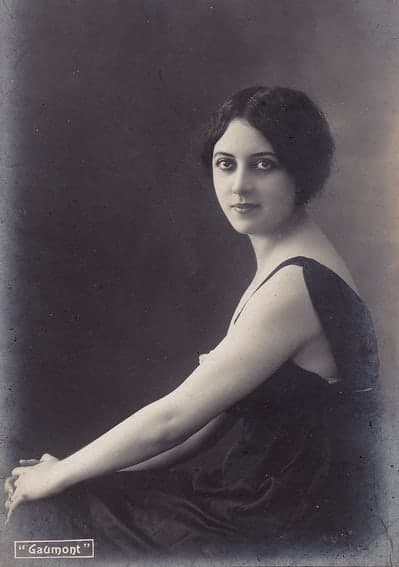
French · Arts
Jeanne Roques (Musidora)
February 23, 1889 – December 11, 1957
Early Life and Background
Jeanne Roques, famously known as Musidora, was born on February 23, 1889, in Paris, France. She was the daughter of Jacques Roques, a composer, and Marie Legrand, a feminist novelist known for her anarchist ideals. Growing up in an intellectually stimulating environment, Jeanne was exposed to the world of arts and literature from a young age, which undoubtedly influenced her career path.
Jeanne's education was rooted in the liberal and progressive traditions of her family, and she soon found a passion for performing arts. Inspired by her family and the cultural milieu of Paris, she gravitated towards acting and theatre.
Career Beginnings and Development
Musidora began her career in theatre before transitioning to the burgeoning world of silent cinema. She adopted the name "Musidora," inspired by the title character in Théophile Gautier's novel, signifying her enigmatic allure and mystique. Her breakthrough came with her role in the film series Les Vampires (1915-1916), where she played Irma Vep, a character that became emblematic of early cinema's femme fatales.
The role of Irma Vep brought Musidora widespread acclaim, and she became one of the French silent cinema's most recognizable faces. Her distinct performance style, characterized by its expressiveness and her striking screen presence, made her a cinematic icon.
Major Works and Accomplishments
Beyond Les Vampires, Musidora starred in several other films, further cementing her status as a pioneering figure in the film industry. She worked alongside and was influenced by leading cinematographers and directors of her time, which expanded her interest in film production and direction.
In the 1920s, Musidora took on the roles of both director and producer, directing films such as La Flamme cachée and Sol y Luna. Despite the male-dominated nature of the industry, she made significant contributions as a female filmmaker, advocating for women's involvement in cinema.
Awards, Honors, and Recognition
Although formal awards in the film industry were not as prevalent during Musidora's career as they are today, her influence and pioneering efforts were widely recognized by her contemporaries. Her work continues to be celebrated in retrospectives and film festivals dedicated to silent cinema.
Personal Life
Musidora had a series of intense personal relationships but never married. She was known for her independent spirit and closely guarded her personal life. Her relationships often informed her work and the strong, independent characters she portrayed on screen.
Legacy and Historical Impact
Musidora’s role in early cinema laid the groundwork for future generations of actresses and filmmakers. Her portrayal of Irma Vep became a cultural archetype that influenced subsequent characterizations of female antagonists and femme fatales in cinema. Musidora also paved the way for women in filmmaking, proving that women could lead both on screen and behind the camera.
She remains an icon of feminist film studies, celebrated for her contributions and defiance of the constraints placed upon women in the early 20th century.
Later Life and Death
In her later years, Musidora's contributions to film were somewhat eclipsed by the advent of sound cinema. Nonetheless, she remained active in the arts, participating in the preservation of film history and contributing to film journals. Musidora passed away on December 11, 1957, in Paris, leaving behind a legacy that continues to inspire filmmakers and artists to this day.
Dated achievements
2 indexed.
- Feb231889Arts
Birth of Jeanne Roques (Musidora)
Jeanne Roques, known as Musidora, is born on February 23, 1889, in Paris, France.
View details Musidora Biography - Encyclopaedia Britannica - Dec111957