← All women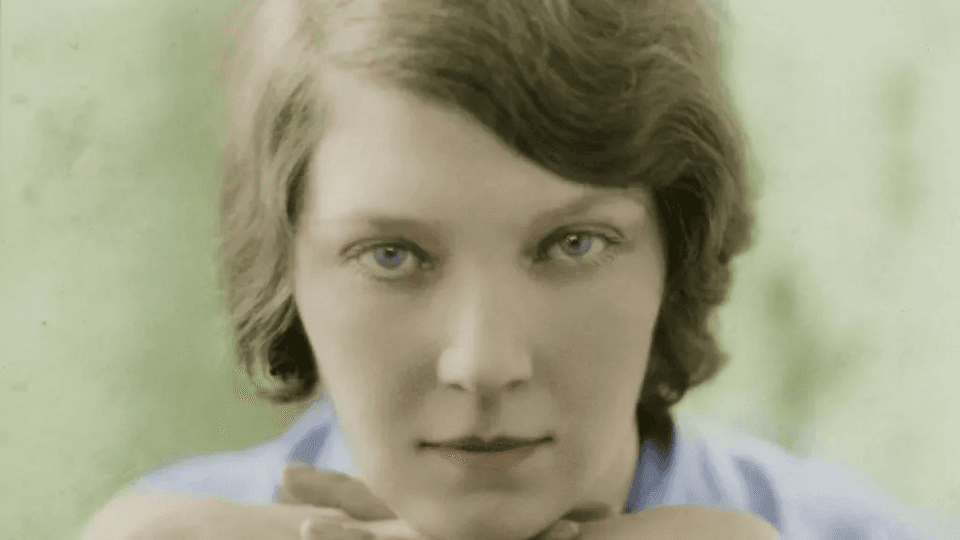
British, Dominican · Literature
Jean Rhys
August 24, 1890 – May 14, 1979
Early Life and Background
Jean Rhys was born Ella Gwendoline Rees Williams on August 24, 1890, in Roseau, Dominica, then part of the British West Indies. Rhys was the daughter of William Rees Williams, a Welsh physician, and Minna Williams, a third-generation Dominican of Scottish descent. The multicultural and colonial environment of her upbringing profoundly influenced her writing. At the age of 16, Rhys moved to England to attend the Perse School for Girls in Cambridge, followed by the Royal Academy of Dramatic Art (RADA) in London. Her education was cut short by World War I, and personal tragedy led her to pursue a series of jobs, including chorus girl, which exposed her to diverse social settings that would later color her fiction.
Career Beginnings and Development
Jean Rhys began writing seriously in the late 1920s. Her early works, typified by "The Left Bank and Other Stories" (1927), drew on her personal experiences and feelings of alienation. Rhys's distinct modernist style, characterized by sparse prose and emotional depth, quickly gained her a reputation as a talented writer of short fiction. Her first novels, including "Quartet" (1928) and "After Leaving Mr. Mackenzie" (1931), depicted women's struggles with identity, colonial displacement, and societal expectations, layering her narrative with the complexities of emotional and cultural exile.
Major Works and Accomplishments
Rhys's most celebrated work, "Wide Sargasso Sea," published in 1966, is a prequel to Charlotte Brontë's "Jane Eyre" and presents the backstory of Bertha Mason, reimagining her origins in the Caribbean. This novel brought Rhys unprecedented fame and reassessed her earlier literary contributions. Widely hailed for its exploration of postcolonial identity, race, and gender, "Wide Sargasso Sea" won the WH Smith Literary Award in 1967. Rhys became a prominent figure in the literary world, with her work receiving critical acclaim for its innovative and evocative storytelling.
Awards, Honors, and Recognition
During her lifetime, Rhys was recognized with several literary accolades. In addition to the WH Smith Literary Award, she was appointed Commander of the Order of the British Empire (CBE) in 1978 for her contribution to literature. Her works continue to receive acclaim and attract scholarly interest, influencing later novelists and academics with her deep exploration of identity and displacement.
Personal Life
Rhys's personal life was marked by a series of tumultuous relationships and marriages, which mirrored the themes of chaos and emotional upheaval found in her fiction. She was married three times, to Willem Johan Marie Lenglet, Leslie Tilden-Smith, and Max Hamer. The complexity of these relationships, along with her struggles with alcoholism and financial hardship, provided her with a rich albeit painful source of inspiration for her work.
Legacy and Historical Impact
Jean Rhys left an indelible mark on twentieth-century literature. Her exploration of themes such as repression, cultural isolation, and existential despair have made her an enduring figure in modernist and feminist literary circles. "Wide Sargasso Sea" in particular remains a staple of postcolonial studies, recasting a Victorian narrative through a new, critical lens. Her works continue to be studied for their stylistic innovation and psychological depth.
Later Life and Death
In her later years, Rhys lived a reclusive life in Devon, dedicating herself to writing until her health began to decline. She passed away on May 14, 1979, at the age of 88, leaving behind a profound literary legacy. Rhys's ability to encapsulate the transient boundaries of identity continues to resonate with readers and scholars around the world.
Dated achievements
1 indexed.