← All women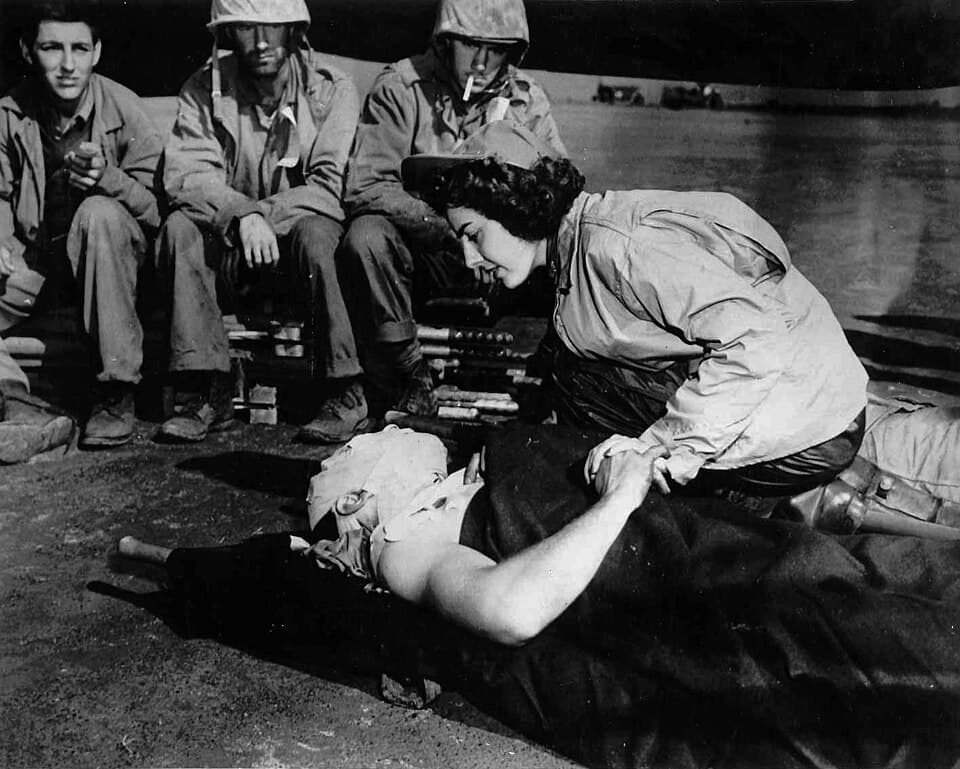
American · Aviation · Medicine · Activism
Jane Kendeigh
March 30, 1922 – July 19, 1987
Early life and education
Jane Louise Kendeigh was born on March 30, 1922, in Lorain County, Ohio, with sources identifying her birthplace as either Oberlin or Henrietta Township. She grew up in Ohio and later became known by the nickname “Candy”, a name that appears in several historical accounts. Her early life is less fully documented than her wartime service, but the available record places her within the generation of American women who came of age during the Great Depression and entered adulthood as the United States mobilized for World War II.
Kendeigh chose nursing as a profession, training in Cleveland at St. Luke’s Hospital School of Nursing. That education placed her in a respected but demanding field that was undergoing major changes in the early 1940s as hospitals, military services, and public-health institutions expanded their use of trained nurses. In an era when women’s professional options were still constrained, nursing offered a route to technical responsibility and public service. Kendeigh’s later career showed that she was willing not only to enter nursing but also to accept the risks of wartime medicine.
Entry into Navy service
During World War II, the U.S. Navy created new pathways for nurses to serve in air evacuation units. In 1944, Kendeigh was selected as one of 122 nurses to receive specialized training at the Naval School of Air Evacuation. The course prepared nurses for the physical and medical demands of flying patients out of battle zones, including care for severe trauma, survival training, and emergency procedures. Only a fraction of the original trainees completed the program and were assigned to evacuation duty, underscoring the selectivity and seriousness of the work.
Kendeigh’s training reflected a broader wartime innovation: the integration of nursing into military air transport. The Navy needed personnel who could stabilize the wounded during flight, manage shock and bleeding, and operate in difficult conditions. Flight nurses served at the intersection of medicine, logistics, and aviation. Their work was a practical response to the geographic realities of the Pacific war, where long distances and island campaigns made rapid evacuation essential.
Iwo Jima and the first Pacific battlefield landing
On March 6, 1945, Kendeigh arrived on Iwo Jima aboard a Naval Air Transport Service evacuation flight. Multiple institutional sources identify her as the first U.S. Navy flight nurse to land on an active Pacific battlefield and the first Navy flight nurse to appear in an active combat zone in the Pacific. That day became the defining moment of her career. At age 22, she moved from training into a battlefield role that had previously not been occupied by a Navy flight nurse.
The Iwo Jima operation was part of a larger, rapidly evolving air-evacuation system. From March 6 through March 21, Kendeigh and fellow flight nurses helped evacuate roughly 2,393 wounded Marines and sailors from the island, and the operation is remembered for achieving that work without losing a patient in flight. The accomplishment demonstrated the practical value of flight nurses and the importance of skilled medical care in transport. It also showed that combat-zone evacuation could be carried out with remarkable reliability despite the hazards of war.
Kendeigh’s Iwo Jima mission is historically significant because it altered the boundaries of women’s military service. The Pacific theater had posed huge logistical problems, and the need for rapid medical transport pushed the Navy to deploy nurses into more dangerous circumstances than many had previously faced. Kendeigh’s presence on the battlefield symbolized the wartime expansion of women’s roles and helped establish air evacuation nursing as a permanent and respected military function.
Okinawa and continued wartime service
Later in 1945, Kendeigh again served in a combat evacuation role in the Pacific. On May 7, 1945, she landed at Okinawa, becoming the first Navy flight nurse to arrive there. The Okinawa campaign was one of the bloodiest of the Pacific war, and the evacuation of wounded personnel was an essential part of sustaining combat operations. Kendeigh’s arrival extended the precedent set at Iwo Jima and showed that her role was not a one-time exception but part of a larger wartime system.
Accounts of her service describe her as moving between the front lines and the evacuation network that linked battlefield casualties to treatment facilities. In this sense, Kendeigh’s work was both medical and operational. She helped care for wounded service members while also helping the Navy adapt its evacuation procedures to a fast-moving amphibious war. Her service at Okinawa strengthened the historical case for flight nursing as a crucial innovation in wartime medicine.
Recognition and wartime context
Kendeigh’s career was shaped by the urgency of World War II and by the limited but expanding opportunities available to women in uniform. The Navy had to address severe casualty rates in the Pacific, and it increasingly relied on specialized nurses who could fly with patients and provide care in transit. The historical record places Kendeigh among the most important early figures in that system. She is repeatedly identified in later military histories as a pioneering flight nurse and as a first in the Pacific theater.
Her recognition came less through formal medals than through historical remembrance. Institutional histories from the Navy, the Marine Corps Museum, and public-history organizations have preserved her story as an example of women’s direct contribution to combat support. In that sense, her legacy lies in documentation and commemoration as much as in wartime promotion or decoration.
Personal life
After the war, Kendeigh returned to civilian life and continued her nursing career. In 1946, she married Navy Lieutenant Robert Cheverton, a Navy air-evacuation pilot. The couple had three daughters. Her postwar life reflected a common transition for many women veterans: a return to family life while maintaining a professional identity built during the war.
Historical accounts indicate that she lived in San Diego, California, and remained connected to nursing after her military discharge in 1946. Although her wartime record is the part most often remembered, her later life is important because it shows that her service did not end with the battlefields of the Pacific. She remained part of the postwar medical community and represented a generation of women whose wartime responsibilities expanded their sense of what was possible in professional life.
Death and legacy
Kendeigh died on July 19, 1987, in San Diego, California, at age 65. By then, her wartime achievements had become part of the broader history of women in military aviation and naval medicine. Her story continued to appear in museum profiles, Navy history articles, documentary material, and later popular histories about women’s wartime service.
Her legacy rests on a small number of precise but consequential firsts. She was the first Navy flight nurse to land on an active Pacific battlefield, the first to appear in that setting, and the first to land at Okinawa. Those achievements mattered because they widened the practical and symbolic boundaries of women’s service in the U.S. Navy. Kendeigh’s career demonstrated that women could perform under combat conditions in a role that required medical expertise, composure, and courage.
In women’s history, Kendeigh stands as an example of wartime barrier-breaking shaped by necessity and competence rather than by publicity. Her story shows how institutional needs during World War II created openings for women to enter roles that had previously been unavailable, and how those women helped redefine military medicine for the future.
Dated achievements
7 indexed.
- Mar301922Medicine
Birth of Jane Louise Kendeigh
Jane Louise Kendeigh was born in Henrietta Township, Ohio.
View details Wikipedia - Jane Kendeigh - Mar061945Medicine
First Navy flight nurse on active Pacific battlefield at Iwo Jima
Ensign Jane Kendeigh landed at Iwo Jima, becoming the first Navy flight nurse on an active battlefield.