← All women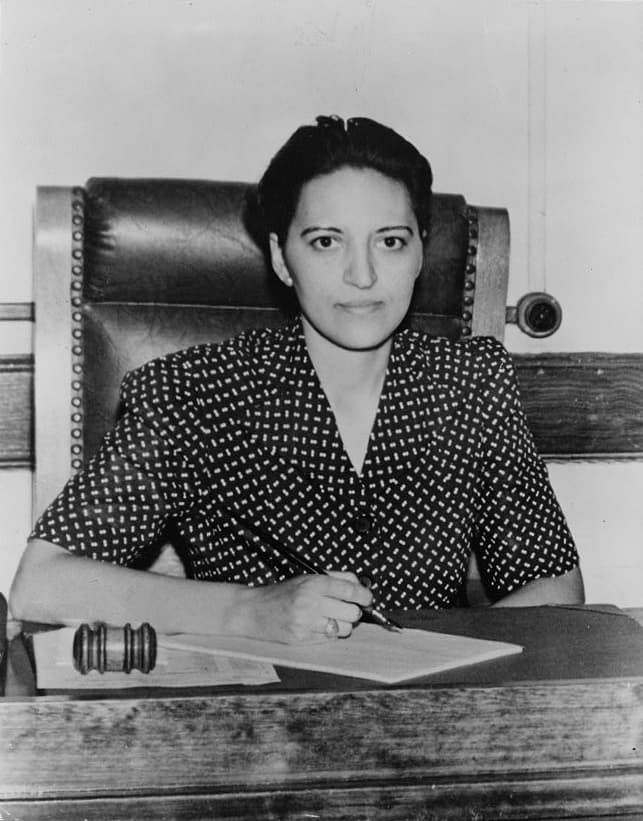
American · Law · Activism
Jane Bolin
April 11, 1908 – January 8, 2007
Early life and background
Jane Matilda Bolin was born on April 11, 1908, in Poughkeepsie, New York, into a prominent and politically active family. Her father, Gaius C. Bolin, was an influential lawyer, and her mother was a white British immigrant who passed away when Bolin was a child. Encouraged by her father and through the influence of W.E.B. Du Bois and writings on the injustices faced by African Americans, Bolin pursued higher education. She graduated from Wellesley College in 1928 and was one of only two Black freshmen in her class. Bolin went on to become the first Black woman to graduate from Yale Law School in 1931.
Career beginnings and development
Bolin began her legal career in New York City, initially working in her father’s practice before moving to the New York City Law Department. Her career trajectory changed dramatically on July 22, 1939, when Mayor Fiorello LaGuardia appointed her as a judge of the New York City Domestic Relations Court, marking her as the first Black female judge in the United States.
Major works, discoveries, or accomplishments
During her 40-year tenure, Bolin diligently worked to ensure just treatment for all who came through her court, particularly minorities and children. She implemented changes such as assigning probation officers without regard for race or religion and worked passionately to ensure that publicly funded childcare agencies accepted children regardless of their ethnic background. Bolin also reviewed adoption cases and advocated for racially integrated child services. Her groundbreaking appointment in 1939 was a significant achievement that opened doors for both women and people of color in the judiciary.
Awards, honors, and recognition received
Although she did not receive many of the high-profile awards common today, Bolin's pioneering work was recognized posthumously. Her legacy is honored by institutions such as the Jane Matilda Bolin Monuments in Wellesley College and her featured story in educational programs about prominent Black figures in American history.
Personal life
In 1933, Bolin married attorney Ralph E. Mizelle, with whom she had a son, Yorke Bolin Mizelle. After Ralph's passing in 1943, she dedicated herself further to her work and raising her son as a single parent. She later remarried, to Walter P. Offutt Jr.
Legacy and historical impact
Jane Bolin's career paved the way for future generations of minority judges and women in the legal profession. Her focus on civil rights and justice for neglected children and underserved communities gained her a respected place in history. Often, despite the social and racial challenges of her time, Bolin's determination to right societal wrongs influenced the standard practices within the legal domain and beyond.
Later life and death
Jane Bolin retired from the bench in 1978 but remained active in public service and continued to demonstrate her commitment to community welfare. She passed away on January 8, 2007, leaving behind an enduring legacy of justice and equality.
Dated achievements
3 indexed.
- Apr111908Law
Birth of Jane Bolin
Jane Matilda Bolin was born on April 11, 1908, in Poughkeepsie, NY.
View details Jane Bolin - Wikipedia - Jul221939Law
Appointed first Black female judge in the US
Appointed on July 22, 1939, Bolin became the first Black woman judge in the U.S.
View details