← All women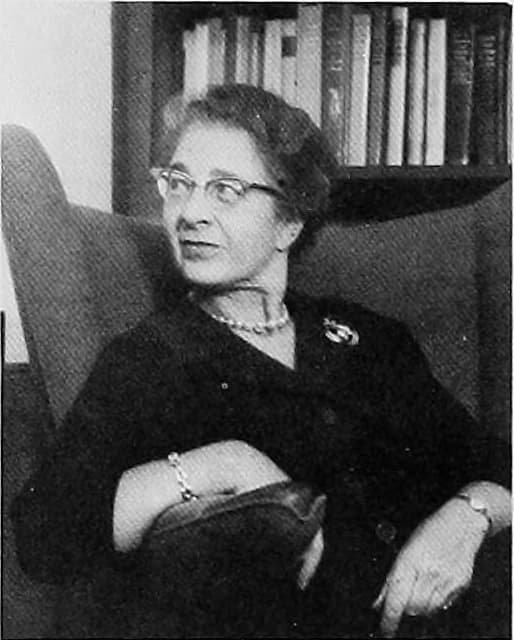
German, American · Medicine
Hilde Bruch
March 11, 1904 – December 15, 1984
Early Life and Background
Hilde Bruch was born on March 11, 1904, in Dülken, Germany. She grew up in a Jewish family within a small industrial town near the Rhine. Bruch was one of six children, and her early interest in science and medicine was fostered by an environment that valued education and intellectual pursuits.
She attended the University of Freiburg, where she received her medical degree in 1929. Given the political climate in Germany during the early 1930s, particularly the rise of the Nazis and increasing anti-Semitism, Bruch decided to emigrate to the United States in 1933.
Career Beginnings and Development
Upon arriving in the United States, Bruch initially faced challenges common to many immigrants, including language barriers and the need to re-establish her medical credentials. She began her American career at the Yale University School of Medicine, where she collaborated with renowned researcher Carl Jung.
Her early career focused largely on pediatrics and endocrinology, but her interest increasingly shifted to psychiatry, particularly in relation to children and adolescents. In 1941, she joined Columbia University as a faculty member and further developed her expertise in this area.
Major Works, Discoveries, or Accomplishments
Bruch is best known for her pioneering research into eating disorders, particularly anorexia nervosa. Her 1973 book, The Golden Cage: The Enigma of Anorexia Nervosa, is considered a seminal text in the field, helping to bring widespread attention to eating disorders and influencing both public and clinical perceptions.
In her research, Bruch was instrumental in shifting the understanding of these disorders from purely somatic to psychosocial issues, emphasizing the role of personal identity and family dynamics. Her work led to a broader acceptance that psychological treatment was crucial for individuals with eating disorders.
Awards, Honors, and Recognition
Throughout her distinguished career, Bruch received numerous awards for her contributions to psychiatry and medicine. Her insights and research not only redefined the treatment approaches to eating disorders but also left a lasting impact on the field of child psychiatry.
Personal Life
Bruch remained dedicated to her profession throughout her life, and little is documented about her personal relationships. She never married, and her work was her primary focus. Her dedication to understanding and improving mental health conditions was evident in her numerous publications and her care for patients.
Legacy and Historical Impact
Hilde Bruch's legacy is profound in the fields of psychiatry and eating disorder treatments. Her approaches and conclusions laid the groundwork for subsequent research paradigms and therapeutic practices in the treatment of such disorders, impacting generations of patients and clinicians.
In addition to her scientific contributions, Bruch served as an inspiration and role model for women in medicine, at a time when female leaders in the field were often underrepresented and underacknowledged.
Later Life and Death
Bruch continued her work until her later years, maintaining a position of influence through lectures, research, and mentorship. She passed away on December 15, 1984, in Houston, Texas, leaving behind a profound and enduring legacy in the medical community.
Dated achievements
1 indexed.