← All women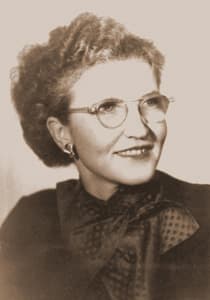
Estonian · Literature
Hilda Taba
December 7, 1902 – July 6, 1967
Early Life and Background
Hilda Taba was born on December 7, 1902, in Kooraste, Estonia. She pursued her early education in Estonia before moving to Tartu to attend Tartu University, where she earned a Bachelor of Arts degree. Taba's formative years were marked by a strong interest in education and social reform, likely influenced by her experiences in post-World War I Estonia, a nascent country seeking to establish itself.
Taba furthered her education in the United States, attending Bryn Mawr College, where she earned her Master’s degree, and later obtaining her Doctorate in Education at Columbia University under the mentorship of influential educators like William Heard Kilpatrick and John Dewey. These experiences shaped her educational philosophy, focusing on progressive education and democratic principles in learning environments.
Career Beginnings and Development
Hilda Taba's career began in the 1930s when she took on various roles in educational settings, including teaching and developing curriculums in the U.S. Her early work at the Dalton School in New York exposed her to curriculum experimentation, but it was at the University of Chicago where Taba emerged as a formidable voice in curriculum theory.
By the 1940s, Taba had relocated to Ohio State University, where she worked alongside Ralph Tyler, contributing to the Eight-Year Study, which sought to reform educational practices in American schools. Her role in this project allowed her to apply her theoretical knowledge in practical settings, significantly impacting how curricula were designed and assessed.
Major Works and Accomplishments
Taba is perhaps best known for her inductive approach to curriculum development, outlined in her works like "Curriculum Development: Theory and Practice" published in 1962. This approach emphasized the importance of teachers in curricular design and the necessity for curricula to be responsive to the needs of diverse students. Taba advocated for a method where ideas were generated from concrete experiences, aligning with the progressive educational movements of the time.
Taba's work was not limited to theory alone; she was actively involved in real-world applications, advising educational systems worldwide. Her influence extended to Africa and Asia, where she helped design curricula that were culturally relevant and adaptive to local educational needs.
Awards, Honors, and Recognition
Throughout her career, Taba's work attracted significant recognition. She was highly regarded by academic peers who acknowledged her as a leading figure in the progressive education movement. Although not often spotlighted with formal awards typical in modern academia, Taba's legacy is honored through continuous citations and the persistence of her pedagogical models in educational literature.
Personal Life
While Hilda Taba was intensely focused on her professional work, she led a private life with a few connections in the educational and academic community. Her personal correspondences reveal a dedicated scholar profoundly committed to her work over personal matters or family life.
Legacy and Historical Impact
Taba's approach to curriculum formation profoundly reshaped educational systems by promoting democratic ideals in education and emphasizing the role of the teacher as a designer of curricula. Her work laid the groundwork for future educational frameworks that prioritize student-centric learning and adaptability.
Her name endures in the field of educational theory, often referenced in discussions about effective curriculum development and innovative educational practices. Taba’s work continues to inspire educators aiming for reform and innovation in teaching methodologies.
Later Life and Death
After decades of service to education in various capacities, Taba settled to focus on her publications. She passed away on July 6, 1967, leaving behind a rich legacy. Though she gained less public attention during her lifetime as opposed to contemporaries, her scholarly contributions remain significant.
Dated achievements
2 indexed.
- Dec071902Literature
Birth of Hilda Taba
Hilda Taba was born in Kooraste, Estonia.
View details Hilda Taba - Wikipedia - Jul061967