← All women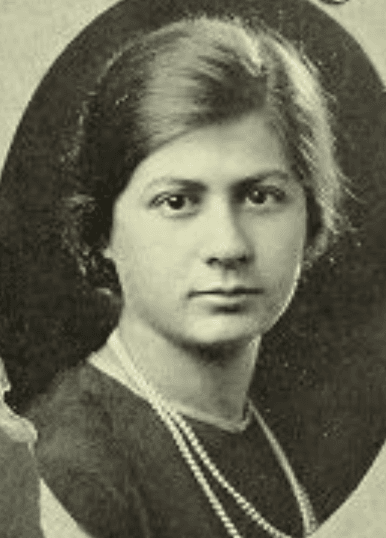
American · Science
Henrietta Hill Swope
October 26, 1902 – November 24, 1980
Early Life and Background
Henrietta Hill Swope was born on October 26, 1902, in St. Louis, Missouri, to Gerard Swope, an electrical engineer and president of General Electric, and Mary Dayton Hill. Her family was intellectually inclined, fostering a stimulating environment for her early education. Swope completed her undergraduate studies at Barnard College, where she developed an interest in astronomy. She continued her graduate studies at Radcliffe College and Harvard University under the mentorship of Harlow Shapley, director of the Harvard College Observatory.
Career Beginnings and Development
After completing her graduate studies, Swope began working at the Harvard College Observatory. During her early career, she focused on photometric studies of variable stars—stars that vary in brightness, which was a burgeoning field in observational astronomy at the time. Her precision and methodical observations allowed her to make significant contributions to the understanding of Cepheid variables, which are crucial for measuring astronomical distances.
Major Works and Discoveries
Swope's most important work was on the photometry of variable stars, especially those in the Magellanic Clouds, which are dwarf galaxies visible from the southern hemisphere. Her meticulous data collection over decades played a key role in calibrating the period-luminosity relationship of Cepheid variables—a fundamental tool for astronomers measuring cosmic distances. This work helped solidify Cepheid variables as a standard candle for measuring galactic and extragalactic distances.
Awards, Honors, and Recognition
In recognition of her outstanding contributions, Swope received several accolades from the astronomical community. Her work was widely published and respected, often cited in the greater astronomical discourse. Swope’s passion for astronomy and her pioneering work in stellar photometry earned her a lasting legacy in the field. While specific awards are not widely documented, her impact is evidenced by the continued reference to her work in cepheid research.
Personal Life
Henrietta Hill Swope did not marry and was known for her dedication to her work. She led a life centered around her scientific pursuits and was known for her camaraderie with colleagues at the observatory.
Legacy and Historical Impact
Swope’s primary legacy is her contribution to the development of stellar photometry as a reliable and respected field within astronomy. The data she provided helped validate and refine key astronomical concepts that are foundational to modern astrophysics. In honor of her contributions, the Las Campanas Observatory in Chile named the Swope Telescope after her—a testament to her lasting impact on astronomy.
Later Life and Death
Henrietta Hill Swope continued her scientific pursuits into her later years, working closely with the Carnegie Institution’s Mount Wilson and Las Campanas Observatories. She passed away on November 24, 1980, leaving behind a rich legacy of astronomical research.
Dated achievements
1 indexed.
- Oct261902Science
Birth of Henrietta Hill Swope
Henrietta Hill Swope was born on October 26, 1902, in St. Louis, Missouri.
View details Wikipedia