← All women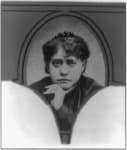
Russian · Literature · Activism
Helena Blavatsky
August 12, 1831 – May 8, 1891
Early Life and Background
Helena Petrovna Blavatsky was born on August 12, 1831, in Yekaterinoslav, in the Russian Empire, now Dnipro, Ukraine. Born into an aristocratic family, her father, Peter von Hahn, was a colonel in the Russian military, and her mother, Helena Andreevna von Hahn, was a noted novelist. Her early life was marked by her mother's death when Blavatsky was only eleven, leading to a childhood of exploration across her family's extensive estates. Blavatsky showed an early interest in the mystical and the esoteric, claiming to have vivid experiences of paranormal phenomena.
Career Beginnings and Development
In her teenage years, Blavatsky embarked on what would become a lifelong journey of travel and study across the globe. By her own accounts, she traveled extensively through Europe, the Americas, and India, eventually spending time in Tibet studying esoteric lore and spiritual disciplines. In 1875, she co-founded the Theosophical Society in New York City with Henry Steel Olcott and William Quan Judge, aiming to promote an underlying unity of all religious thought. Her teachings emphasized the exploration of spiritual realities through the synthesis of science, philosophy, and religion.
Major Works and Accomplishments
Blavatsky authored several influential texts, including "Isis Unveiled" (1877) and "The Secret Doctrine" (1888). These works drew on a vast array of sources from different spiritual traditions, synthesizing them into a new philosophy known as Theosophy, aimed at bridging science and religion. Her writings challenged conventional views of religion and science and opened new avenues for spiritual exploration, significantly influencing religious and spiritual thought.
Awards, Honors, and Recognition
Although Blavatsky did not receive formal accolades during her lifetime equivalent to modern honors, she was highly regarded by followers of the Theosophical movement and continues to be a significant figure in modern spiritual thought.
Personal Life
Blavatsky married Nikifor Blavatsky, a Russian military officer, at the age of 17, but the marriage was short-lived. Her personal life was marked by colorful stories and controversy, partly due to the enigmatic nature of her claims and teachings. She had no children and maintained a lifestyle that defied convention.
Legacy and Historical Impact
Blavatsky's legacy lies in her pioneering role in the development of the modern theosophical movement, which inspired figures like Rudolf Steiner and influenced the New Age movement later in the 20th century. Her work predicated a broader dialogue between Eastern and Western spiritual traditions and influenced a wide range of thinkers, including Mohandas Gandhi and W. B. Yeats.
Later Life and Death
Despite suffering from ill health in her later years, Blavatsky remained active in theosophical circles until her death on May 8, 1891, in London, England. Her passing marked a decline in a singular visionary life yet subsequently catalyzed an international growth in theosophical societies and spiritual exploration.
Dated achievements
2 indexed.
- Aug121831Activism
Birth of Helena Blavatsky
Helena Blavatsky was born on August 12, 1831, in Yekaterinoslav, Russia.
View details Helena Blavatsky | Russian spiritualist | Britannica. - May081891Literature
Death of Helena Blavatsky
Helena Blavatsky died on May 8, 1891, in London, England.
View details