← All women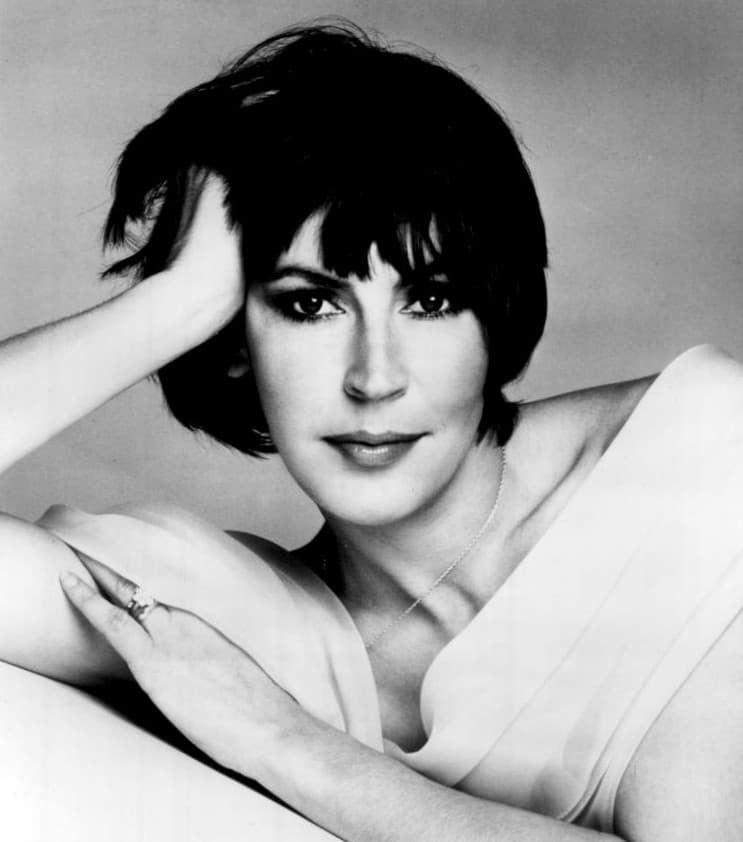
Australian, American · Arts · Activism
Helen Reddy
October 25, 1941 – September 29, 2020
Early Life and Background
Helen Maxine Lamond Reddy was born on 25 October 1941 in Melbourne, Victoria, Australia, into a longstanding show‑business family.[1][2][3] Her mother, Stella Lamond, was an actress, dancer and singer, and her father, Max Reddy, was an actor, writer and producer involved in vaudeville and theatre.[1][2][5] Growing up amid touring companies, dressing rooms and stage lights, Reddy was exposed to performance from infancy and absorbed the rhythms of professional entertainment as a normal way of life.
Her parents’ work often required travel through regional Australia, and Reddy spent significant periods on the road, living in boarding houses and backstage spaces rather than in a single, stable home.[3][8] She later recalled this unconventional upbringing as both precarious and formative, instilling resourcefulness and a strong work ethic. By around age four she was appearing on stage with her parents at the Tivoli Theatre in Perth, Western Australia, singing and participating in variety acts, though detailed documentation exists only for the year rather than the exact date.[3][5]
Reddy received a fragmented formal education, attending Catholic convent schools and other institutions as her family moved.[3][8] She contracted rheumatic fever as a child, which led to extended periods of convalescence; reading and radio during these months reinforced her connection to music and performance. Australia’s relatively small mid‑century entertainment industry offered limited paths to stardom, especially for women, but her parents’ networks gave her early access to training and casual employment in radio, stage and touring shows.[3]
As a teenager, Reddy worked in a variety of local performance contexts, including singing on radio and appearing in variety programs, while also taking non‑entertainment jobs to support herself and her young daughter after an early marriage and divorce.[3][8] This combination of artistic aspiration and economic necessity would shape the determination with which she later pursued broader opportunities abroad.
Career Beginnings and Move to the United States
In the early 1960s, Reddy married a musician in Perth and had a daughter, Traci, but the marriage soon ended, leaving her a single mother in her early twenties.[3][8] Seeking greater stability, she took clerical and factory work while continuing to sing in clubs and on Australian television. Her major domestic breakthrough came when she won a talent contest on the Australian TV music program Bandstand, which offered a trip to New York and an audition with a record company as a prize.[5][12]
In 1966 Reddy traveled to the United States with her young daughter, expecting professional support that failed to materialize when the promised recording contract was not honored.[5][8] Stranded with limited funds, she took various jobs, including singing in small clubs and working non‑musical positions, while struggling to secure representation in a competitive and male‑dominated industry.[3] During this period she met Jeff Wald, an American talent agent whom she married in 1966.[1][8] Wald became her manager and an important, if sometimes contentious, force in building her U.S. career.
After initial frustrations in New York, the couple relocated to Chicago and later to Los Angeles, where Wald’s contacts helped Reddy secure work in nightclubs and television appearances.[1][8] In 1968 she released her first single, a cover of the song “One Way Ticket”, on Fontana Records in Australia, gaining a modest chart presence there.[1][8] Although this early recording did not establish her internationally, it marked the beginning of her identity as a recording artist.
Reddy’s breakthrough in the United States came when she signed with Capitol Records around 1970.[1] Her first U.S. album, I Don’t Know How to Love Him, released in 1971, included the title track from the musical Jesus Christ Superstar and an early version of “I Am Woman.”[1][2] The album’s success on the strength of the title track— which entered the U.S. Top 20—brought her to wider public attention and set the stage for her defining work.
“I Am Woman” and International Breakthrough
The song that would define Helen Reddy’s career—and much of her historical legacy—emerged from her experiences as a woman navigating both domestic life and the entertainment industry in a time of rapid social change. Dissatisfied with the limited, often stereotypical roles available to women in popular music, she co‑wrote “I Am Woman” with Australian musician Ray Burton.[1][8][11] A first, more subdued version appeared on her 1971 debut album, but Capitol initially showed little interest in promoting it.
The turning point came when the producers of the 1972 film Stand Up and Be Counted, a comedy‑drama about women’s liberation, sought a suitable theme song. Reddy re‑recorded “I Am Woman” with a punchier arrangement and stronger rhythm section, tailored for radio play and film placement.[1][14] Released as a single in 1972, the song climbed the charts slowly, fell off, and then re‑entered as growing numbers of women requested it from radio stations and adopted it as a rallying anthem at demonstrations and consciousness‑raising gatherings.[1][16]
On 9 December 1972, “I Am Woman” reached No. 1 on the Billboard Hot 100, making Reddy the first Australian‑born pop singer to top the U.S. singles chart.[1][2] Its refrain—“I am woman, hear me roar, in numbers too big to ignore”—became one of the best‑known slogans of second‑wave feminism. The song sold over a million copies in the United States alone and resonated internationally as an assertion of women’s strength and solidarity.[1][14][16]
At the 15th Annual Grammy Awards on 2 March 1973, Reddy won the Grammy Award for Best Female Pop Vocal Performance for “I Am Woman.”[2] In a widely discussed acceptance speech, she thanked “God, because She makes everything possible,” a deliberately feminist rephrasing that sparked both praise and backlash.[1][14] The victory established her as the first Australian‑born pop singer to receive a Grammy and further cemented the association between her music and women’s liberation.[2][12]
Chart Dominance in the 1970s
Following the success of “I Am Woman,” Reddy enjoyed a remarkable run of hit singles and albums throughout the 1970s. Her 1973 rendition of “Delta Dawn”, previously recorded in country circles, became one of her best‑known performances. It reached No. 1 on the Billboard Hot 100 and, on 29 December 1973, topped the Billboard Adult Contemporary (Easy Listening) chart as well.[1][4] The recording showcased her ability to reinterpret narrative songs with clarity and emotional impact, attracting both pop and country audiences.
Reddy’s output during these years revealed both thematic continuity and stylistic range. She followed “Delta Dawn” with hits such as “Leave Me Alone (Ruby Red Dress),” which addressed trauma and social marginalization through the story of a woman dismissed as mad, and “You and Me Against the World,” a ballad of devotion often interpreted in a maternal context.
On 26 January 1974, her single “Keep on Singing” entered the Billboard Hot 100; it later rose to No. 1 on the Adult Contemporary chart, underscoring her strength in that format.[1] On 15 June 1974, “You and Me Against the World” likewise reached No. 1 on the Adult Contemporary chart, giving her two AC chart‑toppers that year.[1] These successes helped define the sound of 1970s adult contemporary radio, a format that particularly targeted adult women listeners.
Another major milestone was the single “Angie Baby”, written by Alan O’Day. The song’s enigmatic lyrics about a withdrawn girl with an intense inner life and a sinister twist at the end marked a shift toward more surreal storytelling. It entered the Billboard Hot 100 on 21 September 1974 and climbed steadily.[1][4] On 28 December 1974, it reached No. 1 on the Hot 100, becoming Reddy’s third U.S. chart‑topping single.[1][4]
The Australian Women’s Register notes that Reddy was the first Australian artist to achieve three No. 1 hits within this period, and she became one of the most commercially successful female singers worldwide in the mid‑1970s.[12][13] Between 1972 and 1976 she placed multiple singles in the U.S. Top 10 and accumulated six No. 1 hits on the Adult Contemporary chart.[1][14] Her albums—among them Long Hard Climb (1973), Love Song for Jeffrey (1974), and No Way to Treat a Lady (1975)—sold strongly and consolidated her international profile.
Awards, Honors, and Recognition
Reddy’s chart achievements were matched by industry recognition. Having already secured the Grammy for “I Am Woman,” she received further validation at the American Music Awards. On 20 January 1975, she won the award for Favorite Pop/Rock Female Artist, making her the first Australian artist to win this category.[12] The fan‑voted honor underscored her popularity among general audiences, not just critics or activists.
Across her career, Reddy sold an estimated 15–25 million records worldwide, including around 15 million albums and 10 million singles, according to various music industry sources.[1][10][13] She earned a star on the Hollywood Walk of Fame and was frequently billed as the “Queen of 1970s Pop,” reflecting the extent of her commercial reach.[6][13] In 2009, the National Film and Sound Archive of Australia added “I Am Woman” to its Sounds of Australia registry, recognizing the recording’s cultural, historical and aesthetic significance.[12]
While specific award dates for some honors are not consistently documented, Reddy’s broader recognition includes television specials, headlining concert tours, and numerous international chart certifications. She also appeared as a host and performer on U.S. television, including her own variety series, The Helen Reddy Show, further increasing her visibility during the 1970s.[1]
Acting, Television, and Other Creative Pursuits
Parallel to her recording career, Reddy pursued acting and television work. She appeared in the Walt Disney film Pete’s Dragon (1977), in which she played Nora and performed songs that showcased her vocal warmth in a family‑film context.[1][6] She also made guest appearances on television dramas and variety programs, capitalizing on her mainstream popularity.
Reddy later acted on stage, including in musical theatre productions in the United States and the United Kingdom. Though these roles did not eclipse her fame as a recording artist, they demonstrated her versatility and helped sustain a performance career after the peak of her chart success.
In addition to performance, Reddy wrote an autobiography, The Woman I Am, published in the early 2000s, in which she reflected on her childhood, marriages, career high points, financial and health struggles, and spiritual explorations. The memoir provided a primary‑source account used by later biographers and scholars examining her life and the broader history of women in 1970s popular music.[3][8]
Personal Life
Reddy’s personal life was characterized by both intense public scrutiny and private challenges. Her first marriage in Australia produced a daughter, Traci, but ended in divorce before she emigrated to the United States.[3][8] In 1966 she married American talent agent Jeff Wald, who became her manager and played a central role in building her recording and touring career.[1][8] The marriage was often turbulent, shaped by the pressures of fame, substance abuse issues on Wald’s part (discussed in later accounts), and the complex dynamics of mixing business with family life. The couple had a son, Jordan, and divorced in the early 1980s.[1][8]
Reddy married actor and drummer Milton Ruth in 1983; this marriage also ended in divorce in the 1990s.[1][8] During these years she continued to work, but the pace of her recording slowed as musical fashions shifted toward disco, punk, and later new wave and contemporary pop, leaving less space for her brand of adult contemporary music on mainstream charts.
Spiritually, Reddy explored multiple traditions, including Christianity, New Thought and, later, metaphysical beliefs. She was associated for a time with a self‑help and spiritual organization in California, reflecting a broader 1970s turn toward alternative spirituality among entertainers and activists.[3]
Later Career, Semi-Retirement, and Return to Australia
By the 1980s, Reddy’s chart presence had diminished, reflecting broader changes in musical taste rather than a sudden decline in artistry. She continued to record and tour, releasing albums that appealed to loyal fans but attracted less mainstream radio play.[1][11] She also increased her focus on acting, voice‑over work and live performances in theatre and cabaret settings.
In the late 1990s and early 2000s, Reddy gradually withdrew from full‑time performing. She moved back to Australia, settling in Sydney and stepping away from the high‑profile entertainment circuit.[1][11] Reports indicated that she undertook studies in clinical hypnotherapy and worked as a motivational speaker and therapist, applying her interest in psychology and spirituality to new forms of work.[3]
Despite this semi‑retirement, Reddy occasionally returned to the stage for special events and nostalgic concerts, especially as renewed interest in 1970s music brought her an intergenerational audience. A compilation of her hits and reissues of her classic albums introduced her catalog to younger listeners, while “I Am Woman” remained a staple at feminist gatherings, political rallies and pride events.
Legacy and Historical Impact
Helen Reddy holds a distinctive place in both music history and women’s history. As an Australian‑born woman who became a dominant force in the U.S. charts, she helped redefine the possibilities for artists from smaller national industries seeking success in the global marketplace.[2][12] Her achievements paved the way for later Australian stars across genres, from pop to rock to country.
Equally significant is her role in articulating the aspirations of second‑wave feminism through popular music. “I Am Woman” distilled complex ideas about autonomy, resilience and collective power into accessible lyrics and a memorable melody. It provided a usable cultural resource for activists and ordinary women, who sang it at marches, in consciousness‑raising groups, and in domestic spaces.[1][14][16] The song has been referenced in countless media portrayals of the 1970s, from documentaries to dramatizations, and has been covered and quoted across genres.
Reddy’s broader repertoire also contributed to evolving representations of women in popular song. Tracks such as “No Way to Treat a Lady,” “Leave Me Alone (Ruby Red Dress),” and “Ain’t No Way to Treat a Lady” (often cited with slight title variations) addressed themes of emotional abuse, boundaries and self‑respect.[1][11] These songs provided narratives in which women asserted their right to dignity and autonomy, complementing the more overtly political message of “I Am Woman.”
Scholars and critics have examined Reddy’s work as an example of how mainstream pop can intersect with social movements. Her success challenged the notion that politically engaged music had to be marginal or genre‑specific, demonstrating that messages about gender equality could infiltrate the very heart of commercial culture. At the same time, debates over the perceived simplicity or essentialism of “I Am Woman” have kept her work in critical conversation, highlighting tensions within feminism about representation and mass culture.
Within Australia, Reddy is celebrated as one of the country’s earliest international pop superstars. The Australian Women’s Register emphasizes that she was the first Australian to win a Grammy, the first to win the American Music Award for Favorite Pop/Rock Female Artist, and the first to secure three No. 1 hits in the same broad period, achievements that have become points of national pride.[12]
Later Life, Illness, and Death
In her later years, Reddy divided her time between Australia and the United States and maintained a relatively private life compared with the intense visibility of her 1970s fame. She experienced financial ups and downs, as well as health challenges including Addison’s disease and, eventually, dementia.[2][9][16] Despite these difficulties, she retained strong ties with family and close friends and continued to be honored in retrospectives of 1970s music and women’s history.
Reddy died on 29 September 2020 at a care facility in Los Angeles, California, at the age of 78.[2][9][16] Her family announced her passing in a statement that emphasized her iconic status and the inspiration she had offered to women around the world. Obituaries and appreciations appeared globally, with The Guardian and NPR among the many outlets highlighting how “I Am Woman” had become the defining anthem of feminism’s second wave and how no other female artist of the 1970s had matched her run of Adult Contemporary No. 1s.[14][16]
The day after her death was reported, on 30 September 2020, tributes proliferated on social media and in news commentary, as musicians, activists and fans recalled the personal and political importance of her songs.[14][16] The renewed attention sparked streaming surges of her catalog and inspired new interpretations of her life, including biographical films and documentaries that explored her journey from Australian vaudeville child performer to international feminist icon.[1]
Today, Reddy’s legacy endures in the continued use of “I Am Woman” at marches and rallies, in the scholarship that situates her within feminist and music histories, and in the careers of artists who cite her as a pioneer. Her story illustrates how a determined woman from a distant entertainment market could, through talent, timing and conviction, help give voice to a global movement for equality.
Dated achievements
11 indexed.
- Oct251941Science
Birth of Helen Reddy in Melbourne, Australia
Helen Maxine Reddy was born in Melbourne, Victoria, Australia, to show-business parents Stella Lamond and Max Reddy.
View details Britannica: Helen Reddy - Dec091972Science
"I Am Woman" reaches No. 1 on Billboard Hot 100
Reddy's feminist anthem hit No. 1 on the US Billboard Hot 100, making her the first Australian-born pop singer to top the American chart.