← All women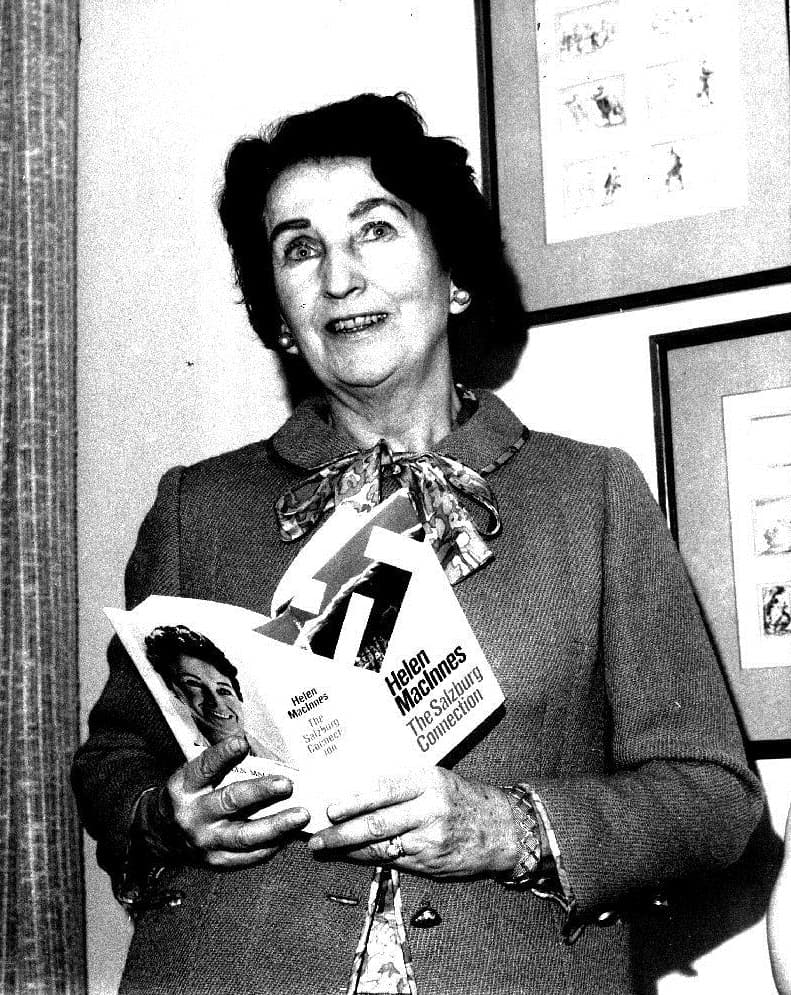
Scottish, American · Literature
Helen MacInnes
October 7, 1907 – September 30, 1985
Early Life and Background
Helen MacInnes was born on October 7, 1907, in Glasgow, Scotland. She was the daughter of Donald MacInnes, a commercial traveler, and Jessica MacDiarmid, who were staunch Scots with a keen interest in literature and politics. Helen's early life was shaped by her Scottish heritage and the cultural milieu of Glasgow, which encouraged learning and intellectual pursuits.
Her education began at Hutchesons' Grammar School in Glasgow, where she excelled in languages. Later, she attended the University of Glasgow, earning a degree in French and German in 1928. Her profound interest in languages not only sharpened her communication skills but also laid a foundation for her future career as a writer. Following her graduation, she pursued further studies at University College London, where she met her future husband, Gilbert Highet, a distinguished classicist.
Career Beginnings and Development
After her marriage to Gilbert Highet in 1932, the couple moved to the United States in 1937, where Highet took a position at Columbia University. It was during this time that Helen MacInnes began to channel her linguistic prowess and observational skills into writing. Her debut novel, "Above Suspicion," was published in 1941, inspired by political events unfolding across Europe, which she closely followed due to her background in languages and extensive travels on the continent.
"Above Suspicion" marked the beginning of her career as a renowned author of espionage novels. The success of her first work established her as a gifted storyteller with the ability to weave intricate plots involving espionage, suspense, and geopolitics against the backdrop of World War II.
Major Works, Discoveries, or Accomplishments
Over the course of her career, Helen MacInnes authored twenty-one novels. Her books cover the turbulent years of World War II and extend into the Cold War era, cementing her reputation as "the queen of spy writers." Some of her notable works include "Assignment in Brittany" (1942), "The Venetian Affair" (1963), and "The Salzburg Connection" (1968). These novels are celebrated for their realistic portrayal of espionage and the intricacies of international politics.
MacInnes' books were frequently adapted for film and television, contributing to their widespread popularity. Her uncanny ability to predict political shifts and her insightful exploration of the human elements behind espionage made her works timeless and significant in understanding the subtle dynamics of the Cold War.
Awards, Honors, and Recognition
Helen MacInnes received several accolades during her lifetime for her contributions to literature, although she remained modest about her achievements. Her works often appeared on bestseller lists and were translated into multiple languages, allowing her to reach a global audience. Despite lacking formal literary awards, the sustained popularity and critical acclaim of her novels served as a testament to her skill and influence in the literary world.
Personal Life
Helen's marriage to Gilbert Highet was a cornerstone of her life. Highet, an academic at Columbia University, contributed to Helen's deep understanding of classical literature and the interconnectedness of cultural and political spheres. The couple had a son, Keith, and together they navigated the challenges of blending British and American cultural experiences
Legacy and Historical Impact
Helen MacInnes' legacy lies in her ability to blend meticulous research with captivating fiction, bringing the art of espionage to a broad readership. Her novels did more than entertain; they educated and sensitized readers to the complexities of international politics and the subtle machinations of espionage. Her work continues to be referenced in discussions about literary depictions of espionage and remains a staple in the genre of spy fiction.
Her writing influenced a generation of readers and writers alike, drawing attention to the genre and paving the way for future authors to explore similar themes.
Later Life and Death
Helen MacInnes continued to write until her health began to decline. She spent her later years in New York City, where she passed away on September 30, 1985, at the age of 77. Her influence endures through her books and the continued interest in the political intricacies they explored.
Dated achievements
2 indexed.
- Oct071907Literature
Helen MacInnes is born
Helen MacInnes, later known as a prominent espionage novelist, is born in Glasgow, Scotland.
View details Britannica: Helen Clark MacInnes Biography - Sep301985Literature
Death of Helen MacInnes
Renowned author Helen MacInnes passes away in New York City on September 30, 1985.