← All women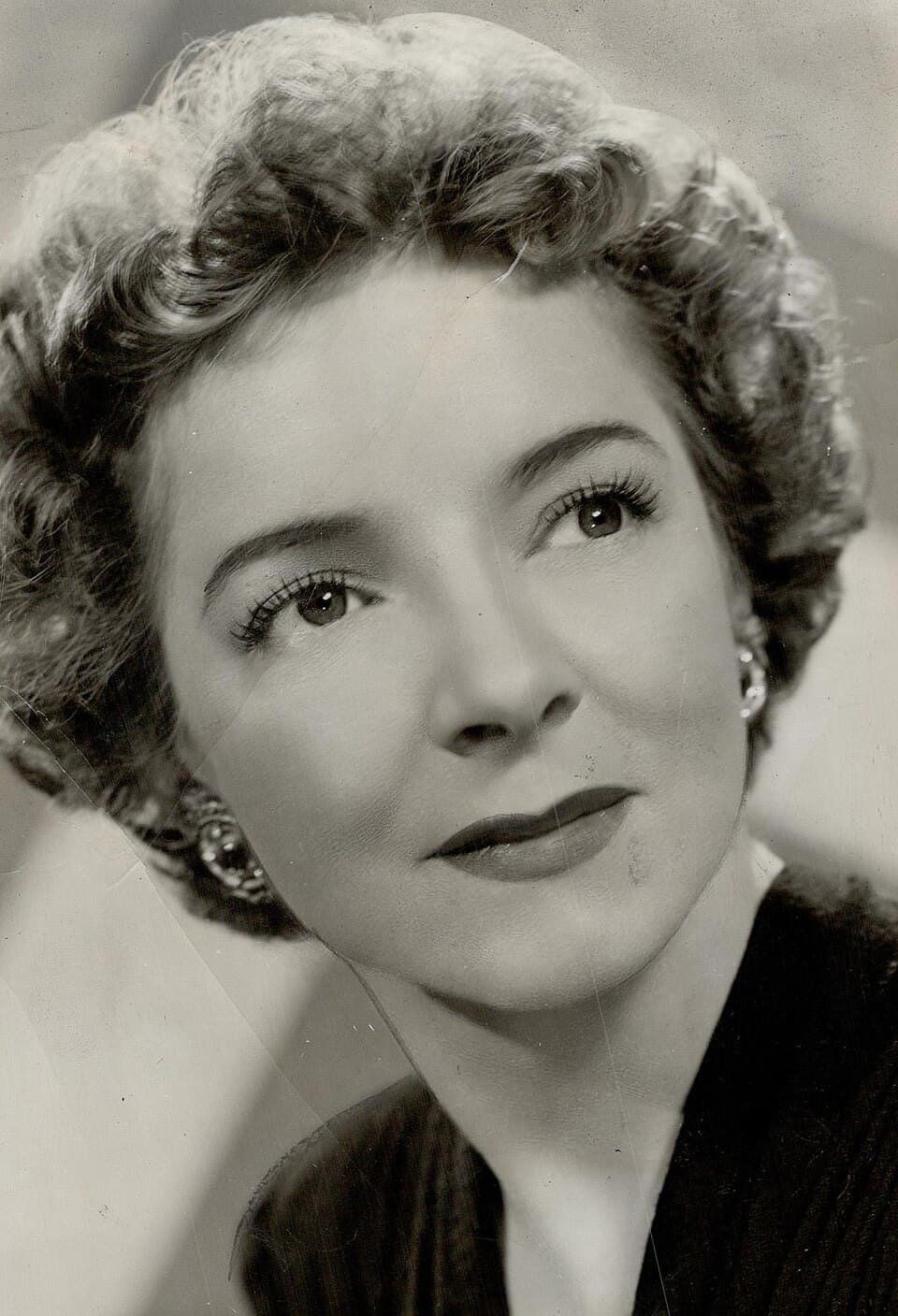
American · Arts
Helen Hayes
October 10, 1900 – March 17, 1993
Early Life and Background
Helen Hayes Brown was born on October 10, 1900, in Washington, D.C., United States.[1][3][7][10] Her father, Francis van Arnum Brown, worked as a government clerk, while her mother, Catherine Estelle Hayes Brown, was a stage‑struck woman who gave drama lessons and acted, deeply influencing her daughter’s path.[2][14] Through her mother’s ambitions and connections, Hayes was introduced to theatrical life almost from infancy.
Hayes grew up in a Catholic environment and attended local parochial schools, ultimately graduating from Sacred Heart Academy in Washington in 1917.[14] She performed in school theatricals and in productions at nearby institutions such as Holy Cross Academy, where she played Peaseblossom in A Midsummer Night’s Dream in 1905, one of her earliest recorded roles.[14] Her maternal grandparents were Irish immigrants who had come to the United States during the potato famine, adding an immigrant heritage to her American upbringing.[15]
Her mother strongly encouraged her to perform, arranging auditions with touring companies and local troupes. Hayes later recalled that this early immersion in theatre, combined with a disciplined Catholic education, instilled both a love of performance and a sense of professionalism that shaped her long career.[4][14]
Career Beginnings and Development
Hayes’s professional stage career began remarkably early. Around 1909 she stepped onto the professional stage in Washington with the Columbia Players, marking the start of her paid work as an actress.[8][14] Later that year she made her Broadway debut in the musical comedy Old Dutch at about nine years of age.[8][14] She quickly became a familiar figure on the New York stage in juvenile roles.
By 1910, Hayes had appeared in early motion pictures, including the short Jean and the Calico Doll (also cited as Jean and the Calico Cat), making her one of the children involved in New York’s fledgling film production.[14] In 1917 she appeared in her first Broadway drama, The Prodigal Husband, produced by Charles Frohman, which toured nationally after its New York run and expanded her reputation beyond the city.[14]
During the 1920s Hayes’s career accelerated. In 1920 she starred in the comedy Bab, and publicity touted her as the youngest actress with her name in lights on Broadway, signalling her transition from child performer to adult star.[3][9] She appeared in a series of plays that showcased her light comedic touch and gradually moved into more substantial dramatic work.
A major breakthrough came with the 1927 Broadway production of Coquette, a tragedy in which she played a young woman destroyed by social convention.[8][14] The role demonstrated her ability to convey deep emotion and serious themes, and it helped establish her as a leading dramatic actress. In 1928 she married playwright and journalist Charles MacArthur, with whom she would collaborate artistically and raise a family.[7][14]
Transition to Film and Major Screen Roles
Although Hayes preferred the stage, she also made a decisive impact in film. In 1931 she went to Hollywood and starred in the talking picture The Sin of Madelon Claudet, written in part by her husband Charles MacArthur.[3][5][14] Her portrayal of a French woman whose life is shaped by sacrifice and injustice earned Hayes wide acclaim and an Academy Award for Best Actress at the 5th Academy Awards on November 16, 1932.[3][7]
This Oscar win made her the first major stage actress to receive an Academy Award, bridging the worlds of Broadway and Hollywood and encouraging other theatre performers to embrace film.[14] Despite this success, Hayes continued to prioritize stage work, carefully selecting screen roles.
Throughout the 1930s she appeared in films such as What Every Woman Knows (1934) and Arrowsmith (1931), often playing intelligent, sympathetic women. However, she remained based in New York and maintained a firm commitment to live theatre, commuting or temporarily relocating to California only for specific projects.[3][14]
Dominance on the Stage: Mary of Scotland and Victoria Regina
Hayes’s reputation as the “First Lady of the American Theatre” was cemented by a series of major stage roles in the 1930s.[3][4] In 1933 she opened in Mary of Scotland, playing Mary, Queen of Scots in a role that became legendary for its emotional intensity and regal bearing.[5][14] The production confirmed her status as the premier interpreter of historical heroines on the American stage.
In 1935 she took on the title role in Laurence Housman’s Victoria Regina, portraying Queen Victoria across different stages of her reign.[7][14] The play, often regarded as Hayes’s theatrical masterpiece, allowed her to display extraordinary range, aging convincingly onstage and giving depth to a monarch who had often been depicted only as a symbol. The performance’s critical and popular success reinforced her standing as the era’s leading dramatic actress.
These roles, combined with her earlier work, made Hayes synonymous with high‑quality Broadway drama. Her ability to humanize historical figures and give them psychological complexity influenced subsequent treatments of royal and political characters in theatre and film.[4][10]
Postwar Broadway and the Tony Awards
After World War II, Hayes continued to dominate Broadway. On April 6, 1947, at the inaugural Tony Awards, she won the very first Tony Award for Best Actress in a Play for her performance in Happy Birthday.[1][8][14] This made her the first actress ever to receive a Tony Award, and effectively aligned the new awards with her standard of theatrical excellence.
Hayes remained active in a variety of plays through the 1950s. On April 13, 1958, she received a second Tony Award for Best Actress, this time for Time Remembered, a romantic fantasy by Jean Anouilh.[1][7] The award demonstrated her continued relevance in a changing theatrical landscape and her ability to bring nuance to modern European drama.
Her Broadway work during these years encompassed both serious drama and sophisticated comedy, and she was frequently cited by critics as a benchmark for technical precision and emotional truth in acting. Her performances helped shape audience expectations for leading roles and influenced the training of younger actors.[4][10]
Television, Radio, and Recording Work
Hayes was also a pioneer in adapting stage techniques to new media. She appeared on radio dramas and in early television productions, bringing theatrical quality to home audiences.[4][10] In the 1950s she earned recognition for her television work, including an Emmy Award in 1953 for Best Actress, reflecting the growing importance of television as an artistic medium.[7][10]
Her work in recording further diversified her career. In 1979, she received the Grammy Award for Best Spoken Word Recording for Great American Documents, an audio collection in which she narrated important texts from U.S. history.[6][7] This award, officially presented at the Grammys ceremony on January 28, 1979, acknowledged the expressive power of her voice and the theatrical skill she brought to nonfiction material.
Through radio, television, and recordings, Hayes reached audiences far beyond the theatre district. These media allowed her to contribute to educational and cultural programming, reinforcing her role as a national cultural figure rather than only a Broadway star.[4][10]
Airport, Oscars, and Screen Farewell
Hayes returned to high‑profile film work in the late 1960s. In 1970 she played the comic role of Ada Quonsett, an elderly stowaway, in the disaster film Airport. Her performance, combining humor with sharp timing, delighted audiences and critics.[1][7][10]
At the 42nd Academy Awards on April 7, 1970, she received the Oscar for Best Supporting Actress for this role.[1][7] With this second Oscar, Hayes became the first person to win Academy Awards in both Best Actress and Best Supporting Actress categories, illustrating her range across leading and character roles.
Her final film appearance came with the 1977 Disney production Candleshoe, released on December 16, 1977, in which she played the aristocratic Lady St. Edmund.[7] The film marked the close of a screen career that had begun with silent‑era shorts and matured through the classic studio period.
Awards, Honors, and EGOT Status
Helen Hayes’s list of major awards is unusually extensive. She won two Academy Awards (Best Actress, 1932; Best Supporting Actress, 1970), two Tony Awards for Best Actress (1947 and 1958), a Special Tony Award for Lifetime Achievement in 1976, multiple Emmy Awards beginning in the 1950s, and a Grammy Award for Best Spoken Word Recording in 1979.[1][6][7][10][14]
In doing so, she became, according to biographical and institutional sources, the first woman to receive the full EGOT combination of Emmy, Grammy, Oscar, and Tony Awards, and among the earliest performers overall to achieve this distinction.[1][6][16] She is also credited as the first person to win the so‑called “Triple Crown of Acting”—Oscars in two acting categories, plus major theatre and television honors.[1][11]
Beyond industry awards, Hayes received high national honors. In 1981 she was a Kennedy Center Honors recipient, recognized for her lifetime contributions to American culture through the performing arts.[7][2] In 1986 President Ronald Reagan presented her with the Presidential Medal of Freedom, the United States’ highest civilian award, citing her extraordinary impact on theatre and film.[1][7][13] In 1988 she received the National Medal of Arts, further affirming her central place in the nation’s cultural history.[1][4][14]
On January 25, 1981, she won a Primetime Emmy Award for Outstanding Lead Actress in a Limited Series or a Special for A Story to Be Told, contributing to her EGOT status.[6] These honors collectively positioned Helen Hayes as one of the most decorated performers in 20th‑century American entertainment.
Broadway Theatres and Institutional Commemoration
Hayes’s legacy is uniquely inscribed in Broadway’s physical landscape. On November 17, 1969, the historic Fulton Theatre was rededicated as the Helen Hayes Theatre, making her the first woman to have a Broadway theatre named after her.[11] The dedication acknowledged her decades of influence on the American stage.
On June 9, 1986, a second venue, the Little Theatre, was officially renamed the Helen Hayes Theatre.[11] With this second dedication, Hayes became the first woman to have two successive Broadway theatres bear her name, an unprecedented honor for an actress. The dual naming symbolized both her enduring impact and the theatre community’s desire to commemorate her in a lasting, public way.
These theatres function as living memorials, hosting new generations of plays and performances while carrying Hayes’s name on their marquees. They demonstrate how individual women’s contributions can be embedded in cultural institutions, not only through awards but also through the physical spaces in which art is created.[11][8]
Personal Life
In 1928 Hayes married Charles MacArthur, a prominent playwright and journalist known for co‑writing The Front Page.[7][14] Their partnership combined the worlds of journalism, playwriting, and acting. MacArthur wrote or adapted several works in which Hayes appeared, including The Sin of Madelon Claudet, strengthening the artistic collaboration between them.[3][14]
The couple had a daughter, Mary MacArthur, born in 1930, who was groomed for a stage career but tragically died of polio in 1949.[14] They later adopted a son, James MacArthur, who became a successful actor, notably in television series such as Hawaii Five‑O.[14] Hayes was deeply affected by Mary’s death, and her grief informed her later philanthropic work, including support for children’s health causes and hospitals.
Hayes and MacArthur lived for many years in Nyack, New York, in a house that became a gathering place for literary and theatrical figures.[9][14] MacArthur died in 1956, and Hayes continued to reside in Nyack, balancing her professional commitments with community engagement. She was active in local efforts concerning environmental preservation of the Hudson River Valley and support for regional arts institutions.[4][14]
Later Life, Retirement, and Death
Hayes officially retired from the stage in 1971, citing asthma and allergies aggravated by theatre dust as major reasons.[14] Nevertheless, she continued to work intermittently in film and television for roughly two more decades, appearing in projects that allowed her to bring her seasoned presence to new audiences.
During her later years she wrote several memoirs, reflecting on her career, family, and the evolution of American theatre. She also became increasingly involved in philanthropic and institutional efforts, including advocacy for hospitals and participation in arts organizations. Her contributions were recognized by induction into the National Women’s Hall of Fame on September 15, 1986, which honored her as a woman whose achievements significantly shaped American culture.[11]
Helen Hayes died on March 17, 1993, at her home in Nyack, New York, at age 92.[1][3][5][10] Her death marked the end of an extraordinarily long and varied career. Tributes emphasized not only her artistic accomplishments but also her generosity, professionalism, and role as a mentor and inspiration to other performers.
Legacy and Historical Impact
Helen Hayes is widely remembered as the “First Lady of the American Theatre”, a title reflecting both her artistic stature and her symbolic role in the cultural imagination.[1][3][4][16] Her career illustrates the possibilities available to women who combined early exposure, rigorous discipline, and strategic choices across multiple media.
Historically, Hayes’s achievements are notable for several barrier‑breaking "firsts": she was the first major stage actress to win an Academy Award; the first actress to receive a Tony Award; the first person to win Oscars in both Best Actress and Best Supporting Actress categories; and the first woman to have two successive Broadway theatres named in her honor.[1][7][11][14] She was also one of the earliest performers—and the first woman—credited with attaining EGOT status.[1][6][16]
Her performances in plays like Coquette, Mary of Scotland, and Victoria Regina helped redefine the portrayal of historical and tragic female figures on the American stage. By giving psychological depth and emotional complexity to queens and heroines, she challenged simplistic representations and demonstrated that women’s stories could bear the weight of serious drama.[4][10]
At the institutional level, Hayes’s honors—including the Presidential Medal of Freedom, National Medal of Arts, Kennedy Center Honors, multiple industry awards, and induction into the National Women’s Hall of Fame—underscore her role in shaping U.S. cultural history.[1][2][4][7][11][13] Her name on Broadway theatres and in major award rolls ensures that her legacy is embedded in both physical and symbolic structures of the performing arts.
For women’s history, Helen Hayes stands as a key figure who expanded the possibilities for actresses and demonstrated that women could not only star on stage and screen but also be recognized as architects of national culture. Her life story reflects broader themes in 20th‑century American history: the rise of mass media, the professionalization of entertainment, and the gradual institutional recognition of women’s contributions to the arts.
Dated achievements
14 indexed.
- Oct101900Science
Birth of Helen Hayes
Helen Hayes Brown was born in Washington, D.C., later becoming known as the "First Lady of the American Theatre."
View details Helen Hayes | Britannica - Nov161932Science
First major stage actress to win the Academy Award for Best Actress
Hayes won the Best Actress Oscar for The Sin of Madelon Claudet, becoming the first major stage actress honored with an Academy Award.