← All women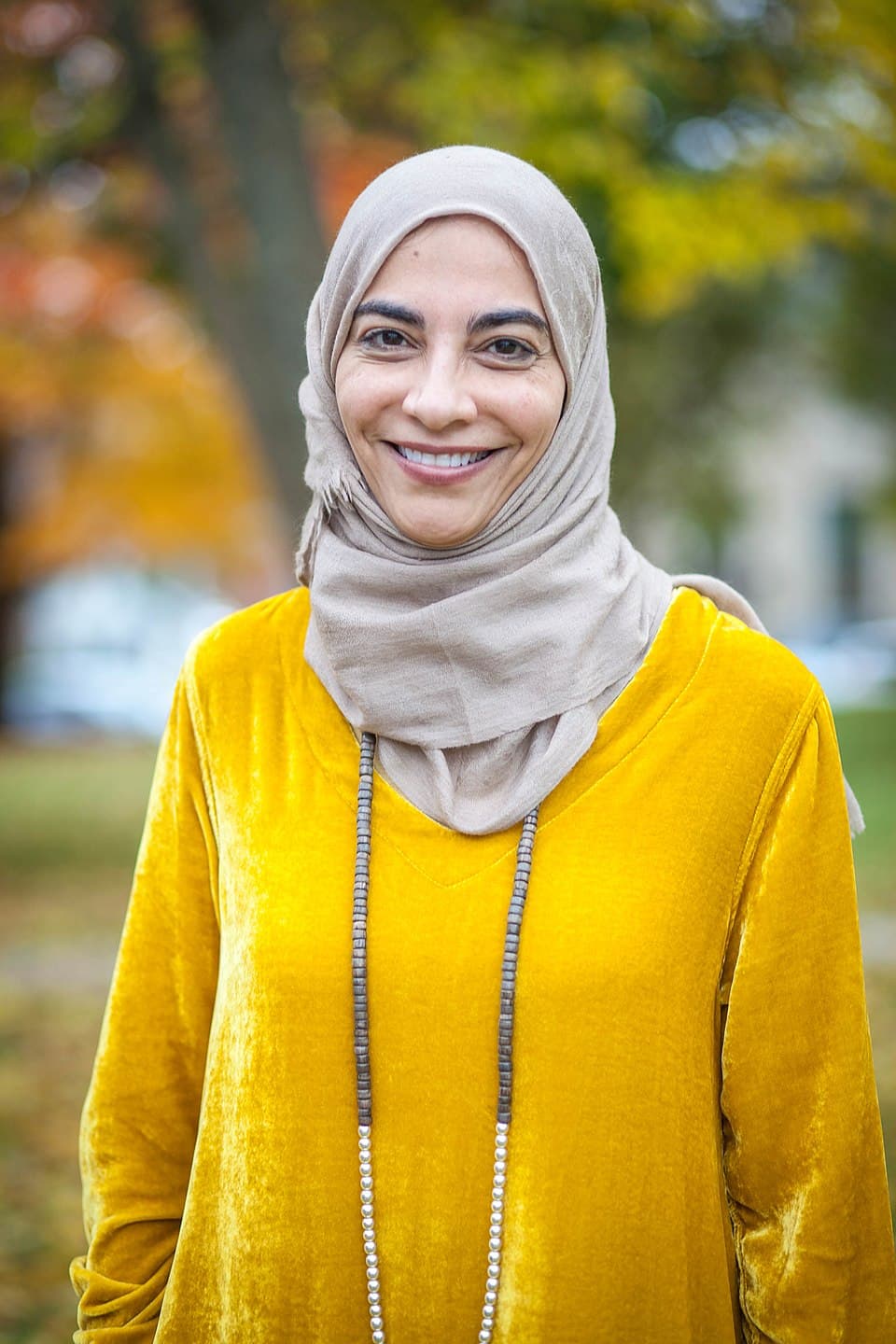
Saudi Arabian · Science · Politics
Hayat Sindi
November 6, 1967 – present
Early Life and Background
Hayat bint Sulaiman bin Hassan Sindi was born on 6 November 1967 in Mecca (Makkah), Saudi Arabia
Biographical accounts emphasize that Sindi developed an early interest in medicine and science, motivated in part by her father’s asthma and a desire to help him and others suffering from chronic disease.[8][9] Her schooling in Mecca introduced her to basic science, but advanced laboratory opportunities were limited. At the same time, the rapid modernization brought by oil wealth generated new aspirations for professional careers, including in health and technology. Sindi has described her childhood as one in which she loved mathematics and science but had little exposure to female role models in research.[1][11] In conservative Saudi society, studying abroad alone was unusual for young women, and higher‑education choices were often shaped by family expectations. Nonetheless, she nurtured a quiet ambition to become a scientist and to use technology to serve humanitarian goals. In the mid‑1980s, Sindi convinced her family to allow her to travel to the United Kingdom to pursue higher education, an exceptional step for a young Saudi woman at the time.[4][6] She arrived without speaking English and initially spent about a year intensively studying the language and preparing for A‑level examinations, sometimes reportedly putting in up to twenty hours of study per day.[4][11] This effort was necessary to qualify for admission to British universities. After achieving the required qualifications, Sindi enrolled at King’s College London, where she studied pharmacology1995
During her undergraduate studies, Sindi carried out research on allergy and received recognition for this work. At the college’s 1995 graduation ceremonies she was awarded a Princess Anne Award for allergy research, underscoring her early promise as a scientist.[2] This combination of academic success and research distinction laid the groundwork for her later acceptance into top doctoral programs. Following her degree at King’s, Sindi pursued postgraduate training in biotechnology. She was admitted to Newnham College at the University of Cambridge, where she undertook doctoral research in biotechnology.[2][3][4] Her PhD work focused on electromagnetic‑acoustic sensors, leading to a thesis titled Studies on a Novel Electromagnetic‑Acoustic Sensor.[2][12] In 2001, she completed her PhD in biotechnology, becoming the first Saudi woman to obtain a doctorate in that field and the first woman from any of the Arab States of the Persian Gulf to complete a PhD in biotechnology.[1][2][4][5][6] Sources also note that she was the first Saudi woman admitted to Cambridge’s biotechnology PhD program.[4][6] At the time, very few women from the Gulf region were represented in doctoral‑level science programs in Western universities, making her achievement a widely cited regional milestone. Her research on electromagnetic‑acoustic sensors provided a foundation for later work on biochemical sensing and point‑of‑care diagnostic devices. The technical knowledge acquired at Cambridge enabled her to bridge fundamental physics with applied medical technology, a hallmark of her later innovations.[2][12] After completing her PhD, Sindi continued her scientific career through research appointments and collaborations in prominent institutions. She undertook work at the Massachusetts Institute of Technology (MIT) and later at Harvard University, environments that exposed her to interdisciplinary approaches to global health and technology.[1][3][12] At Harvard, she advanced development of low‑cost, point‑of‑care diagnostic devices designed for use in resource‑poor settings. One of her notable contributions is the Magnetic Acoustic Resonance Sensor (MARS), a biochemical sensor that uses combinations of light and ultrasound to analyze body fluids.[1][7][12] This sensor forms part of a broader portfolio of technologies aimed at quickly and cheaply diagnosing illnesses outside fully equipped laboratories. Sindi co‑founded the organization Diagnostics For All (DFA), established around 2007, which aims to create inexpensive, paper‑based diagnostic devices for people in impoverished regions.[1][2][5][11] Working with colleagues from Harvard, she helped design tools such as lab‑on‑paper tests that can detect liver function, pregnancy complications, or infectious diseases using small samples of blood or other fluids. DFA’s work addresses the challenges of limited infrastructure, unreliable electricity, and high costs that impede laboratory medicine in many parts of the world. In addition to DFA, Sindi has been involved in other science‑related ventures, including Sonoptix, and the i2 Institute (Institute for Imagination and Ingenuity), founded in 2011 to promote innovation and entrepreneurship among young people, particularly in the Middle East.[1][2][5] Through i2, she has encouraged emerging scientists, technologists, and engineers to develop socially impactful projects, often emphasizing the importance of courage, creativity, and social responsibility. Across the 2000s and 2010s, Sindi accumulated a portfolio of intellectual property, with multiple sources noting that she holds nine patents related to diagnostic tools and biotechnology innovations.[5][7][15] These patents reflect her dual identity as both a research scientist and an inventor focused on practical solutions. Sindi’s scientific and humanitarian work has been recognized by numerous awards and positions. Beyond her early Princess Anne Award, she has received honors that highlight her status as a leading biotechnologist and advocate for science in the Middle East. An important international recognition came when she was appointed a UNESCO Goodwill Ambassador for Sciences. UNESCO and regional profiles describe her as the first Saudi and first female scientist to hold this specific ambassadorial role, which she assumed in the early 2010s.[5][9] In this capacity, she has promoted science education, innovation, and youth engagement, particularly in Arab and Muslim-majority societies. Sindi has also served on high‑level advisory bodies. The International Fund for Agricultural Development (IFAD) notes her membership in the newly constituted UN Scientific Advisory Board (UNSAB), and her role as a Senior Advisor on Science, Technology and Innovation to the President of the Islamic Development Bank (IsDB)
Media outlets have repeatedly listed Sindi among the most influential Arabs. For example, Arabian Business ranked her among the leading Arab power figures, describing her as a “trailblazing Saudi Arabian biotechnologist and medical scientist whose name is synonymous with scientific innovation and social impact.”[8][9] Such profiles underscore not only her scientific achievements but also her public advocacy for women in STEM and for equitable access to technology. In 2013, Sindi entered the sphere of formal politics in Saudi Arabia. On 11 January 2013, King Abdullah appointed her as one of 30 women to the Consultative Assembly (Shura Council), the Kingdom’s advisory legislative body, making her one of its first female members.[2][5] This appointment followed a royal decision to include women in the Council for the first time, reflecting gradual reforms in the country’s governance structure. On 19 February 2013, she participated in the Council’s first session that included women members, formally taking her seat with other female appointees.[2] As a legislator, she brought a scientific perspective to discussions on health, education, research, and innovation policy, aligning technical knowledge with national development priorities. Sindi’s presence in the Shura Council marked a notable intersection of science and politics. Her appointment showed that expertise in biotechnology and global health could be valued at the highest levels of advisory governance in a conservative monarchy. For women’s history, her legislative role is a key example of how women scientists from the Gulf have begun to influence not only laboratories but also policy arenas.[2][5] Building on her scientific and advisory experience, Sindi expanded into science‑based consulting. In 2022, she founded the Institute for Quality, a consulting firm dedicated to supporting organizations through science, technology, and quality management.[7][15] The firm’s profile describes her as “one of the world’s leading biotechnologists and a global champion of science and technology,” and notes her role in co‑founding and co‑inventing Diagnostics For All.[7] The Institute for Quality works with public and private organizations to align innovation projects with rigorous standards and social impact goals. By leading this enterprise, Sindi exemplifies a trend in which scientists transition into strategic advisory roles, helping institutions leverage evidence and technology for broader societal benefit.[7] Her leadership of the Institute for Quality also highlights the diversification of career paths for Arab women in STEM. Instead of remaining solely in academia or research labs, Sindi has moved into entrepreneurship and consulting, using her expertise to shape organizational behavior and governance.[5][7] Publicly available sources focus primarily on Sindi’s professional achievements and rarely discuss her private life. Biographical profiles mention that she comes from a family of eight and that her father’s health influenced her interest in pharmacology.[9][11] However, there is limited reliable information about her marital status, children, or personal relationships, and major references such as encyclopedia entries and institutional profiles do not emphasize these aspects.[2][3][5] This focus reflects both cultural norms in Saudi Arabia, where personal details may be kept private, and the nature of Sindi’s public role, which centers on science, innovation, and policy rather than personal biography. Hayat Sindi occupies a distinctive position in the history of science and women’s rights in the Middle East. As one of the first Saudi and Gulf women to earn a PhD in biotechnology from a top Western university, she helped redefine what was possible for women from her region in STEM fields.[1][2][4] Her work at King’s College, Cambridge, MIT, and Harvard, coupled with her co‑founding of Diagnostics For All, has contributed to expanding access to diagnostic medicine for underserved populations. Her advocacy extends beyond laboratory innovation to systemic change. Through the i2 Institute and numerous public speaking engagements, Sindi has encouraged young Arabs—especially women—to pursue science and entrepreneurship, emphasizing creativity, imagination, and social responsibility.[1][5] As a UNESCO Goodwill Ambassador for Sciences and advisor to international bodies, she has championed science education, gender equity, and technology for development. In Saudi Arabia, her appointment to the Shura Council symbolizes a landmark in women’s political representation. She has helped demonstrate that scientific expertise is relevant to legislative and policy processes, contributing to a broader recognition of the value of evidence‑based decision‑making.[2][5] Her impact is also symbolic: media portrayals of a Saudi woman scientist in Western labs, international forums, and national politics challenge prevailing stereotypes about Muslim women and the Arab world. Sindi’s career illustrates how individuals can bridge East and West, combining scientific rigor with humanitarian concern.[1][9] As of the 2020s, Hayat Sindi continues to be active in science policy, advisory roles, and consulting. She serves as Senior Advisor on Science, Technology and Innovation to the President of the Islamic Development Bank, helping shape strategies for using science and technology to support sustainable development in member countries.[5] She remains involved with initiatives that promote innovation ecosystems and support young entrepreneurs in the Middle East. Through the Institute for Quality and other platforms, Sindi continues to advocate for integrating rigorous scientific thinking into organizational practice, stressing that quality and ethics must underpin technological deployment.[7][15] Her ongoing work reflects a commitment to ensuring that scientific advances translate into tangible improvements in health, livelihoods, and opportunity, especially for marginalized communities. Living and working across multiple geographies, Sindi maintains a public profile as one of the most prominent Saudi women in global science and policy. Her biography remains a reference point for discussions about women in STEM, Arab participation in high‑level research, and the role of science in addressing global inequities.[1][2][5]Move to the United Kingdom and Education
Doctoral Studies at Cambridge
Research Career and Scientific Innovation
Awards, Honors, and Advisory Roles
Political Career: Shura Council Membership
Entrepreneurship and the Institute for Quality
Personal Life
Legacy and Historical Impact
Later Life and Ongoing Work
Dated achievements
10 indexed.
- Nov061967Science
Birth of Hayat Al Sindi in Mecca
Born on 6 November 1967 in Mecca, Saudi Arabia, future biotechnologist and policymaker Hayat Al Sindi entered the world in a society where women’s access to education was still limited.
View details Hayat Sindi – Wikipedia - Jul131995Science
Graduation from King’s College London and Princess Anne Award
On 13 July 1995, Hayat Sindi graduated with honors in pharmacology from King’s College London and received a Princess Anne Award for her allergy research.