← All women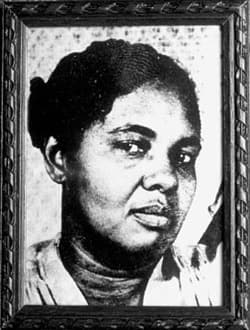
American · Activism · Politics
Harriette Moore
June 19, 1902 – January 3, 1952
Early Life and Background
Harriette Vyda Simms Moore was born on June 19, 1902, in West Palm Beach, Florida, during the height of the Jim Crow era.[1][4] She grew up in a racially segregated society in which Black Floridians faced disenfranchisement, economic exploitation, and pervasive violence. Biographical accounts emphasize that she was shaped by the realities of segregated schooling and limited employment opportunities for Black women, which made education both a personal aspiration and a political act.[1][3]
Details of her immediate family background are sparsely documented in comparison with her husband’s, reflecting the broader tendency of historical records to under-document Black women’s lives. However, later historians and public-history projects reconstruct her early years through the lens of Black Florida’s educational networks, noting that she was part of a generation of Black teachers who forged professional identities in underfunded, segregated schools.[1][3] These experiences laid the groundwork for her lifelong commitment to educational equity and civil-rights organizing.
Education and Formation as an Educator
Sources consistently describe Harriette as an educator, indicating that she pursued the training required to teach in Florida’s Black schools.[1][4][9] In the early twentieth century, Black teachers in Florida typically received their education through normal schools, teacher-training programs, and high schools serving African American communities. Though specific institutions and dates for Harriette’s own training are not well documented, her subsequent employment as a teacher in Brevard County suggests that she attained the qualifications needed to teach at the elementary level.
Historians note that Black women teachers in this era often combined classroom work with civic engagement, serving as clubwomen, community leaders, and informal social workers.[3] Harriette’s later activism fits within this broader pattern. Her identity as a teacher—not simply as the wife of a prominent male civil-rights leader—was central: she taught in segregated schools, advocated for equal pay for Black educators, and helped cultivate political awareness among students and parents.[1][9][12]
Marriage to Harry T. Moore and Partnership
In 1919, Harriette Simms married Harry Tyson Moore, a fellow educator who would become one of Florida’s leading civil-rights organizers.[1][4] Available sources do not provide an exact wedding date, but they agree on the year.[1][4] The marriage forged what later commentators call a "political partnership" that threatened Jim Crow by linking Black education, community organizing, and voting-rights activism.[3]
The couple eventually settled in Mims, Florida, in Brevard County, where both worked as teachers.[1][9][12] They had two daughters, Evangeline and Annie Rosalea, who grew up in a household marked by both educational work and political engagement.[12] Harriette’s roles as wife and mother were intertwined with her activism, as the family home doubled as a base for organizing and as the eventual site of the bombing that killed both parents.
Career Beginnings in Education
Harriette Moore began her teaching career in the 1920s, working in Black schools in Brevard County, including in Titusville and Mims.[9][12] At the time, Black schools in Florida received fewer resources, offered lower pay to teachers, and operated under strict segregation. Harriette taught African American children in these conditions, providing basic education while also conveying lessons in dignity and citizenship.[1][9]
Her teaching work placed her within the emerging network of Black educators who were increasingly vocal about inequities in pay and resources. Alongside Harry, Harriette became involved in efforts led by the Florida State Teachers Association and local NAACP branches to challenge discriminatory salary structures.[1][11][12] She contributed to organizing campaigns that encouraged Black teachers and parents to demand equal treatment.
NAACP Organizing and Equal-Pay Campaigns
In the 1930s, Harry and Harriette Moore deepened their involvement in organized civil-rights work. In 1934, Harry founded the first branch of the National Association for the Advancement of Colored People (NAACP) in Brevard County.[11][12] Harriette is described as active in NAACP organizing and membership efforts, helping to recruit members, host meetings, and sustain the branch’s activities.[1][11][12]
The Moores also helped launch a pioneering legal challenge to discriminatory teacher pay. In 1937, Harry Moore, supported by Harriette and the Florida State Teachers Association, filed a lawsuit in Brevard County seeking to equalize Black and white teachers’ salaries—known as Gilbert v. Board of Public Instruction of Brevard County.[1][11] Histories of the case emphasize that it was the first lawsuit in the Deep South to challenge unequal pay for Black teachers, setting a precedent that inspired similar suits elsewhere.[1][11] While Harry’s name appears as plaintiff and public leader, Harriette’s support work—helping to gather information, mobilize fellow teachers, and sustain household finances during retaliation—was critical to the campaign.
Anti-Lynching Work and Investigations of Racial Violence
By the late 1930s and 1940s, the Moores’ activism expanded to include anti-lynching advocacy. Sources note that Harry and Harriette investigated every lynching in Florida that came to their attention, documenting cases and pressing for state and federal action.[11][12][15] This work placed them in direct confrontation with local law enforcement and white supremacist groups.
Harriette’s contributions to anti-lynching campaigns included gathering testimonies, helping maintain correspondence with NAACP officials, and participating in public education about racial violence.[1][12] Their efforts formed part of a broader movement seeking federal anti-lynching legislation and accountability for racist killings. Although anti-lynching bills repeatedly stalled in Congress, the Moores’ investigative work generated pressure on Florida authorities and helped build a record of abuses.
Voter Registration and the Progressive Voters League
In the 1940s, Harry and Harriette Moore intensified their focus on voting rights. With Harry serving as executive secretary of the Florida NAACP and later as leader of the Progressive Voters League of Florida, the couple organized campaigns to register Black voters and challenge all-white primaries.[11][12] Harriette assisted in hosting meetings, maintaining membership lists, and educating community members about the importance of voting.
Between 1944 and 1950, their combined efforts helped increase the registration of Black voters in Florida to approximately 31 percent of those eligible—markedly higher than in any other Southern state at the time.[11] This achievement is often credited to Harry’s leadership, but sources stress that Harriette was a full participant in the labor of organizing.[1][11][15] Their work opened new political opportunities for African Americans across the state and contributed to the broader infrastructure of the modern Civil Rights Movement.
Retaliation and Loss of Teaching Positions
The Moores’ activism provoked retaliation from white authorities. In 1946, both Harry and Harriette lost their positions as educators in Brevard County, a consequence of Harry’s public campaign for equal pay and their broader civil-rights work.[9][11] Losing their teaching jobs meant not only economic hardship but also the loss of institutional platforms for influencing Black youth.
Despite this retaliation, Harriette continued to support Harry’s full-time activism. He became a paid organizer for the NAACP and the Progressive Voters League, traveling extensively across Florida, while Harriette maintained the household, assisted with organizational tasks, and remained active in local community work.[1][9][11] This period underscores the gendered dimensions of activism: Harriette’s unpaid labor helped sustain the family and movement even after formal employment ended.
Escalating Tensions and the Months Before the Bombing
In 1951, the Moores persisted in their civil-rights activities despite mounting threats. They continued investigating lynchings, advocating for equal pay, and organizing voter registration in the face of hostile local authorities and Ku Klux Klan intimidation.[1][3][12] Historians describe this period as one of escalating tension, with the Moores’ work increasingly viewed by white supremacists as a direct challenge to the racial order.
In the months leading up to Christmas, they focused on cases of racial violence and inequalities that had become flashpoints in Florida politics. Their efforts contributed to a climate in which violent reprisals against civil-rights leaders became more likely.[1][3][13] The bombing of their home thus occurred against a backdrop of intensifying backlash against Black activism.
Bombing on Christmas Night 1951
On the night of December 25, 1951, a bomb detonated beneath the bedroom of the Moores’ small wooden house in Mims, Florida, as they celebrated their twenty-fifth wedding anniversary.[1][12] The explosion severely injured both Harriette and Harry. Harry died en route to medical care, while Harriette suffered critical injuries to which she would succumb nine days later.[9][12]
Accounts from the period and later investigations attribute the bombing to Ku Klux Klan operatives angered by the Moores’ civil-rights work.[12] The attack drew national attention and prompted investigations by local authorities, the FBI, and the NAACP. The case, however, was never successfully prosecuted, and no one was convicted of the crime.[6]
Later Life and Death
After the bombing, the Moores confronted additional layers of Jim Crow discrimination in healthcare. A Brevard County hospital reportedly refused to treat them because they were Black, necessitating Harriette’s transfer to a hospital in Sanford.[1][9] Harry died on the night of the blast; Harriette, seriously wounded, lived long enough to experience the aftermath but died on January 3, 1952.[1][4][9]
She left behind two daughters and a community traumatized by the loss of a local teacher and organizer. Harriette’s death marked the end of a life spent in education and activism but also the beginning of her posthumous role as a symbol of civil-rights martyrdom.[8][10][12]
Investigations and the 2011 DOJ Case Closure
The bombing of the Moores’ home prompted multiple investigations over the decades, including probes by Florida officials and the FBI. Several Ku Klux Klan suspects were identified in mid-twentieth-century inquiries, but the case remained unresolved.[6] In 2011, the U.S. Department of Justice Civil Rights Division formally closed its investigation, concluding that only circumstantial evidence existed and that all identified suspects were deceased.[6]
The January 13, 2011 closure signaled the end of formal federal efforts to secure criminal accountability for the bombing.[6] While unsatisfying from a justice perspective, the decision affirmed that the Moores’ deaths were recognized at the federal level as civil-rights–related murders. It also shifted the focus toward memory, education, and commemoration.
Awards, Honors, and Institutional Recognition
In the decades after their deaths, Harry and Harriette Moore received growing recognition for their pioneering role in the civil-rights movement. In 2014, they were inducted into the Florida Civil Rights Hall of Fame, which highlights Harriette’s contributions in education, equal-pay advocacy, voter registration, and investigations of lynching.[11]
The couple’s former homesite in Mims became the Harry T. & Harriette V. Moore Cultural Complex, comprising a museum, memorial park, and reconstructed home.[5] The complex serves as an educational center focused on civil-rights history, with exhibits emphasizing Harriette’s teaching career and activism. Other institutions, including teachers’ unions and public television projects, have produced documentaries and educational materials celebrating the Moores as foundational figures in Florida’s civil-rights history.[6][9][10]
The National Museum of African American History and Culture holds the Harry T. and Harriette V. Moore Archival Collection, including photographs and documents that memorialize their partnership and activism.[8] These collections underscore Harriette’s role as an organizer whose life was cut short by racial terror.
Personal Life and Family
Beyond her public activism, Harriette Moore was a mother and community member. She and Harry raised two daughters, Evangeline and Annie Rosalea, in a household where civil-rights work was part of daily life.[12] The family endured threats and economic retaliation as a consequence of the Moores’ activism, including the loss of both parents’ teaching positions.
Harriette’s personal relationships extended into networks of fellow teachers, clubwomen, and local activists. Historians emphasize that she embodied the often-unrecognized labor of women in the civil-rights movement—keeping households running, sustaining organizations, and providing emotional support in addition to public work.[3] Her marriage to Harry is frequently described as a political partnership that connected ordinary Black life to broader democratic struggles.[3]
Legacy and Historical Impact
Harriette Moore’s legacy rests on her combined roles as educator, organizer, and martyr. Together with Harry, she helped lay the groundwork for the modern Civil Rights Movement in Florida by:
- Advocating for equal pay for Black teachers and supporting pioneering litigation.[1][11]
- Organizing NAACP branches and expanding membership across central Florida.[1][11][12]
- Investigating lynchings and pressing for anti-lynching legislation and accountability.[11][12]
- Helping increase Black voter registration to levels unmatched in other Southern states.[11][15]
Their assassination on Christmas Day 1951 has been widely characterized as the first assassination of civil rights activists in the modern Civil Rights Movement and the only instance in which both husband and wife were killed for their activism.[4][2][14] Public-history projects and scholarly work also describe the Moores as the first martyrs of the modern movement, emphasizing that their deaths predate, and helped foreshadow, later civil-rights murders.[6][8][10]
Harriette’s story has become increasingly central in narratives seeking to highlight women’s contributions to civil rights. Writers stress that her life illustrates how the movement’s "architecture" was built by educators, wives, mothers, and local organizers whose labor made the movement durable long before it became nationally recognized.[3] Her example challenges histories that center only male leaders and underscores the structural work done by Black women at the local level.
Commemoration and Public Memory
Today, Harriette Moore is commemorated through museums, archival collections, educational curricula, and media productions. The Harry T. & Harriette V. Moore Cultural Complex in Mims functions as both a memorial and a classroom, hosting exhibits and programs dedicated to the couple’s lives and the broader history of civil rights in Florida.[5][10] Public television and online documentaries, including projects by WUCF and other outlets, present her as a key figure in early civil-rights organizing.[6][10]
National and local organizations, such as teachers’ unions and the Florida Education Association, celebrate Harriette’s legacy during Black History Month and other commemorative events, highlighting her commitment to educational equity.[9] The Smithsonian’s archival collection and interpretive materials frame the Moores as "early unsung heroes" of the movement.[8][13]
Through these commemorations, Harriette Vyda Simms Moore has moved from relative obscurity into the broader public memory of the Civil Rights Movement. Her life and death exemplify both the possibilities created by grassroots activism and the risks borne by Black women who dared to challenge Jim Crow.
Dated achievements
6 indexed.
- Jun191902Activism
Birth of Harriette Vyda Simms Moore
Harriette Vyda Simms, later Moore, was born in West Palm Beach, Florida, playing a key role in Florida’s early civil rights movement.
View details EBSCO Research Starters: Harriette Moore - Dec251951Activism
Bombing of Harry and Harriette Moore’s home
On Christmas Day 1951, Harry and Harriette Moore’s home in Mims, Florida, was bombed, fatally injuring them both.