← All women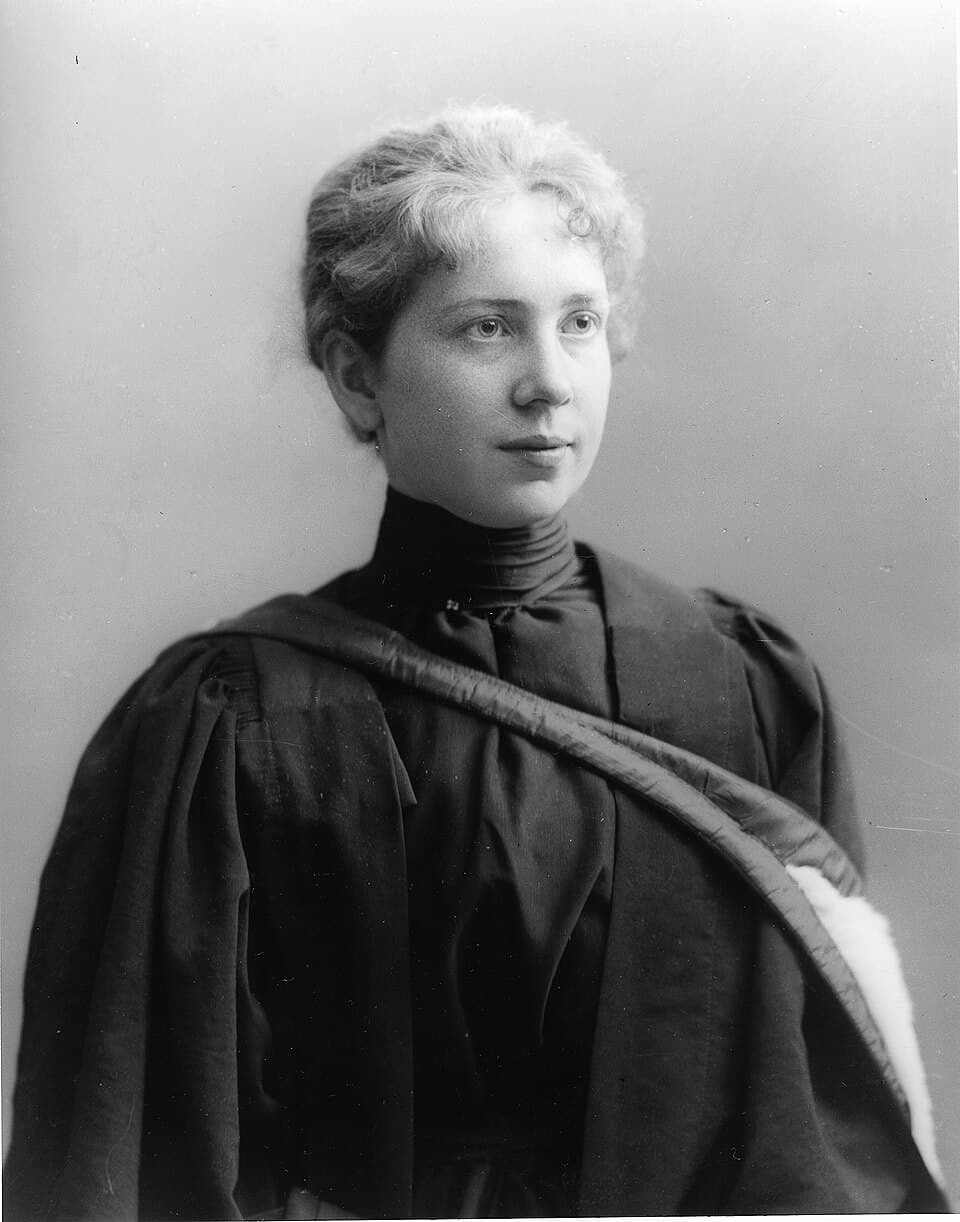
Canadian · Science
Harriet Brooks
July 2, 1876 – April 17, 1933
Early Life and Background
Harriet Brooks was born on July 2, 1876, in Exeter, Ontario, Canada. She was one of nine children in her family. Brooks attended McGill University in Montreal, which later became an important hub for scientific research, particularly in physics. It was at McGill that Brooks began to develop her interest in science, especially in physics, under the influence of renowned physicist Ernest Rutherford. She graduated with a Bachelor of Arts degree in 1898, followed by a Master of Arts degree in 1901.
Career Beginnings and Development
After completing her education, Brooks began her scientific career at McGill University, working as a research assistant to Ernest Rutherford, a future Nobel laureate. Her initial work involved investigating the properties of radioactive materials, which led to significant discoveries in the field of nuclear physics. Brooks's research notably contributed to understanding the decay of radium and thorium. In 1901, she went to Bryn Mawr College in Pennsylvania, USA, where she continued her research and was awarded a fellowship offering the opportunity to work abroad.
Major Works, Discoveries, or Accomplishments
Harriet Brooks is best remembered for her groundbreaking research in radioactivity and her significant discovery regarding the nature of radioactive decay. One of her notable achievements was recognizing that radioactive elements undergo a process of transmutation, where they change into other elements. Her work on the behavior of gamma rays also advanced the scientific understanding of radioactive materials.
In 1902, she moved to England to work under Sir J.J. Thomson at the Cavendish Laboratory in Cambridge. Here, she deepened her research on radioactivity and ionization. Despite facing societal challenges as a woman in science, Brooks's work was recognized internationally, exemplified by the high regard in which her colleagues held her.
Awards, Honors, and Recognition
While Harriet Brooks did not receive formal awards during her lifetime due to the gender biases of the period, her legacy is recognized retrospectively as instrumental in the foundation of nuclear science. Her contributions were initially overshadowed by her male counterparts, yet her impact became more appreciated as women's participation in science was recognized historically.
Personal Life
Brooks' personal life included an engagement to physicist Frank Pearson, which she broke off due to the expectation that she should resign upon marriage. Her decision reflected the broader struggle women faced in balancing professional and personal lives during that time. She eventually married Dean Laird McNaughton in 1907, with whom she had a family.
Legacy and Historical Impact
Harriet Brooks's legacy lies in her role as a pioneer for women in science. Her determination to pursue research, against the gender norms of the early 20th century, set a precedent for future generations of female scientists. Her scientific inquiries provided a cornerstone for the development of nuclear physics and influenced subsequent discoveries in the field.
Later Life and Death
Brooks returned to Canada later in her life and continued to contribute to science through teaching and smaller research projects. She passed away on April 17, 1933, due to a blood disorder. Despite her early death, Brooks's contributions continue to inspire scientists, particularly women, in pursuing careers in scientific research.
Dated achievements
0 indexed.