← All women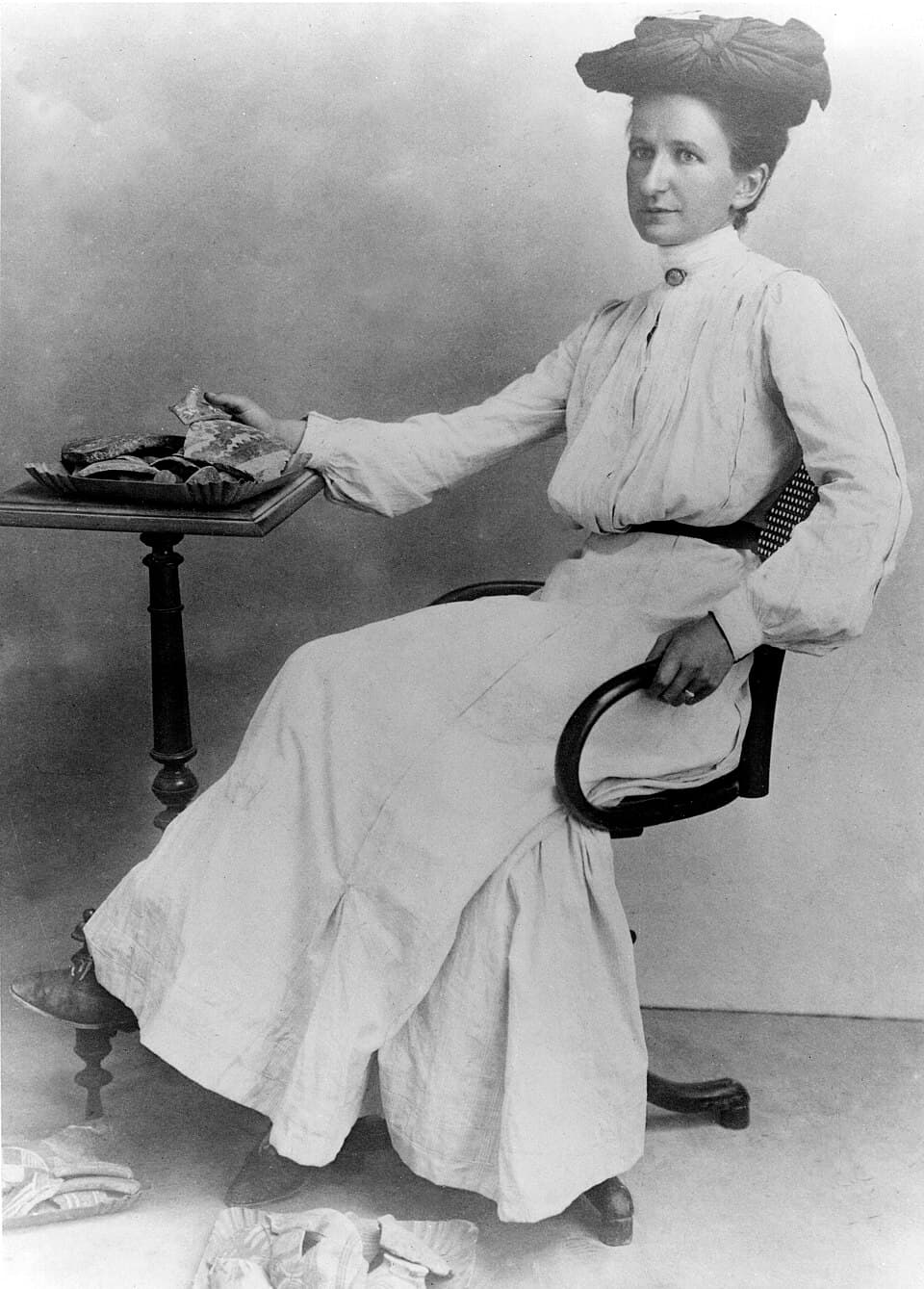
American · Science · Exploration
Harriet Boyd Hawes
October 11, 1871 – March 31, 1945
Early Life and Background
Harriet Ann Boyd was born on October 11, 1871, in Boston, Massachusetts. She grew up in an intellectually vibrant family that valued education, influencing her later pursuits. Her father, Alexander Boyd, was a successful wool merchant, instilling in her a sense of independence and determination. Boyd pursued an active education attending Smith College, where she graduated in 1892 with a degree in history. Her quest for knowledge and adventure took her to Europe, where she became intrigued by ancient cultures and archaeology, propelling her towards a groundbreaking career.
Career Beginnings and Development
After finishing her degree at Smith College, Boyd initially pursued nursing and bravely served with the American Red Cross during the Greco-Turkish War in 1897. Her exposure to Greek culture during this time only deepened her interest in archaeology. Despite challenges such as skepticism from her male counterparts, she enrolled in archaeological studies at the American School of Classical Studies at Athens.
Major Works and Discoveries
Harriet Boyd's career as an archaeologist is most notable for her pioneering excavations at Gournia on the island of Crete. She discovered the site in 1901 through meticulous research and exploration. Her work there was groundbreaking as it marked the first time a major archaeological excavation in Greece was led by a woman. Boyd's findings at Gournia include significant artifacts and a layout of an ancient Minoan town, which contributed vastly to the understanding of Aegean civilizations.
Awards, Honors, and Recognition
Harriet Boyd received significant recognition for her work, including an honorary Doctor of Letters from Smith College in 1910. She was also one of the first women to present an academic paper to the Archaeological Institute of America, a testimony to her scholarly impact.
Personal Life
In 1906, Harriet married Charles Henry Hawes, an anthropologist. Together they had two children, Alexander and Mary. Their marriage was characterized by mutual respect and shared intellectual interests, bolstering Boyd's academic pursuits.
Legacy and Historical Impact
Harriet Boyd Hawes is remembered not only for her archaeological discoveries but also for her role in breaking gender barriers in academia. Her work paved the way for future generations of women in both archaeology and science. Her methodologies and dedication to meticulous fieldwork set new standards in the field of archaeology.
Later Life and Death
In her later years, Harriet continued to contribute to her fields of interest through lectures and writings. She passed away on March 31, 1945, leaving behind a legacy of courage and scholarly contribution that continued to inspire many.
Dated achievements
2 indexed.
- Oct111871Science
Birth of Harriet Boyd Hawes
Harriet Boyd Hawes was born on October 11, 1871, in Boston, Massachusetts.
View details Geotour: Harriet Boyd Hawes - Mar311945Science
Death of Harriet Boyd Hawes
Harriet Boyd Hawes passed away on March 31, 1945, leaving a legacy in archaeology and women’s history.