← All women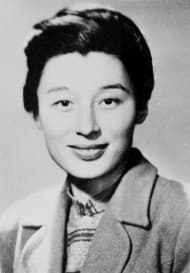
Chinese, British · Literature · Medicine
Han Suyin
September 12, 1917 – November 2, 2012
Early Life and Background
Han Suyin was born on September 12, 1917, in Xinyang, Henan Province, China, to a Chinese father, Chou Wen, and a Belgian mother, Marguerite Denis. Her given name was Rosalie Matilda Kuanghu Chou. She grew up in an environment marked by cultural diversity and intellectual stimulation, which later profoundly influenced her work. Her father's role in the railway industry exposed her to the ideas of modernization and nationalism.
Han's early education took place in Belgium and later China. She faced the dual challenge of navigating her mixed heritage in a period characterized by intense geopolitical upheaval and a conservative societal framework.
Career Beginnings and Development
In 1938, Han began her medical studies at Yenching University in Beijing, but the outbreak of the Second Sino-Japanese War resulted in the suspension of her education. She then moved to London, where she continued her studies at the prestigious Royal Free Hospital. Han's medical career continued alongside her burgeoning writing career.
Major Works and Accomplishments
Han’s most celebrated work, "A Many-Splendoured Thing," published in 1952, was a semi-autobiographical novel that chronicled her romance with a married British war correspondent. The novel explored love and social barriers within a cross-cultural context, resonating with a wide audience. Adapted into an Oscar-winning film in 1955, it cemented her place in literary history.
Throughout her career, Han authored over 20 books, including "The Crippled Tree" and its sequels, providing insightful perspectives on China's history and revolution.
Awards, Honors, and Recognition
Han received numerous accolades for her contributions to literature and cultural understanding, although she never won major international literary awards. Her works continue to be celebrated for their detailed and empathetic portrayals of Eastern and Western cultures.
Personal Life
Her personal life was marked by complexities, including multiple marriages and a deep connection to both European and Asian identities. Han married Tang Pao-huang, a Chinese Nationalist officer, in Yunnan, but widowed shortly after. Later partnerships reflected her cosmopolitan persona.
Legacy and Historical Impact
Han Suyin remains a critical figure for her role in introducing an Asian perspective to Western audiences, particularly during a time when such narratives were rare. Her work fostered greater cross-cultural understanding, serving as a bridge during complex political times, including the rise of communism in China.
Later Life and Death
Han continued to write and lecture internationally into her later years before retiring in Lausanne, Switzerland. She passed away on November 2, 2012, at the age of 95, leaving behind a legacy of literary and cultural achievement.
Dated achievements
2 indexed.
- Sep121917Literature
Birth of Han Suyin
Han Suyin was born on September 12, 1917, in Xinyang, China.
View details Han Suyin - Wikipedia - Nov022012Literature
Death of Han Suyin
Han Suyin passed away on November 2, 2012, in Lausanne, Switzerland.
View details