← All women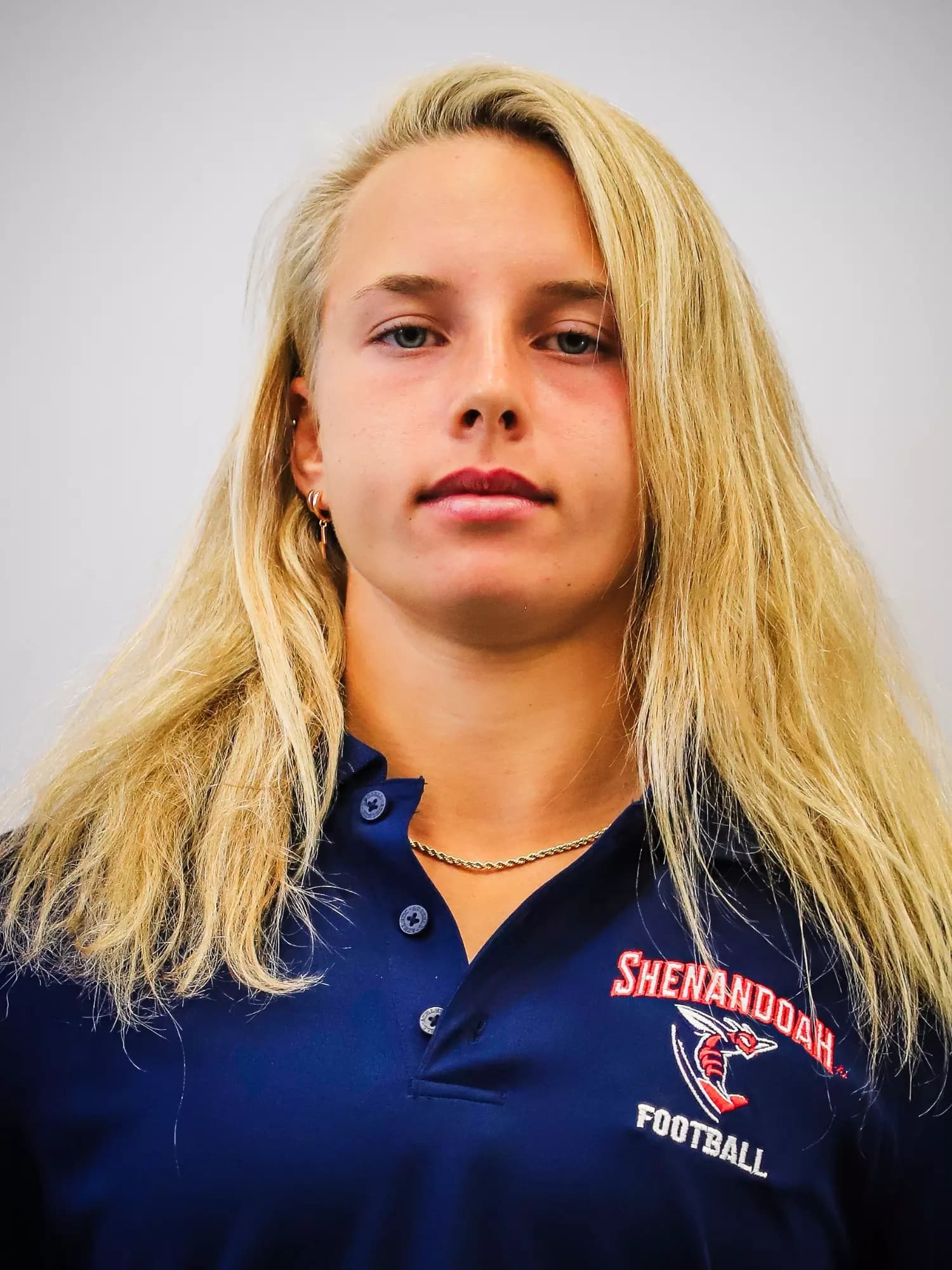
American · Sports
Haley Van Voorhis
Unknown – present
Early life and background
Haley Van Voorhis is an American football player best known for becoming the first woman in NCAA history to play a college football game in a non-kicking position. Reliable published sources agree that she was born in the United States, but they do not provide a fully verified birth date; available references only narrow her birth year to 2003 or 2004. Because no exact date is securely documented, her birth is not listed as a dated event in this profile.
Van Voorhis grew up around football and began playing at a young age. Public reporting describes her moving from flag football in elementary school to tackle football in middle school, reflecting an early comfort with a sport that remained heavily male-dominated. Sources also report that she became the first girl to play football at Christchurch School, a formative experience that helped establish her reputation as a determined and versatile athlete. She later played wide receiver and defensive back in high school, where she was recognized as an all-state honorable mention in Virginia. These early experiences helped shape the resilience, physical confidence, and technical skill that would later define her college career.
Her background is also notable for the range of sports she played. Institutional and media profiles describe her as a multi-sport athlete, including track and field and football at Shenandoah University, along with prior participation in tennis, soccer, baseball, basketball, lacrosse, and flag football. That broad athletic base likely contributed to her speed and coordination as a defensive back and sprinter.
Path to college football
Van Voorhis continued her football development after high school through the Women's Football Alliance, where she played strong safety for the D.C. Divas before entering college football. Team information from the Divas notes that she played multiple seasons with Shenandoah University football and track and field between 2021 and 2024, underscoring her dual-sport role at the collegiate level. Before joining Shenandoah’s varsity lineup, she reportedly spent two seasons training and preparing with the program.
Her commitment to Shenandoah University was announced in April 2021, and later institutional coverage described her as a junior safety who had earned the opportunity to compete in a varsity game after years of preparation. This transition was important because it placed her in the NCAA football environment not as a ceremonial exception but as a rostered defensive player trusted to contribute in live game action.
Historic NCAA appearance
Van Voorhis’s defining moment came on September 23, 2023, when Shenandoah University faced Juniata College at Shentel Stadium in Winchester, Virginia. In the first quarter, with Shenandoah in control of the game, coaches inserted Van Voorhis on defense. She came off the sideline and into the game as a safety, and on the play she generated pressure on the quarterback that contributed to an incomplete pass and a stop. Multiple national outlets reported that this appearance made her the first woman to compete in an NCAA football game in a non-kicking role.
The historical importance of the moment lies in its specificity. Women had previously appeared in NCAA football games, most prominently in kicking roles, but Van Voorhis was the first to do so as a defensive player. That distinction made the event a landmark for women in sport, especially in a game where physical contact, tactical specialization, and entrenched norms had long limited access. Her appearance was not merely symbolic; it occurred within the structure of a real game, on a defensive snap, at an NCAA institution, and in a position that had never before been occupied by a woman in that context.
Coverage of the game spread quickly. ESPN, NPR, USA Football, NCAA.com, the TODAY show, and other outlets highlighted the achievement, and Shenandoah University later noted that national attention included praise from figures such as Billie Jean King and Deion Sanders. The rapid media response demonstrated how a single roster decision can challenge public assumptions about gender and sport when it occurs at a highly visible historical threshold.
Later college career and continued athletic role
After her historic debut, Van Voorhis remained associated with Shenandoah athletics. A later Wikipedia entry and institutional profiles indicate that she continued to be linked with the program through the 2024 season and also competed in track and field. In 2024, published statistics noted limited football appearances, including tackles in games she played, which suggests that her role remained active beyond the landmark debut. Even so, the public memory of her career is centered on the September 2023 breakthrough, which became her signature accomplishment.
Her athletic profile also reflects the broader reality of women entering college football through multiple pathways. She had experience in youth and high school football, women’s tackle football, and collegiate training, showing that barrier-breaking moments are often built through years of accumulated skill rather than a single sudden opportunity. In that sense, Van Voorhis’s career illustrates both persistence and institutional change: she was ready for the moment when it came, and the program was willing to let her take it.
Recognition and public impact
Van Voorhis’s historic appearance drew immediate recognition from national and local media. Shenandoah University’s own coverage emphasized the scale of the response and compiled reporting from major outlets. ESPN described her journey into college football history; NPR framed the appearance as a first for a non-kicker woman in NCAA football; and USA Football profiled her transition from childhood love of the game to college success. That coverage elevated her from a rostered player to a widely recognized trailblazer.
The significance of her achievement extends beyond a single day because it altered the visible possibilities for girls and women who play football. For many years, women who appeared in men’s or coeducational football contexts were concentrated in specialist roles, especially placekicking. Van Voorhis’s appearance at safety made it harder to argue that defensive roles were categorically off limits. Her milestone therefore functioned as both a record and an argument: women belong not only at the margins of the sport but in the heart of its defensive action.
Personal life and legacy
Publicly available reliable sources do not provide detailed, verified information about Van Voorhis’s marriage, children, or other personal relationships, and none are included here. What is clearly documented is her identity as a student-athlete whose career already occupies a durable place in women’s sports history. She is remembered most for turning a childhood love of football into a nationally recognized breakthrough, while also showing that the line between “symbolic first” and genuine competitive contribution can disappear in the same play.
Her legacy lies in the way her debut reframed expectations. Van Voorhis’s place in history is not simply that she was present, but that she was present in a role long reserved for men. That distinction matters to historians of sport because it marks a concrete shift in the boundaries of access. For future athletes, coaches, and programs, her appearance offers a reference point for what is possible when opportunity meets preparation. In the evolving history of women’s football, Haley Van Voorhis stands as one of the clearest examples of a barrier being crossed in full public view.
Dated achievements
1 indexed.
- Sep232023Sports
First woman non-kicker to play in an NCAA football game
Haley Van Voorhis, a junior safety for Shenandoah University, became the first woman in NCAA history to play a non-kicking position in a college football game.
View details Haley Van Voorhis's journey through college football history