← All women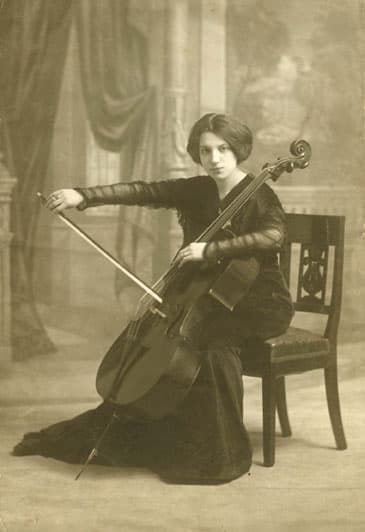
Portuguese · Arts
Guilhermina Suggia
June 27, 1885 – July 30, 1950
Early Life and Background
Guilhermina Suggia was born on June 27, 1885, in Porto, Portugal. She was the daughter of Augusto Suggia, a cellist who nurtured her interest and talent for music from a young age. Guilhermina began playing the cello at the age of five, quickly showing remarkable promise in an era when female musicians, especially in such demanding instruments as the cello, were rare. Driven by strong familial encouragement, she moved to Leipzig to study at the conservatoire, becoming one of the few women admitted at the time.
Career Beginnings and Development
As a teenager, Suggia attended the Leipzig Conservatory, where she honed her skills under the tutelage of notable cellists like Julius Klengel. Her early career was marked by her performances across Europe, where she began to garner attention for her dynamic style and hypnotic stage presence. Suggia’s career in London further propelled her to fame, performing with some of the era’s leading orchestras.
Major Works and Accomplishments
Guilhermina Suggia became renowned for her interpretative depth and technical mastery, often compared to renowned cellists of her time like Pablo Casals, with whom she had a personal and professional partnership. An especially notable concert included her performance in England’s Philharmonic Society in 1912, a groundbreaking event as female soloists were rarely featured.
Awards, Honors, and Recognition
Her contributions to music earned her respect and recognition world over. Her recordings, particularly with the BBC, extend her legacy far beyond live performances, offering a glimpse of her genius to future generations.
Personal Life
Suggia had a long-term partnership with fellow cellist Pablo Casals, and while they never married, their shared passion for the cello forged a deep connection that influenced both their careers.
Legacy and Historical Impact
Guilhermina Suggia paved the way for future generations of female musicians, challenging societal norms and serving as a symbol of determination and artistic brilliance. The prestigious Guimarães City Hall founded the Guilhermina Suggia International Cello Competition in her honor, cementing her impact on the musical world.
Later Life and Death
In her later years, Suggia continued to perform and inspire, dedicating her life to music until succumbing to cancer on July 30, 1950. Her legacy endures as a trailblazer and icon in the realm of classical music.
Dated achievements
1 indexed.
- Jun271885Arts
Birth of Guilhermina Suggia
Guilhermina Suggia was born on June 27, 1885, in Porto, Portugal.
View details Wikipedia