← All women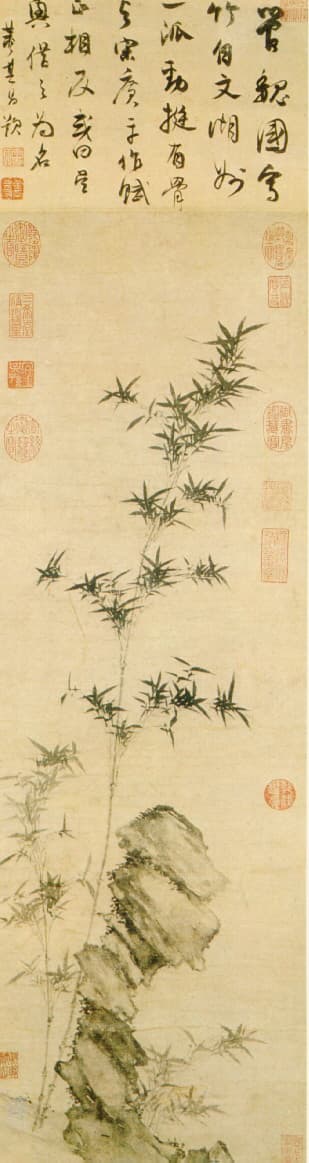
Chinese · Arts
Guan Daosheng
1262 – 1319
Early Life and Background
Guan Daosheng (Chinese: 管道昇; courtesy name Zhongji) was born in 1262 in Wuxing, a county-level city now part of Huzhou in modern Zhejiang province, China.[1][7][14][16] Her lifetime spanned the late Southern Song and early Yuan dynasties, a period of political upheaval following the Mongol conquest of China.[1][7] Little is recorded about her natal family, but surviving sources emphasize that she came from a literati milieu in which classical learning, poetry, and calligraphy were highly valued.[2][7] This environment fostered her early education in the Confucian classics and the artistic skills that would later define her career.
From a young age, Guan is believed to have been exposed to the refined culture of the Jiangnan region—renowned for its scholars, calligraphers, and painters.[7][14] The intellectual atmosphere of Wuxing, combined with access to books and cultivated social networks, allowed her to develop literary and artistic talent unusual for a woman of her time, when elite women were typically confined to domestic roles.[2][3][7]
Marriage and Entry into the Artistic Elite
Guan Daosheng married the celebrated painter, calligrapher, and scholar-official Zhao Mengfu (1254–1322), a major figure of early Yuan literati culture and a descendant of the Song imperial house.[1][2][7][14][16] Their marriage brought her into one of the most important artistic circles of the era. Zhao’s position at court and his stature among scholar-painters gave Guan access to elite patrons, imperial commissions, and collections otherwise closed to most women.[2][3][7]
Contemporary and later accounts describe the couple as sharing a close intellectual partnership.[2][7] Guan not only supported Zhao’s work but also pursued her own artistic and literary career, signing paintings and leaving colophons in her own name.[1][7] Together they had at least one son, the calligrapher Zhao Yong, whose works were later collected alongside those of his parents.[14][16] The family’s reputation as a literati household in service to the Yuan court further solidified Guan’s position within the artistic establishment.
Career Beginnings and Development
Guan’s emergence as an artist coincided with broader changes in Yuan dynasty culture, when many Han Chinese literati negotiated their status under Mongol rule by retreating into artistic and scholarly pursuits.[2][7][13] Within this context, she distinguished herself as a painter, calligrapher, and poet. She mastered the literati style of ink painting, rooted in brushwork and personal expression rather than decorative color or strict academic realism.[1][2][11]
While the exact chronology of her early works is uncertain, sources note that she developed a distinctive approach to monochrome ink painting, especially in her depictions of bamboo and landscapes.[1][2][6][11] She was also active as a calligrapher, copying classic texts, and as a poet whose inscriptions often accompanied her paintings.[1][2][7] By the early fourteenth century, Guan’s art enjoyed wide recognition at court and among scholars, and Mongol rulers and high officials collected her work.[2][14][16]
Major Works and Artistic Innovations
Guan Daosheng is best known for her ink paintings of bamboo, a subject long coded as masculine in Chinese art and associated with the virtues of steadfastness and resilience.[1][2][3][14][17] Painting bamboo was traditionally the province of male literati, often used as a visual metaphor for the ideal scholar. Guan’s decision to specialize in this subject challenged prevailing gender norms, and later writers emphasized the transgressive nature of a woman mastering such themes.[3][14][17]
Her major surviving work includes the celebrated handscroll Ten Thousand Bamboo Poles in Cloudy Mist, often described as the earliest extant painting known to be by a woman in China.[15] In this scroll, Guan uses modulated ink washes and varied brushstrokes to depict dense groves of bamboo emerging from mist, creating a rhythmic visual field that merges calligraphic line and atmospheric landscape.[6][15] The work is accompanied by poetic inscription, underscoring her integration of image and text.
Another important attributed painting is Bamboo and Stone, a handscroll in which sturdy bamboo plants grow alongside rocks, symbolically juxtaposing flexibility and solidity.[1][6][15] Art historians have also studied the scroll View by the Bamboo and Stream, dated 1309, as a key example of her innovation in scroll format and composition.[5] This work blurs the distinction between hanging scroll and handscroll, expanding the repertoire of literati painting by combining landscape, bamboo, and inscription into a unified visual field.[5]
Beyond individual works, Guan is credited with authoring or inspiring the treatise The Bamboo in Monochrome, which articulates philosophical and technical reflections on painting bamboo in ink.[6] Though the exact textual history is complex, this treatise is revered as a classic of artistic theory, setting out how brushwork, ink tones, and personal cultivation merge in the representation of bamboo.[6] Her paintings frequently reintegrated bamboo into broader landscape settings, rather than isolating individual stalks; this compositional strategy influenced later generations of artists who depicted bamboo groves in mist and rain.[6][5]
Calligraphy and Literary Output
Guan Daosheng was also celebrated as a calligrapher, continuing a tradition in which refined brushwork in writing and painting were considered interconnected arts.[1][2][11] Yuan sources note that a Mongol emperor—referred to in some European-language accounts as “Emperor Khan” or “Emperor Ren”—collected her works and commissioned her to copy the classic text Thousand-Character Classic (Qianzi wen), a famous primer used in Chinese education.[14][16] Such a commission from the court testifies to her technical mastery and high status.
Her calligraphy is described as elegant yet vigorous, merging the softness often associated with female hands with the disciplined structure prized by literati connoisseurs.[2][7] Guan’s poems, some of which survive in inscriptions on her paintings, express themes of nature, loyalty, and quiet resilience, and they contribute to our understanding of her self-fashioning as a woman artist within a male-dominated literary culture.[1][2][7][13]
Recognition, Patronage, and Reputation
During her lifetime, Guan’s works circulated among elite collectors, including members of the Yuan imperial family and high-ranking officials.[2][14][16] Her paintings and calligraphic pieces were valued not merely as curiosities by a woman, but as works of genuine artistic excellence. Later essays and art-historical narratives consistently rank her among the greatest women artists in Chinese history, and some modern scholars and reference works describe her as "the most famous female painter and calligrapher" in China.[1][2][19]
Her reputation was closely linked to that of her husband and son, whose works were collected in tandem with her own, but she was also recognized as an individual creative voice. In Ming dynasty court culture, paintings attributed to Guan were used to represent feminine virtues and to explore the idea of a powerful woman artist, as evidenced in the sixteenth-century work Two Women Looking at Paintings and related scholarship.[10][12]
Gender, Norms, and Barriers
Guan Daosheng’s career unfolded in a social order deeply shaped by Confucian ideals, under which women of the elite were expected to remain within domestic spaces, subordinate to fathers, husbands, and sons.[2][3][7] Artistic practice for women was generally constrained to small-scale, private accomplishments, with few opportunities for public recognition or court patronage. Against this backdrop, Guan’s visibility at the Yuan court and her acclaim among literati stood out as exceptional.
By specializing in bamboo—a culturally masculine subject—Guan "bent several norms of ancient China," as modern commentators note.[3] Her signed works, treatise, and imperial commissions challenged assumptions about women’s capabilities and roles. She navigated these constraints in part through the support of her family, especially Zhao Mengfu, but also through her own skill and cultivation, making herself legible to male connoisseurs within their own aesthetic language.[2][3][7][13]
Later feminist art historians have examined Guan as a pioneering figure whose life complicates the narrative of women’s exclusion from artistic greatness. She serves as a case study in how gender, authorship, and the canon of Chinese painting were constructed and contested from the Yuan through the Ming.[7][10][13]
Later Life and Death
Details of Guan Daosheng’s later years are sparse in the surviving record. She continued to work and to be associated with the artistic production of Zhao Mengfu’s circle in the early fourteenth century.[1][2][7] Her death is generally placed in 1319, during the Yuan dynasty; the exact circumstances and location are not well documented in standard references.[1][2][11][14][16] After her death, critics and collectors quickly incorporated her into the pantheon of major artistic masters, singling her out as the only woman among this cultural elite.[2][6]
Legacy and Historical Impact
Over the centuries, Guan Daosheng’s paintings, calligraphy, and poems have been repeatedly copied, collected, and reinterpreted. Modern art historians see her as a central figure in the development of literati ink painting, especially for her innovations in bamboo depiction and scroll format.[5][6][11] She remains a touchstone for discussions of gender in Chinese art history and is often cited as "the first lady of painting" in China’s artistic "Golden Age" of the Yuan.[2][6]
Her handscrolls such as Ten Thousand Bamboo Poles in Cloudy Mist have become canonical examples in museum collections and art history surveys, illustrating both technical mastery and the possibility of female authorship in a patriarchal artistic tradition.[15][17] Scholars continue to analyze her work through lenses ranging from formalism to feminist theory, exploring how her image as a "great woman artist" was constructed across different periods.[7][10][13]
In contemporary cultural memory, Guan is frequently invoked as one of the most famous female artists in Chinese history and as a pioneering woman whose work crossed boundaries of gender and genre.[1][2][19] Her legacy endures not only in surviving scrolls and inscriptions but also in ongoing debates about who is remembered within the canon and how women’s contributions to art are valued and narrated.
Dated achievements
1 indexed.
- Sep101319Science
Death of Guan Daosheng
Guan Daosheng died in Tongzhou, near the Grand Canal, while traveling north with her husband Zhao Mengfu, ending one of the most celebrated artistic careers of the Yuan dynasty.
View details Guan Daosheng - Wikipedia