← All women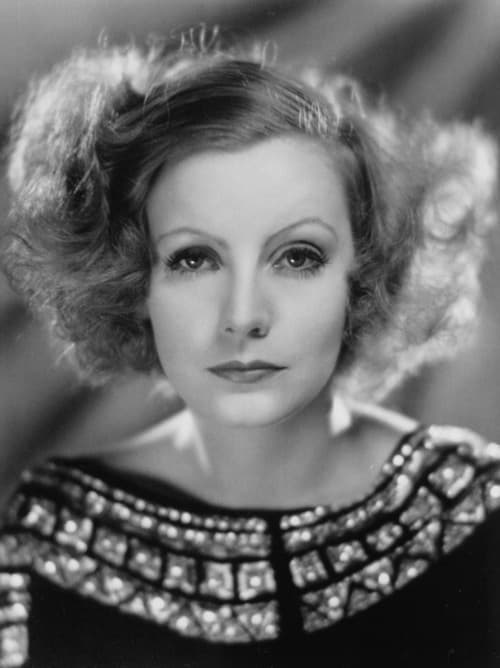
Swedish · Arts
Greta Garbo
September 18, 1905 – April 15, 1990
Early Life and Background
Greta Garbo, born Greta Lovisa Gustafsson on 18 September 1905 in Stockholm, Sweden, emerged from a working‑class environment that profoundly shaped her later persona.[1][2][10] She grew up in the Södermalm district, a crowded, poor area of the city, with her father Karl Alfred Gustafsson, a laborer, and mother Anna Lovisa, a housewife.[1][7][10] The family’s financial instability and her father’s ill health exposed Garbo early to hardship and insecurity, experiences that contributed to her lifelong frugality and guarded nature.[8]
As a child, Garbo was shy and introspective but drawn to performance. Biographical accounts note that she enjoyed school theatricals and would later recall being fascinated by the cinema.[1][11] In her teens she worked as a sales clerk at the Stockholm department store Konsum (often identified as PUB), where her managers selected her to appear in short publicity films promoting the store.[11][2] These industrial films constituted her first screen experiences, combining her employment with budding acting work.
Encouraged by her modest success in these films, Garbo auditioned for and won a scholarship to the Royal Dramatic Theatre School in Stockholm (often referred to as the Royal Dramatic Theatre’s training school), which she entered in the early 1920s.[1][6][9][11] There she received formal training in stage acting and voice, while supporting herself partly as a fashion model and film performer.[6][8] The school would prove decisive: it was there that she encountered director Mauritz Stiller, who became her mentor and transformed her path from local performer to international film star.[11]
Career Beginnings in Sweden
Garbo’s earliest film appearances were in short industrial and advertising films made around 1920–1922, including work for Tullsbergs Film, but her first notable non‑industrial role came in the 1922 film Luffar‑Petter.[1][8] Stiller saw potential in her screen presence and began coaching her intensively, refining her physical expressiveness and camera awareness. His mentorship was instrumental in shaping her distinctive, restrained style.
Stiller then cast Garbo in the ambitious Swedish silent feature The Saga of Gösta Berling (Gösta Berlings saga), adapted from Selma Lagerlöf’s novel. The film premiered in Sweden on 15 September 1924, with Garbo in the prominent role of Countess Elizabeth Dohna.[1] Her performance—combining youthful innocence with emotional gravity—drew attention from critics and audiences, establishing her as a major new talent in Scandinavian cinema.[1][11] Stiller continued to champion her, positioning her as the embodiment of a new, subtle screen acting style.
The film’s importance extended beyond Sweden. On 18 May 1925, The Saga of Gösta Berling premiered in Berlin and Paris, exposing Garbo’s work to influential European film circles.[4] Her image and performance impressed foreign producers and contributed to Stiller’s efforts to secure international opportunities. At a time when cross‑border film stardom was still emerging, a Swedish actress attracting attention in Germany and France helped demonstrate the commercial potential of Scandinavian performers.
Move to Hollywood and MGM Contract
Garbo’s European success drew the interest of Metro‑Goldwyn‑Mayer (MGM), then one of the most powerful studios in Hollywood. In 1925, MGM executive Louis B. Mayer signed both Mauritz Stiller and Garbo, bringing them to the United States.[1][11] Garbo, in her early twenties, arrived in Hollywood with limited English and little familiarity with American culture, yet quickly adjusted to studio life.
Her first American film, Torrent, was released on 26 January 1926, introducing her to U.S. audiences.[1][11] The silent melodrama cast her as Leonora, a peasant girl who becomes an opera star, and showcased her expressive face and poised demeanor. Critics praised her performance, and the film’s box‑office success cemented MGM’s belief in her star potential.[11] Over the next several years, Garbo appeared in a series of silent films, including The Temptress (1926), Flesh and the Devil (1927), Love (1927), and A Woman of Affairs (1928), often playing passionate, tragic heroines.[1][2]
Garbo’s screen persona in this period emphasized mystery, melancholy, and emotional intensity, reinforced by MGM’s publicity campaigns. She became known for her striking features—large eyes, sculpted cheekbones—and for a performance style that avoided theatrical gesturing in favor of subtle, interiorized emotion. By the late 1920s, she was one of MGM’s most bankable stars and a central figure in Hollywood’s emerging global market.[1][8]
Transition from Silent to Sound Cinema
The late 1920s brought a technological upheaval as sound films ("talkies") replaced silents. Many silent stars struggled with the transition, but Garbo successfully navigated it. Her final silent film, The Kiss, was released on 20 January 1929, ending her purely silent screen work.[1] The film confirmed her mastery of silent acting just as sound began to dominate Hollywood.
Garbo’s first talking picture, Anna Christie, premiered on 14 November 1930
Following Anna Christie, Garbo starred in a series of sound films that solidified her reputation as one of the era’s finest actresses. Notable works included Grand Hotel (1932), where her line "I want to be alone" became emblematic of her screen and real‑life persona; Mata Hari (1931), in which she played the infamous spy; Queen Christina (1933), portraying Sweden’s 17th‑century monarch; Anna Karenina (1935), adapted from Tolstoy; Camille (1936), often cited as one of her greatest performances; and Ninotchka (1939), a sophisticated comedy directed by Ernst Lubitsch.[1][2][6] Her sound films reinforced her image as a sophisticated, emotionally complex woman, frequently torn between passion and duty. Garbo’s acting style in these roles was nuanced, emphasizing small gestures and psychological depth rather than overt melodrama. Over time, critics came to view her as a precursor to modern screen naturalism.[8] Across her career from the early 1920s to 1941, Garbo’s filmography, though comparatively compact, includes numerous works that have become staples of film history. In Flesh and the Devil (1927), she and co‑star John Gilbert created one of silent cinema’s most famous romantic pairings, and their off‑screen relationship fed the mythology surrounding her.[1] Love (1927), an adaptation of Anna Karenina, further developed her tragic heroine persona. In the sound era, Grand Hotel (1932) was particularly significant as one of the first major ensemble films, pairing Garbo with stars such as John Barrymore and Joan Crawford. Her portrayal of the depressed ballerina Grusinskaya, and the repeated line "I want to be alone," became central to her enduring image.[1][2] Queen Christina (1933) allowed her to explore gender presentation and power; the film’s depiction of the queen in masculine attire has been studied in discussions of gender and sexuality on screen.[1] Camille (1936), adapted from Alexandre Dumas fils, is often singled out as Garbo’s finest performance.[8][10] As Marguerite Gautier, she combined elegance and vulnerability, earning another Academy Award nomination and high critical praise. Ninotchka (1939) marked a tonal shift: a romantic comedy that famously advertised "Garbo laughs!" Her portrayal of a stern Soviet envoy who gradually reveals warmth and humor demonstrated her versatility and challenged perceptions of her as solely a tragedienne.[1] Garbo received three Academy Award nominations for Best Actress in her competitive career— for Anna Christie (1930), Romance (1930), Camille (1936), and later for Ninotchka (1939).[2][5] Although she never won a competitive Oscar, these nominations cemented her status as one of the foremost performers of her generation. Beyond box‑office success, Garbo’s contributions were recognized by major institutions. At the 26th Academy Awards on 25 March 1954, she was granted an Honorary Academy Award "for her unforgettable screen performances."[2] Garbo did not attend the ceremony, consistent with her pattern of avoiding public events, but the award acknowledged her cumulative impact on film acting and star imagery.[2][5] Garbo also became a naturalized U.S. citizen in 1951, reflecting her long residence in the United States even as she retained strong connections to Sweden.[6][10] In 1983, she received a Kennedy Center Honor, formally presented on 16 November, recognizing her lifetime contribution to American culture through the performing arts.[2] This honor placed her alongside leading figures in theater, music, and dance, further underscoring her importance in the broader arts landscape. Long after her retirement, retrospectives, museum exhibitions, and restored prints of her films continued to celebrate her work. Institutions such as the Swedish Women’s Biographical Lexicon and major national galleries have featured her in scholarly and popular programs, reflecting her dual significance as a Swedish cultural figure and a Hollywood icon.[7][9] Garbo’s personal life has been the subject of intense interest, partly because she chose to reveal very little publicly. She never married and had no children.[1][6] Contemporary accounts and later biographical studies document close relationships with both men and women, reflecting a private emotional world that resisted simple categorization. One of her most publicized relationships was with actor John Gilbert, her co‑star in several MGM films. Their romance in the mid‑1920s captivated fans and fueled studio publicity, though it ultimately did not lead to marriage.[1] Garbo was also known to maintain significant friendships and possible romantic connections with women, including writer Mercedes de Acosta, among others. Later scholarship and essays have explored how her relationships and ambiguity about her sexuality informed readings of her screen persona and her affinity for roles involving gender fluidity or unconventional romantic choices.[13][16] Garbo was famously protective of her privacy. She granted very few interviews, avoided press events, and frequently declined invitations to public functions. The phrase "I want to be alone," associated with Grand Hotel, came to symbolize her attitude toward celebrity, though she reportedly clarified that she wanted to be left alone by the press, not isolated from friends.[1][9] In everyday life, she was known to enjoy walks in New York, cultivate a small circle of trusted companions, and maintain interests in art, travel, and collecting. After the release of Two-Faced Woman on 26 November 1941, Garbo effectively retired from acting.[1][10] The film’s mixed reception and her dissatisfaction with Hollywood’s direction contributed to her decision not to make another picture. Although various projects were proposed in the 1940s and 1950s—including potential collaborations with prominent directors—she either declined them or they failed to materialize.[1] Garbo settled into a largely private life in New York City
Health issues gradually increased with age. On 15 April 1990, Garbo died in New York City at the age of 84, with sources citing pneumonia and renal failure as causes.[3][5][6] Her passing prompted extensive obituaries and retrospectives in international media, reasserting her central place in film history and revisiting her decision to leave the screen at the height of her fame. Greta Garbo is widely regarded as one of the greatest screen actresses of all time.[1][2][15] Her legacy rests not only on individual films but also on the transformation she helped bring to cinematic acting and star imagery. At a time when many performers still relied on theatrical gestures, Garbo developed a minimalist, psychologically rich style that conveyed profound emotion through small movements and expressions. Film historians often cite her work as a bridge between silent‑era expressiveness and modern naturalistic performance.[8] Garbo’s persona—aloof, enigmatic, and self‑possessed—challenged prevailing notions of femininity in film. She frequently portrayed women with complex inner lives and moral agency, whether as queens, courtesans, or professional figures. Her willingness to play tragic endings, to occupy roles that questioned conventional romance, and to convey emotional suffering without sentimentality made her characters enduring subjects of analysis.[1][2] Her star image also contributed to evolving ideas about celebrity. By refusing constant media exposure and guarding her private life, Garbo contrasted sharply with the publicity‑driven Hollywood system. This resistance contributed to what has been called "the Garbo myth": the notion of the star as an almost literary figure of solitude, mystery, and integrity. Journalists, critics, and later writers have repeatedly returned to this myth in essays and books, attempting to understand both the person and the image.[9][20] From a women’s‑history perspective, Garbo’s career illustrates the possibilities and constraints facing female performers in early 20th‑century cinema. She achieved extraordinary autonomy relative to many contemporaries, negotiating aspects of her roles and image, yet remained subject to studio control and broader gender expectations. Her subtle exploration of gender in films like Queen Christina, along with historiographical work on her relationships, has made her a central figure in discussions of queer representation and androgyny in classic film.[1][13] Garbo’s influence endures in later generations of actors and directors who cite her as a touchstone for screen presence and emotional understatement. Restorations of her films and scholarly works, such as Karen Swenson’s biography and numerous academic articles, continue to refine our understanding of her craft.[16][8] As both a Swedish cultural icon and an emblem of Hollywood’s golden age, she occupies a unique transnational position in the history of cinema. More than three decades after her death, Greta Garbo remains a symbol of the transformative power of film acting and of the tensions between public fascination and private self‑determination. Her story—from a working‑class childhood in Stockholm to global stardom and deliberate retreat—continues to resonate in debates about celebrity, gender, and artistic autonomy.Major Works and Artistic Accomplishments
Awards, Honors, and Recognition
Personal Life and Relationships
Later Life and Retirement from Film
Legacy and Historical Impact
Dated achievements
10 indexed.
- Sep181905Arts
Birth of Greta Garbo
Greta Lovisa Gustafsson, later known as Greta Garbo, was born in Stockholm, Sweden.
View details Biography of Greta Garbo - Sep151924Arts
Premiere of The Saga of Gösta Berling
The film marked Garbo's first major screen break and her first leading role.
View details