← All women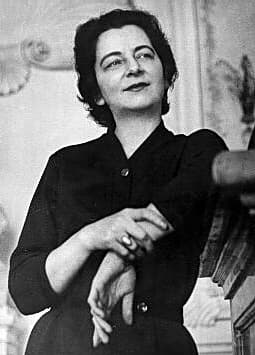
Polish · Arts
Grazyna Bacewicz
February 5, 1909 – January 17, 1969
Early Life and Background
Grażyna Bacewicz was born on February 5, 1909, in Łódź, Poland, into a musical family with Lithuanian and Polish descent. Her father, Wincenty Bacewicz, was a renowned musician, which helped foster her musical talents from a young age. She began learning piano and violin under her father's guidance. Bacewicz's early education took place at the Warsaw Conservatory, where she studied piano, violin, and composition. A burgeoning talent, her education was supplemented by studies in Paris under the tutelage of Nadia Boulanger, a prominent figure who helped refine Bacewicz’s compositional skills.
Career Beginnings and Development
Bacewicz’s career began in earnest in the 1930s, when she started performing as a violinist and composing chamber music. Her early works quickly garnered attention for their innovative structures and emotional depth. By the mid-1930s, Bacewicz was recognized in Poland as a performer and composer of notable merit. The 1936 premiere of her String Quartet No. 1 marked her out as a composer with a unique voice.
Major Works and Accomplishments
Bacewicz’s portfolio expanded significantly in the 1940s and 1950s, during which she composed several large orchestral works alongside numerous solo and chamber pieces. Her compositions are noted for their inventive use of harmony and rhythm, often reflecting the neoclassical style. The Piano Concerto (1949) and her Concerto for String Orchestra (1948) are among her most acclaimed works, earning her international recognition.
She continued to create and innovate throughout the 60s, with notable pieces such as her Violin Concerto No. 7 (1965), demonstrating her evolution as a composer and embracing a more avant-garde style. These contributions solidified her status in the world of classical music, helping her break many gender barriers traditionally associated with the field.
Awards, Honors, and Recognition
Bacewicz was awarded many prestigious accolades for her compositions, including the Polish State Prize. Her success stemmed from a deep understanding of music, technical virtuosity, and ability to convey profound emotion through music.
Personal Life
Bacewicz married Andrzej Biernacki in 1936, and together they had one son, Jan. Her familial life harmonized with her professional pursuits, often drawing inspiration from her personal experiences in her compositions.
Legacy and Historical Impact
Grażyna Bacewicz is remembered as a rare female voice in the predominantly male-dominated sphere of 20th-century composition. Her works continue to be performed globally and are particularly celebrated for their craftsmanship and innovative spirit. As one of the first Polish women to achieve international recognition in composition, Bacewicz paved the way for future generations of women in classical music.
Later Life and Death
Bacewicz's later years were devoted to teaching and mentoring the next generation of musicians. Her legacy is immortalized through her prolific output of compositions and her influence on Polish cultural life. She passed away on January 17, 1969, leaving behind a rich repertoire that continues to inspire.
Dated achievements
2 indexed.
- Feb051909Arts
Birth of Grażyna Bacewicz
Grażyna Bacewicz was born on February 5, 1909, in Łódź, Poland.
View details Wikipedia: Grażyna Bacewicz - Jan171969Arts
Death of Grażyna Bacewicz
Grażyna Bacewicz passed away on January 17, 1969, in Warsaw, Poland.
View details