← All women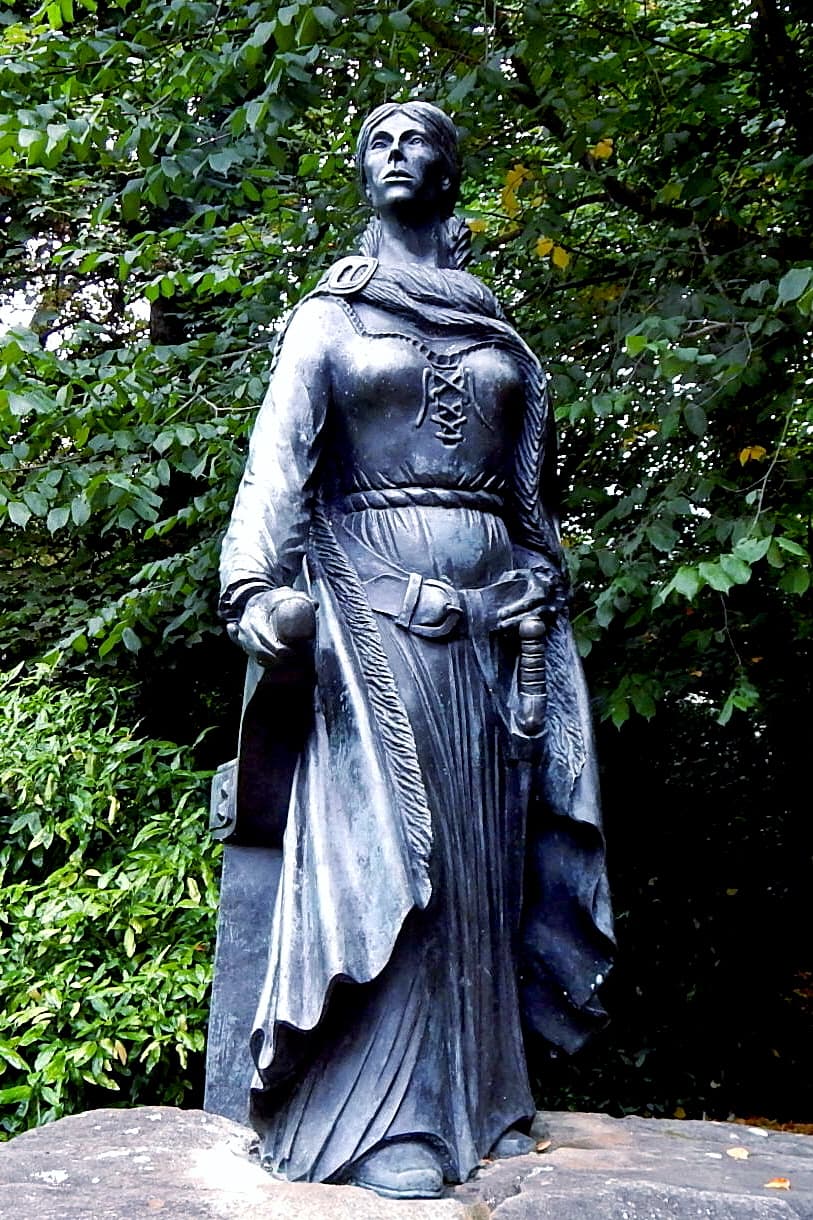
Irish · Exploration · Politics
Grace O’Malley
1530 – 1603
Introduction
Grace O’Malley (Irish: Gráinne Ní Mháille, often anglicised as Granuaile) was a sixteenth‑century Gaelic chieftain, seafarer, and political leader from the west coast of Ireland, active during the turbulent period of the Tudor conquest. Born around 1530 and dying around 1603, she is remembered as Ireland’s so‑called “Pirate Queen,” a shipowner and captain who combined maritime enterprise, armed resistance, and pragmatic negotiation to protect her clan and territory against rival Gaelic families and expanding English authority.[1][2][8][10][11][15]
Much of O’Malley’s story survives in English administrative records, legal complaints, and correspondence, supplemented by later Irish tradition, ballads, and historical reconstruction. Contemporary Irish annals are relatively silent about her, and many details of her life are approximate rather than precisely dated. Nonetheless, historians agree that she was a powerful regional ruler by land and sea, controlling a network of castles, galleys, and crews across Clew Bay and beyond, and engaging in both commerce and piracy. Her famous audience with Queen Elizabeth I at Greenwich in 1593 has become emblematic of her political skill and defiant independence.[1][2][7][10][11][15]
Early Life and Background
Grace O’Malley was born into the Uí Mháille (O’Malley) clan, a Gaelic family based in the maritime lordship of Umhaill on the west coast of County Mayo, Ireland. Most modern accounts place her birth around 1530, probably near Clew Bay, an area dominated by O’Malley strongholds and harbours.[1][2][8][15] The O’Malleys were renowned as a seafaring people; medieval references and later tradition describe them as maintaining fleets of ships, exacting tolls from passing vessels, and travelling widely along the Atlantic coasts for fishing and trade.[1][2][10][15]
Her father is generally identified as Eoghan Dubhdara Ó Máille, a chieftain or lord of Umhaill who controlled several castles and maritime routes, though surviving sources are sparse.[2][10][11][15] Gráinne grew up within the culture of Gaelic lordship, where clan leaders exercised authority over dependents, collected rents and tributes, and were bound by complex kinship obligations. She would have been exposed early to both shipboard life and the expectations placed on dynastic heirs.
Later folklore tells that as a child she insisted on sailing with her father and, when told she could not because her hair would catch in the ship’s ropes, she cut her hair short, giving rise to the nickname Gráinne Mhaol (“bald Gráinne”).[2][8][11][15] Although this anecdote is not documented in contemporary records, it reflects the memory of her as a girl determined to step into a male‑dominated maritime sphere.
Marriage, Alliance, and Early Career
In the mid‑sixteenth century, Grace O’Malley married Donal an Chogaidh O’Flaherty (Domhnall an Chogaidh Ó Flaitheartaigh), a member of the powerful O’Flaherty (Ó Flaithbheartaigh) clan of west Connacht.[2][8][10][11] This alliance extended her influence southward into the territory around Lough Corrib and the Connemara coast. As the wife of a chieftain, she gained access to additional ships, fighting men, and strongholds.
Sources agree that she and Donal had several children, usually named as Owen, Murrough, and a daughter often called Margaret or Méadhbh, though the exact number and birth order are uncertain.[2][10][11] During this period, O’Malley appears to have combined the roles of noblewoman and maritime leader, managing her own crews and engaging in sea‑borne activity distinct from but complementary to her husband’s operations.
English and later Irish accounts portray her as active in trading, toll‑taking, and piracy along the western seaboard. Her galleys—long, oared vessels suited to coastal waters—could move quickly between bays, intercept merchant shipping, and support raids ashore.[1][2][7][10][11] While the distinction between legitimate exactions and piracy was fluid in this era, her reputation as a "pirate queen" stems from such activities and from her willingness to attack or exact compositions from those who refused to acknowledge her authority.
Widowhood and Independent Leadership
In the later sixteenth century, Donal an Chogaidh O’Flaherty died, reportedly in a dispute or skirmish over a castle at Hen’s Castle (Caislean na Circe) on Lough Corrib, though the precise circumstances remain debated.[2][7][10][11] Following his death, Grace O’Malley did not retire into dependence on male kin, as Gaelic norms often prescribed for widows. Instead, she returned to her O’Malley patrimony in Umhaill and assumed an assertive leadership role in her own right.
By this time she had adult sons and loyal followers, and she consolidated power over a chain of coastal strongholds, including Clare Island, Rockfleet (Carraigahowley) Castle, and other sites around Clew Bay.[1][2][7][10][11][15] She organized a fleet of galleys and ships that engaged in long‑distance voyages for trade and seasonal fishing, as well as in plunder when opportunity presented. English sources describe her men levying tributes on vessels using her waters and raiding along the Galway and Mayo coasts.
Her activities extended beyond purely maritime ventures. O’Malley took part in the complex politics of Connacht, forming and breaking alliances with neighbouring clans, including the Burkes (de Búrca), MacDermots, and others, depending on circumstances. The period was marked by increasing English military presence, the imposition of new legal structures, and efforts to replace Gaelic customs of lordship and landholding with Tudor models of crown sovereignty.[1][2][10][11]
Relationship with the Tudor State
By the 1580s, Grace O’Malley’s career intersected sharply with English efforts to pacify and control Connacht. The crown’s governors, notably Sir Richard Bingham, sought to dismantle the power of local chieftains whom they viewed as rebels and freebooters. English reports portray O’Malley as a formidable adversary, sometimes in open conflict, sometimes in uneasy cooperation.[1][2][7][10][11][15]
One English official famously described her as "the nurse to all rebellions in the province for 40 years," a phrase that captures both the longevity of her political engagement and the alarm she inspired among colonial administrators.[1][15] At various times she appears to have supplied men and ships to Irish lords resisting English encroachment. At other times she made temporary submissions to the crown, seeking to secure her position and protect her dependents through legal agreements.
English records from this period include complaints about her raids, references to her imprisonment, and notices of her release under certain conditions.[2][10][11] The details and dates of these events are not always clear, but they show that she was considered a major regional power whose actions could not be ignored. Her capacity to mobilize armed crews, control harbours, and influence neighbouring chiefs gave her leverage even as the Tudor state tightened its grip.
The 1593 Audience with Queen Elizabeth I
In 1593, facing intensified pressure from Sir Richard Bingham, who had seized members of her family and interfered with her lands and maritime operations, Grace O’Malley undertook a bold journey from the west of Ireland to the heart of English power. That September she obtained an audience with Queen Elizabeth I at Greenwich Palace, an encounter noted in contemporary correspondence and later celebrated in Irish historical writing and folklore.[1][2][7][10][11]
During the meeting, which required royal permission and involved travel through hostile or unfamiliar territory, O’Malley set out her grievances against Bingham, including the imprisonment of her son Tibbot (Theobald) and the confiscation of her property. She requested redress and sought recognition of her rights as a Gaelic leader. Elizabeth I, who was herself navigating challenges of authority, gender expectations, and imperial expansion, appears to have treated O’Malley as a political actor rather than as a mere subject.
Accounts of the audience—based on letters and later retellings—suggest that O’Malley and the queen conversed through an interpreter and that O’Malley refused to bow as a subject, positioning herself instead as the head of a Gaelic "nation" negotiating with a foreign sovereign.[1][2][10][11] Elizabeth is said to have granted certain petitions, ordering the release of Tibbot and instructing Bingham to moderate his treatment of O’Malley’s interests. Implementing these orders in remote Connacht proved difficult, but the episode demonstrates O’Malley’s political acumen and her willingness to deploy diplomacy alongside force.
The Greenwich audience has come to symbolize a rare direct interaction between two powerful female rulers in early modern Europe. It highlights the complexities of the Tudor conquest, where local Gaelic leaders could sometimes appeal over the heads of aggressive regional officials to the central monarchy, using English law and royal favour to counter military repression.[1][2][7][10][11]
Major Activities and Accomplishments
Grace O’Malley’s significance lies less in discrete, dated "events" than in the cumulative exercise of power over several decades. Her principal accomplishments include:
- Maritime leadership and fleet command: She controlled and commanded a fleet of Irish galleys and other vessels operating from Clew Bay, Clare Island, and Rockfleet, undertaking long‑distance voyages for trade, seasonal fishing, and opportunistic raiding.[1][2][7][10][11][15]
- Territorial lordship: As de facto ruler of Umhaill, she held castles and lands, levied dues, and maintained dependents in a manner analogous to male Gaelic chieftains, challenging patriarchal norms of succession and authority.[1][2][8][10][11][15]
- Military engagement: She participated in regional conflicts, defending her territory against rival clans and English incursions, and was remembered in English sources as a persistent opponent of crown pacification policies.[1][2][10][11][15]
- Diplomatic negotiation: Her 1593 audience with Elizabeth I and other documented petitions to English officials show her using legal and diplomatic channels to pursue her aims, illustrating a pragmatic approach that combined resistance with selective cooperation.[1][2][7][10][11]
These accomplishments demonstrate that O’Malley operated simultaneously as a shipowner, sea captain, clan chief, and political strategist. Historians emphasize that, although popular culture often portrays her purely as a pirate, contemporary evidence depicts a more complex figure whose activities ranged from legitimate commerce to extortion and rebellion depending on context.[1][2][7][10][11]
Awards, Honours, and Contemporary Recognition
In the sixteenth century, Gaelic Ireland did not confer formal "awards" in the modern sense, and English authorities generally viewed Grace O’Malley as a troublesome rebel rather than as someone to honour. She did, however, receive forms of recognition that illuminate her status.
Within Gaelic society, her succession to her father’s leadership role, despite having an older brother, indicates that she was acknowledged as a capable and legitimate chief by her followers and kin.[15] The loyalty of her crews and dependents, and the endurance of her reputation in later oral tradition, suggest that she commanded respect and admiration locally.
In English documents, descriptions of her as "the nurse to all rebellions" and "the most notorious woman in all the coasts of Ireland"—phrases later quoted by biographers—testify to the fear and grudging acknowledgement she inspired among colonial officials.[1][15][20] Her ability to secure a personal audience with Elizabeth I also reflects a degree of recognition at the highest level of the Tudor state, even if couched in terms of control rather than honour.
Personal Life and Family
Grace O’Malley’s personal life was intertwined with her political career. Her marriage to Donal an Chogaidh O’Flaherty served as both a dynastic alliance and a platform for shared maritime ventures. After Donal’s death, she is reported to have entered a second union with Richard an Iarainn Burke (Risdeárd an Iarainn de Búrca), a member of the Burke family.[2][10][11] This relationship is sometimes described as a "contract marriage" of one year, after which she is said to have dismissed him but retained one of his castles, though the exact legal details are obscure and may be embellished in later accounts.
Her children played significant roles in her activities. Her son Tibbot (Theobald) Burke, often called Tibbot na Long (“of the ships”), later adapted to the transformed political landscape by cooperating with English authorities. He eventually became Viscount Mayo under the new Anglo‑Irish peerage system in the early seventeenth century, illustrating how O’Malley’s lineage continued within a reconfigured social order.[2][10][11]
Stories and sources emphasize that O’Malley did not separate maternal responsibilities from political leadership. She is depicted giving birth at sea and returning quickly to command, though such details are part of a mixture of folklore and selective historical memory.[2][8][11] Regardless of the literal accuracy of specific anecdotes, her life demonstrates that women in Gaelic Ireland could, in certain circumstances, combine domestic and clan roles with military and political authority.
Later Life and Death
In her later years, Grace O’Malley continued to navigate the shifting dynamics of the Tudor conquest. The defeat of major Irish rebellions and the consolidation of English rule limited the scope for independent Gaelic lordship. O’Malley appears to have relied increasingly on negotiated arrangements, including her son Tibbot’s accommodation with the crown, to preserve some measure of family status and property.[2][7][10][11]
Most modern references state that she died around 1603, the same year as Elizabeth I, though no contemporary record provides an exact date. Tradition holds that she died at Rockfleet (Carraigahowley) Castle on the Mayo coast, one of her principal strongholds, and that she was buried in the Cistercian abbey on Clare Island, which contains later O’Malley tombs.[1][2][7][11][15] As with her birth, the lack of precise documentation means that her death must be treated as approximate rather than pinpointed.
By the time of her death, the world in which she had risen to prominence was changing rapidly. The structures of Gaelic lordship were being replaced by English legal and administrative systems, plantations, and new patterns of landownership. Nevertheless, her immediate descendants, including Tibbot na Long and the Viscounts Mayo, continued to wield influence within the evolving Anglo‑Irish elite.
Legacy and Historical Impact
Grace O’Malley’s legacy is notable in several overlapping domains: Irish history, maritime culture, gender studies, and popular imagination. Historically, she stands out as one of the most prominent Gaelic leaders in sixteenth‑century Connacht, a figure who combined military resistance with tactical negotiation and who maintained a regional power base for decades despite the encroachment of a centralizing state.[1][2][3][7][10][11][15]
Her career challenges assumptions about gender in early modern Ireland. Although women in Gaelic society could occasionally inherit or exercise authority, O’Malley’s sustained and high‑profile leadership as a shipowning chieftain is exceptional. Modern writers and institutions often describe her as a "trailblazer" and even as a "feminist" figure, highlighting how she "breached boundaries of gender imbalance and bias" and operated in roles typically reserved for men.[1][10][15][20] These characterizations reflect contemporary interpretive frameworks rather than sixteenth‑century terminology, but they underscore her significance as an example of female power.
In maritime history, O’Malley is remembered for her command of fleets of Irish galleys and her engagement in piracy and sea‑borne warfare. Museums, historians, and popular media frequently cite her as one of the most famous pirates of the North Atlantic, contrasting her with better‑known Caribbean figures from later centuries.[1][3][16][18]
Her story has entered Irish folklore and cultural expression. Songs, plays, novels, and children’s books recount her exploits, often embellishing or romanticizing her life. Landmarks associated with her—such as Clare Island, Rockfleet Castle, and other castles—feature in heritage tourism and commemorations.[2][3][8][13][15] She has been the subject of scholarly biographies, notably by Anne Chambers, as well as exhibitions in institutions like the Women’s Museum of Ireland.[11][15][20]
Modern commentators also use O’Malley to explore themes of colonialism, resistance, and pragmatic survival. Her interactions with the Tudor state illustrate how local leaders might oscillate between rebellion and accommodation, and how women could be central actors in such processes. While many details of her life remain uncertain, the convergence of documentary evidence and enduring tradition secures her place as one of the most significant women in Irish history.
Historiography and Sources
The study of Grace O’Malley presents challenges that highlight broader issues in early modern Irish historiography. Contemporary Gaelic sources say little about her, perhaps because the annals focused primarily on major dynastic events and ecclesiastical affairs, or because her activities fell into categories not privileged by their compilers. Most of what historians know comes from English administrative documents—state papers, legal complaints, and correspondence—which record her presence mainly when she interacted with or resisted crown officials.[2][7][10][11]
These records are influenced by political agendas and perceptions of Gaelic society as rebellious and disorderly. They tend to emphasize her "piracy" and "rebellion" while downplaying the legitimacy of Gaelic lordship. Later historians and biographers, beginning in the nineteenth and twentieth centuries, worked to reconstruct her life by piecing together scattered references and correlating them with local traditions and genealogies.[2][11][15]
Folklore and literary treatments, while invaluable in preserving her memory, often blur distinctions between documented fact and imaginative elaboration. Anecdotes about cutting her hair, giving birth at sea, or dismissing a husband after a one‑year trial have become part of her legend, even when direct documentary corroboration is lacking.[2][8][11][15] Responsible scholarship therefore distinguishes between solidly attested events, plausible reconstructions, and purely legendary material.
Despite these difficulties, the broad contours of her life—birth into the O’Malley clan around 1530, marriages into O’Flaherty and Burke circles, maritime and political leadership in Connacht, confrontation and negotiation with English authorities, an audience with Elizabeth I in 1593, and death around 1603—are supported by multiple independent sources and have been widely accepted by historians.[1][2][7][10][11][15]
Conclusion
Grace O’Malley emerges from the fragmentary record as a complex and compelling figure: a Gaelic chieftain who commanded ships and castles, a mother who integrated family and political strategy, a rebel who fought and bargained with imperial power, and a woman who occupied spaces of authority typically closed to her sex in early modern Europe. Her fame as Ireland’s "Pirate Queen" only partially captures the breadth of her activities, which encompassed commerce, warfare, diplomacy, and clan governance.
While precise dates and details of many episodes in her life remain elusive, the evidence that survives is sufficient to place her among the most historically significant women of the sixteenth century. Her story continues to be revisited by historians, artists, and activists interested in the intersections of gender, power, and colonialism, ensuring that Gráinne Ní Mháille remains a living presence in Ireland’s cultural and historical imagination.[1][2][3][7][10][11][15][20]
Dated achievements
1 indexed.
- Sep011593Science
Audience with Queen Elizabeth I at Greenwich Palace
Grace O'Malley met Queen Elizabeth I face-to-face at Greenwich Palace in September 1593, negotiating directly for her family's freedom and the removal of Sir Richard Bingham.
View details Grace O'Malley: Pirate History, Fact, Fiction and Legend - Royal Museums Greenwich