← All women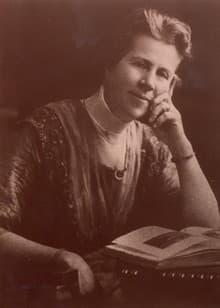
British · Science
Grace Chisholm Young
March 15, 1868 – March 29, 1944
Early Life and Background
Grace Chisholm Young was born on March 15, 1868, in Haslemere, Surrey, England. She was a member of a well-off family with educational privilege. Her parents, Anna Louisa Bell and Henry William Chisholm, encouraged her education from a young age. Grace displayed an early aptitude for mathematics and pursued studies at Girton College, Cambridge, an institution that allowed women to study but not earn degrees at the time.
Career Beginnings and Development
After studying at Cambridge, she continued her education at the University of Göttingen in Germany, where she became the first woman to receive a doctorate in mathematics. Faced with skepticism and bias against women in academia, Chisholm persevered and completed her dissertation on algebraic groups in 1895 under the supervision of the renowned mathematician Felix Klein.
Major Works, Discoveries, and Accomplishments
Grace married William Henry Young in 1896, and together they formed a highly productive mathematical collaboration. The Youngs published several works on calculus, particularly focusing on the theory of functions of a real variable. One of their most significant contributions was on the Denjoy–Young–Saks theorem. Throughout her career, she published numerous papers and took lead roles in many of their joint projects, often conducting much of the groundwork herself.
Awards, Honors, and Recognition
Despite the gender biases of her time, Grace Chisholm Young received considerable recognition for her work. While formal awards were rare for women during her lifetime, her sheer output and the quality of her work spoke volumes about her expertise and pioneering spirit.
Personal Life
Grace and William had six children, including Laurence Chisholm Young, who also became a notable mathematician. The Young family resided primarily in Switzerland, where Grace balanced her professional and domestic responsibilities.
Legacy and Historical Impact
Grace Chisholm Young's legacy endures through the mathematical texts she authored and her pioneering role for women in mathematics. Her perseverance opened pathways for subsequent generations of women scientists. She is remembered as a trailblazer who contributed significantly to mathematical analysis and theory.
Later Life and Death
In her later years, Grace continued to contribute to the field until health issues limited her activity. She passed away on March 29, 1944, leaving behind a profound legacy in mathematics. Her courage in defying societal norms continues to be celebrated in historical and mathematical circles.
Dated achievements
2 indexed.
- Mar151868Science
Grace Chisholm Young's Birth
Born on March 15, 1868, in Haslemere, England.
View details Agnes Scott - Grace Chisholm Young - Mar291944