← All women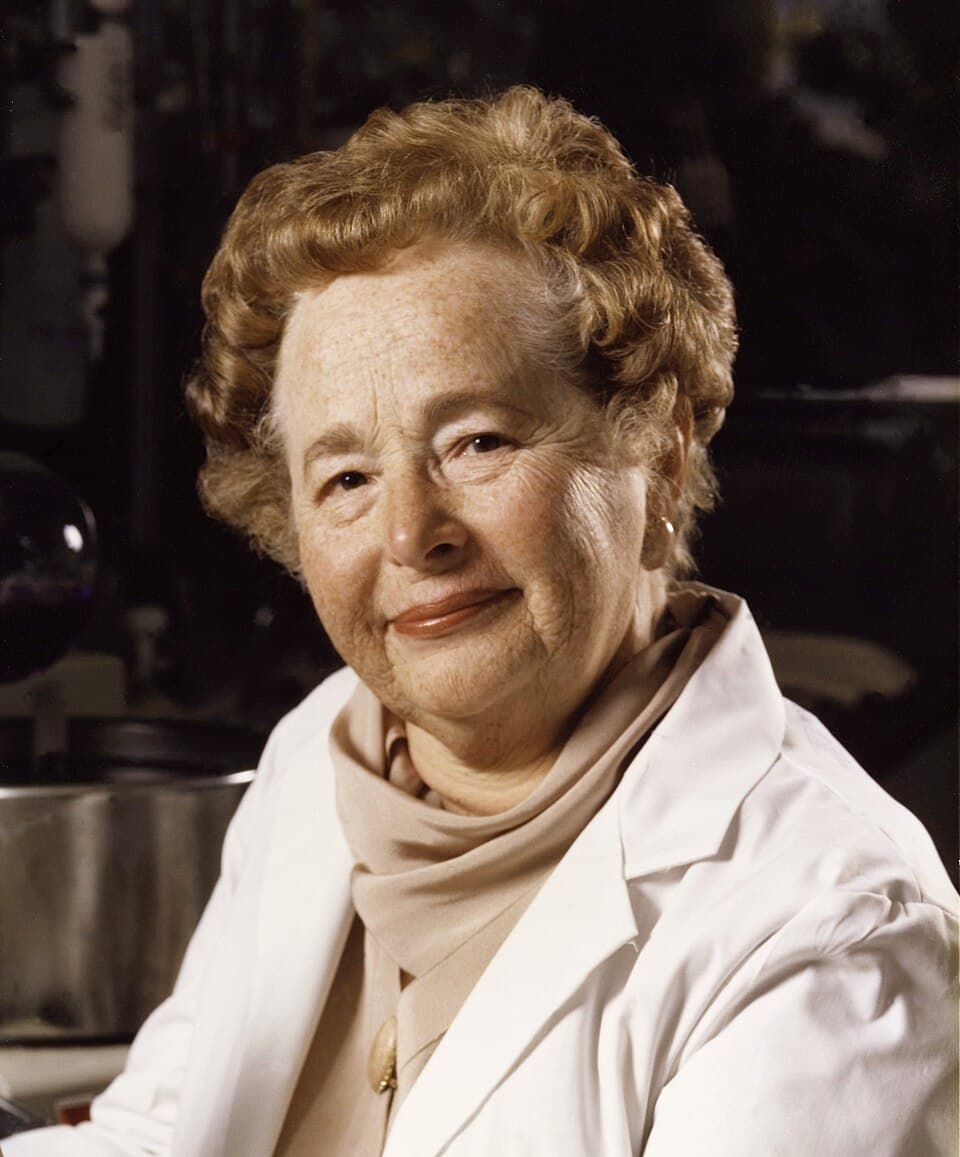
American · Science · Medicine
Gertrude Belle Elion
January 23, 1918 – February 21, 1999
Early Life and Background
Gertrude Belle Elion was born on 23 January 1918 in New York City to immigrant parents from Eastern Europe.[1][13] Her father, Robert Elion, was a dentist who had emigrated from Lithuania, and her mother, Bertha Cohen Elion, came from an area of Poland under Russian rule.[5][11] Growing up in a multilingual, working‑class household, Elion developed a strong curiosity and love of learning. She later recalled that books and education were central values in her family, despite modest means.[5][12]
In 1929, the family’s financial security was shaken when her father lost his savings in the stock market crash.[5][12] This experience deepened Elion’s determination to pursue practical, stable work. A critical emotional turning point came in 1933, when her beloved grandfather died of stomach cancer.[12][13] Elion has described this loss as the moment she resolved to become a scientist in order to fight disease and alleviate human suffering.[12]
Elion excelled in public schools in New York, showing particular aptitude in science and mathematics.[11][12] Because higher education for women was still uncommon and often discouraged, she relied on public institutions and scholarships. She enrolled at Hunter College, a women’s college of the City University of New York, where tuition was free for city residents.[1][11] There she studied chemistry, a discipline still dominated by men and not typically considered suitable for women.
Education and Formative Influences
Elion graduated summa cum laude in chemistry from Hunter College in 1937.[1][11] Despite her outstanding academic record, she faced substantial gender discrimination when seeking graduate training and employment. Several graduate programs rejected her because she was a woman, and the economic constraints of the Depression made full‑time study difficult.[11][15]
To support herself, Elion took a series of jobs that were only loosely connected to her training. She taught high‑school science, worked as a lab assistant, and held clerical positions while pursuing graduate coursework part‑time.[11][12] In 1941, she completed a master’s degree in chemistry at New York University, studying in the evenings and summers while working during the day.[11] Attempts to enter PhD programs were repeatedly frustrated, both by the limited availability of fellowships for women and by faculty who were reluctant to accept female students.
These early experiences shaped Elion’s pragmatic approach to science. Rather than follow the traditional academic path, she focused on gaining hands‑on laboratory experience. The combination of economic necessity and gender bias pushed her toward industrial research, where, despite barriers, opportunities for applied work were somewhat more open to women.[12][15]
Career Beginnings at Burroughs Wellcome
Elion’s landmark career began when she was hired in 1944 as a biochemist at Burroughs Wellcome, a pharmaceutical company in Tuckahoe, New York (later part of GlaxoSmithKline).[12][13] She joined the research group led by George H. Hitchings, a chemist who was interested in purine metabolism and the design of analogs—compounds that mimic natural biochemical building blocks.[1][12]
Hitchings and Elion developed a close scientific partnership based on meticulous experimentation and conceptual innovation. Instead of relying on trial‑and‑error screening of large collections of compounds, they sought to understand the biochemical pathways essential to cell growth and then design molecules that would interfere selectively with those pathways.[1][14][16] This approach came to be known as rational drug design.
During the 1940s, Elion broadened her expertise in biochemistry, pharmacology, and hematology. She was responsible for both synthesizing new compounds and testing their effects on cells and animal models. Working in an industrial laboratory that did not require a PhD, she advanced rapidly on the strength of her results rather than formal credentials, demonstrating that rigorous, high‑impact research was possible outside the traditional academic hierarchy.[12][13]
Major Discoveries and Rational Drug Design
Elion’s first major breakthrough came in 1950 with the development of 6‑mercaptopurine (6‑MP), a purine analog that became a cornerstone in the treatment of childhood leukemia.[1][14][16] By interfering with nucleic acid synthesis in rapidly dividing cells, 6‑MP helped achieve remission in many pediatric patients for whom few effective therapies previously existed. This discovery demonstrated the power of rationally designed antimetabolites—drugs that disrupt critical metabolic processes in cancer cells.
In 1951, Elion and Hitchings published influential work on purine antagonists, documenting how their synthetic analogs interfered with purine metabolism and describing the conceptual framework for designing targeted chemotherapeutic agents.[1][10] These publications helped establish rational drug design as a credible and reproducible methodology in pharmaceutical research.
Elion expanded the therapeutic scope of purine analogs in the early 1950s. In 1952, she developed pyrimethamine (Daraprim), an agent effective against Plasmodium parasites and used in the treatment and prevention of malaria.[3][11] This contribution was particularly significant in global public health, providing a new tool in the fight against a major parasitic disease.
By 1955, Elion and Hitchings had synthesized 6‑thioguanine, another key drug for treating leukemia.[1][10] The combination of 6‑mercaptopurine and 6‑thioguanine broadened the range of hematologic malignancies that could be treated and refined dosing strategies for chemotherapy.
Immunosuppression and Organ Transplantation
One of Elion’s most consequential achievements was her work on azathioprine (Imuran), an immunosuppressant derived from 6‑mercaptopurine. By the early 1960s, azathioprine was in clinical use and proved essential in making organ transplantation feasible by preventing rejection of transplanted kidneys.[1][14][16] It selectively suppressed immune responses while allowing sufficient immune function to remain.
This drug marked a historic turning point: for the first time, long‑term survival after organ transplantation became realistic, transforming renal medicine and later contributing to transplantation of other organs. Elion’s work therefore extended beyond cancer and infectious disease to fundamental immunology and surgical practice, illustrating the broad impact of rational drug design.
In 1959, Elion was awarded a patent for 2‑amino‑6‑mercaptopurine (Purinethol), consolidating the intellectual property surrounding one of the first successful leukemia drugs.[4] A subsequent patent for Imuran was granted in 1962, underlining her role as an inventor whose laboratory innovations translated into protected, commercially available therapies.[4]
Allopurinol, Gout Therapy, and Enzyme Inhibition
In 1963, Elion discovered allopurinol, a drug that inhibits xanthine oxidase and reduces the production of uric acid.[1][14] Allopurinol quickly became a cornerstone therapy for gout, a painful arthritic condition caused by deposition of urate crystals. By targeting a specific enzyme in purine metabolism, the drug exemplified rational design aimed at a defined biochemical target.
Allopurinol’s introduction also influenced management of hyperuricemia associated with cancer chemotherapy and other conditions. It provided clinicians with a precise, mechanism‑based tool, reducing reliance on less targeted treatments and illustrating how deep knowledge of metabolic pathways could yield safer and more effective medications.
Antiviral Therapy and Acyclovir
Elion extended rational drug design into the emerging field of antiviral therapy. In the 1970s, working with her team at Burroughs Wellcome, she helped develop acyclovir (ACV), a nucleoside analog that inhibits viral DNA polymerase.[10][14] By 1977, acyclovir was recognized as the first highly successful antiviral drug for herpes simplex infections.[1][14]
Acyclovir works by being selectively activated in virus‑infected cells and then terminating viral DNA synthesis, sparing most host cells. This selectivity was a major conceptual advance in antiviral pharmacology. Clinically, acyclovir revolutionized the treatment of herpes infections and later became important in managing varicella‑zoster virus. It demonstrated that rational design could be applied to viral enzymes and paved the way for the subsequent development of other nucleoside analogs and antiretroviral agents.
Role in the Development of AZT and HIV/AIDS Therapy
Elion’s work also laid crucial foundations for the treatment of HIV/AIDS. Her investigations into nucleoside analogs and viral DNA replication informed the development of zidovudine (AZT), one of the first widely used antiretroviral drugs.[1][14][15] AZT emerged from the same rational design principles that guided acyclovir, adapting them to retroviral reverse transcriptase.
Although AZT was approved after Elion’s retirement from Burroughs Wellcome in 1983, her laboratory and conceptual framework were central to its creation.[10][15] The drug became an early cornerstone of AIDS therapy in the late 1980s, offering patients the first meaningful pharmacologic intervention against HIV. Elion’s influence thus extended to one of the most significant public‑health challenges of the late twentieth century.
Academic Honors and Later Education
Despite never completing a traditional PhD, Elion’s scientific stature was recognized with multiple honorary degrees and academic appointments. In 1969, she received an honorary D.Sc. from George Washington University and a D.M.S. from Brown University, acknowledging her contributions to medicinal chemistry and pharmacology.[11]
She later served as a research professor at Duke University, where she taught, advised graduate students, and continued to shape research directions in pharmacology and experimental therapeutics.[10][13] Her academic roles gave her a platform to mentor younger scientists, particularly women, and to demonstrate that impactful research careers could take nontraditional routes.
Awards, Honors, and Recognition
Elion’s contributions were widely honored. Beyond the 1988 Nobel Prize in Physiology or Medicine, she received numerous prestigious awards.[1][2][13] In 1968, the American Chemical Society awarded her the Garvan–Olin Medal, recognizing outstanding work by a woman chemist.[2][16] In 1991, she received the U.S. National Medal of Science, one of the nation’s highest scientific honors.[2][11]
That same year, Elion was inducted into the National Inventors Hall of Fame, becoming the first woman to be honored there for scientific and technological innovation.[2][8] She later received the Lemelson‑MIT Lifetime Achievement Award in 1997, recognizing the broad impact of her inventive work on human health.[8]
Internationally, she was elected to bodies such as the U.S. National Academy of Sciences, further cementing her status as a leading figure in biomedical research.[13] Her awards collectively highlight the rare level of recognition accorded to a woman scientist of her generation.
Personal Life
Elion never married and did not have children.[1][11] As a young woman, she had been engaged, but her fiancé died of bacterial endocarditis before their wedding, an experience that further reinforced her commitment to medical research.[11][15] She later described science as both a vocation and a sustaining focus in the wake of personal loss.
Colleagues and students often noted her generosity, modesty, and commitment to mentoring. She encouraged younger researchers to publish and insisted that they receive appropriate credit for discoveries made in her laboratory.[15] This mentoring ethos was especially important for women and minorities entering a still‑male‑dominated field.
Outside the laboratory, Elion enjoyed travel, music, and attending the theater. She maintained close relationships with her extended family and with friends from her early years in New York.[11] Her personal life reflected a blend of devotion to science and appreciation for cultural pursuits.
Legacy and Historical Impact
Gertrude B. Elion’s legacy rests on both specific drugs and a broader transformation of pharmaceutical science. Her work on purine analogs, immunosuppressants, enzyme inhibitors, and antiviral agents demonstrated that rational drug design could yield powerful, targeted therapies across a wide range of diseases.[1][14][16] Medications she discovered or helped develop—such as 6‑mercaptopurine, 6‑thioguanine, azathioprine, allopurinol, pyrimethamine, and acyclovir—are foundational in oncology, rheumatology, infectious disease, and transplantation medicine.
Historically, Elion was a trailblazer for women in science. She entered chemistry when women were rarely accepted into graduate programs or research leadership roles, yet rose to head the Department of Experimental Therapy at Burroughs Wellcome and to receive a Nobel Prize.[1][12][13] Her career showed that women could lead high‑impact industrial research and that scientific excellence could prevail despite structural gender bias.
Her mentoring and advocacy for younger scientists amplified this impact. By ensuring that her trainees received recognition and opportunities, she helped diversify the pipeline of researchers entering pharmacology and biochemistry.[15] Scholars of women’s history often highlight Elion as an example of how women navigated and gradually transformed the gendered landscape of twentieth‑century science.
Elion’s influence also persists conceptually. Rational drug design, now fundamental to pharmaceutical development, underpins the creation of targeted cancer therapies, enzyme inhibitors, and modern antiviral and antiretroviral drugs.[14][16] The methods she and Hitchings pioneered—understanding metabolic pathways, identifying critical enzymes, and designing analogs to disrupt them—remain central to medicinal chemistry and drug discovery.
Later Life and Death
Elion officially retired from Burroughs Wellcome in 1983, but she remained scientifically active for many years.[10][13] She continued as a consultant to the company, served as a research professor at Duke University, and participated in scientific advisory boards and lectures. The year after her retirement, her laboratory’s work contributed to the development of AZT, underscoring that her intellectual legacy continued to drive innovation.[10][15]
In her later years, Elion lived in Chapel Hill, North Carolina, close to Duke and the Research Triangle, remaining engaged with scientific colleagues and students.[10][13] On 21 February 1999, she died at home in Chapel Hill at age eighty‑one.[4][6][7][11] Obituaries and memorials from scientific societies, universities, and women’s‑history organizations emphasized both the lifesaving nature of her discoveries and the inspirational model she offered for women in science.
Gertrude B. Elion’s life story—from a determined student in Depression‑era New York to a Nobel laureate whose work continues to save lives—remains central to the history of twentieth‑century medicine and to the broader narrative of women’s achievements in science.
Dated achievements
3 indexed.
- Jan231918Science
Birth of Gertrude Belle Elion
Gertrude Belle Elion was born in New York City, later becoming a pioneering pharmacologist and biochemist.
View details Biography of Gertrude B. Elion - Oct161988Medicine
Nobel Prize in Physiology or Medicine
Gertrude B. Elion received the Nobel Prize in Physiology or Medicine on October 16, 1988, for her remarkable contributions to drug development.