← All women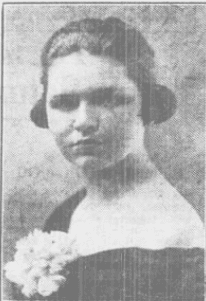
American · Politics · Arts
Georgia Neese Clark Gray
January 27, 1898 – October 26, 1995
Early Life and Background
Georgia Neese Clark Gray (born Georgia Neese) was born on 27 January 1898 in Richland, Kansas, a small rural community southeast of Topeka.[4][5] She was the younger of two daughters of Albert Neese and Ella Sullivan Neese.[4][2] Albert Neese was a farmer and an energetic local entrepreneur who owned and operated the Richland State Bank, a general store, an insurance agency, a lumber yard, and a grain elevator.[2][4] Ella Neese was a homemaker who kept the household running while her husband managed multiple businesses. Growing up in a family where business, finance, and community service were intertwined, Georgia absorbed practical knowledge of banking and commerce from an early age.
Accounts of her childhood note that her father sometimes expressed regret that he did not have a son to succeed him in the bank.[2] This sentiment reflected the prevailing norms of the period, when financial and leadership roles were assumed to be the domain of men. Nonetheless, Georgia showed intellectual curiosity and independence. She attended schools in Richland and Topeka and later continued her education in the city.
After secondary school, Georgia studied at Bethany College in Topeka and then transferred to Washburn College (now Washburn University), also in Topeka.[7][2] She completed her degree from Washburn in 1921, an achievement that was still relatively uncommon for women of her generation.[2] Her decision to pursue higher education was shaped by both her own ambitions and her father’s insistence that she obtain a college degree before embarking on any theatrical career.[2]
During her student years, Georgia developed a keen interest in the performing arts. She was drawn to the theater and "bitten by the acting bug," as later commentators described it.[2] This passion would soon lead her far from Kansas, but the grounding in liberal arts and the discipline of her college education remained central to her later success in more conventional fields such as banking and politics.
Education and Acting Career
Upon graduating from Washburn in 1921, Georgia Neese moved to New York City to study acting at the Franklin Sargent School of Dramatic Art, a respected institution for stage training.[2] There she honed her skills in voice, movement, and performance, preparing for a professional career on the stage. According to later biographical sketches, she pursued acting with determination and secured roles that gave her a moderately successful career in the theater.[2][8]
Georgia performed in stock companies and touring productions, gaining experience in a competitive and often unstable profession. Her time in New York exposed her to urban life and to a broader range of social and political ideas than those available in rural Kansas. She developed poise, public speaking abilities, and comfort before audiences—skills that would later prove invaluable when she entered banking, party politics, and federal office.
The stock market crash of 1929 and the onset of the Great Depression dramatically altered the theater industry, making jobs scarce.[2] As economic conditions worsened, many productions closed or cut back, and opportunities for actresses declined. Faced with this new reality, Georgia made a pragmatic decision to return to Kansas and work in the family bank. Her earlier exposure to banking through her father’s business provided a solid foundation for this transition.
Return to Kansas and Banking Career
Returning to Richland after the crash, Georgia joined her father at Richland State Bank, taking on responsibilities as a banker and manager.[2] Over time she became more deeply involved in the bank’s operations and in the network of businesses her father had created. Biographical sources emphasize that she "proved herself a most capable businesswoman," handling the demands of rural banking, including agricultural loans and local commerce.[8]
Her banking career was not without dramatic incidents. One oft‑recounted story describes how bank robbers awakened her at home and forced her to accompany them to the Richland bank to open the safe.[8] The episode illustrates the precarious nature of small‑town banking in the early twentieth century and Georgia’s personal courage in stressful situations.
Georgia’s personal life changed in 1929, when she married George M. Clark, a businessman associated with the bank.[1][2] After his death in 1937, she became president of Richland State Bank, assuming full leadership of the institution.[1][2] Although she divorced Clark in the mid‑1940s, she kept his surname for professional purposes—a choice that meant her signature on U.S. currency would later read "Georgia Neese Clark".[1]
Following the relocation of populations and economic activity away from Richland, the bank was eventually moved to Topeka, where it continued under her leadership as Capital City Bank.[7] She served as president of the bank until 1964, overseeing its growth and adaptation to changing financial landscapes.[2] Her tenure made her one of relatively few women bank presidents in mid‑twentieth‑century America.
Entry into Politics and Democratic Party Service
Alongside her work in banking, Georgia Neese Clark became active in Kansas and national politics, particularly within the Democratic Party. Upon her return from New York, she began attending Democratic meetings and cultivating relationships with party leaders.[2] Her skills in public speaking and her network as a banker contributed to her rising profile.
In 1934, she was selected as the Democratic National Committeewoman from Kansas, then noted as the youngest national committeewoman in the United States.[2] In this role she participated in national party conventions, engaged in fundraising, and helped coordinate campaign activities. She became an early supporter of Harry S. Truman, whose own political trajectory—from county judge to U.S. Senator and then President—intersected with hers during the New Deal and World War II eras.[6]
By the mid‑1940s, Georgia had built a reputation in Washington as a reliable fundraiser and experienced party operative.[2] When Truman became President in 1945, her longstanding support and organizational work contributed to her visibility among national Democratic leaders.[4][6] This political background, combined with her banking expertise, would later prove decisive in her selection for federal office.
Appointment as Treasurer of the United States
The path to Georgia Neese Clark’s historic appointment began with the death of William A. Julian, who had served as Treasurer of the United States for more than 15 years.[2][8] Seeking a woman to fill the position, President Truman asked advisors to identify qualified candidates.[2][3] Georgia’s name was proposed, reflecting her dual experience in banking and party politics.
According to later accounts, when Truman offered her the job, he remarked that the position did not pay much and asked whether she could afford to accept it. Georgia famously replied, "Can I afford not to?"—a response that underscored her sense of duty and opportunity.[2] Her appointment made her responsible for key aspects of federal financial administration, including oversight of the issuance of U.S. paper currency.
Sources differ on the exact appointment date; a Kansas historical post and social‑media tributes highlight 9 June 1949 as the day she became the first woman Treasurer.[7][9][11] The German‑language biographical entry lists her official term as running from 21 June 1949 to 27 January 1953.[5] A contemporary LinkedIn historical note cites 27 January 1949 as the appointment date.[12] While these accounts vary in detail, all concur that she assumed the office in mid‑1949 and was the first woman to do so.[4][5]
Newspapers at the time drew attention to her unusual background: she was a former actress, a divorcee, and a rural banker, characteristics that challenged traditional expectations of federal officeholders in the late 1940s.[8] Her appointment attracted headlines from Rochester to Tallahassee and was widely noticed in Kansas papers.[8] She brought to the role not only technical knowledge of banking but also the poise and communicative skills honed on the stage and in partisan politics.
Tenure as the First Woman Treasurer of the United States
Georgia Neese Clark served as the 29th Treasurer of the United States from 1949 to 1953$29 billion in paper money was printed, all bearing the signature "Georgia Neese Clark".[1] The appearance of a woman’s name on every new dollar bill and other notes was itself a symbolic milestone, visible to millions of Americans in everyday transactions.
As Treasurer, she worked within the U.S. Treasury Department, dealing with routine but essential functions related to currency, accounts, and financial administration. Her term coincided with major developments in post‑World War II economic policy, including managing the fiscal implications of the Marshall Plan and early Cold War expenditures. Although detailed records of her specific decisions are limited in the biographical literature available, her role placed her at the intersection of federal finance and political accountability.
Her tenure ended with the conclusion of the Truman administration. The German biographical entry specifies that she held the office until 27 January 1953, and commentators generally place the end of her service around the 20 January 1953 inauguration of President Dwight D. Eisenhower.[1][5] After her departure, the office continued to be held by a succession of women, and historical commentaries often note that since Georgia Neese Clark, the Treasurers of the United States have overwhelmingly been women.[2][6]
Her pioneering role is recognized in lists of American women’s firsts, where she is noted as the first woman to serve as Treasurer.[1] The Britannica biography of Georgia Neese Gray likewise underscores that she was the first woman appointed as Treasurer of the United States, highlighting the gender‑barrier‑breaking nature of her service.[18]
Personal Life and Second Marriage
Georgia Neese Clark’s personal life intertwined with her professional roles. After her marriage to George M. Clark in 1929 and his death in 1937, she carried his surname into her banking and political career.[1][2] In the mid‑1940s she divorced him but retained the name "Clark" for professional reasons.[1] This choice meant that throughout her term as Treasurer her official signature read "Georgia Neese Clark," even though her later life included a second marriage.
In 1953, after leaving federal office, she married Andrew J. (Andy) Gray, a journalist and press agent.[1][3] The National Park Service’s oral history materials describe Andy Gray’s career in journalism and public relations and note the couple’s later involvement with the Harry S. Truman Presidential Library
After her second marriage, she was often referred to as Georgia Neese Clark Gray, a name used in many later biographical references and commemorations.[4][5] She continued to live primarily in Kansas, balancing her commitments to the bank with civic and cultural activities in Topeka. Beyond banking and federal service, Georgia Neese Clark Gray played a notable role in Kansas civic life. She supported cultural institutions and educational causes and maintained connections to her alma mater, Washburn University.[2] Her prominence in the state led to multiple honors in later years. One significant recognition is the naming of the main performance hall at the Topeka Performing Arts Center in her honor.[13] Local commentary notes that the hall bears her name as a tribute to her contributions as a banker and community leader.[13] This naming reflects both her early passion for theater and her later support of the arts; it symbolically links her youthful aspirations as an actress with her mature role as a patron of cultural life. She is also celebrated in fraternity and sorority histories, particularly within Alpha Phi, where she is listed among notable sorority women.[1] The Alpha Phi profile highlights her pioneering status as the first female Treasurer of the United States and recounts aspects of her career and personal life, reinforcing her significance as a role model for women in finance and public service. In addition, Georgia Neese Clark Gray appears in compilations of American women’s firsts, and she is frequently mentioned in commentaries and social‑media posts by Kansas officials revisiting the state’s history of women’s achievements.[1][9][11] These sources emphasize her trailblazing role and her enduring ability to inspire future generations. Georgia Neese Clark Gray’s most enduring legacy lies in her role as the first woman Treasurer of the United States. Her appointment in 1949 demonstrated that women could hold senior positions in federal financial administration at a time when such roles were overwhelmingly filled by men.[4][5] The fact that, after her tenure, the office of Treasurer came to be held almost exclusively by women underscores the transformative impact of her precedent.[2][6] Her signature on billions of dollars in U.S. paper money gave her a unique form of visibility. Ordinary citizens who may never have heard her name in news reports nonetheless saw "Georgia Neese Clark" printed on the bills they used daily. This subtle yet pervasive presence contributed to normalizing the idea of women’s authority in financial matters. Historians and commentators stress that Georgia’s trajectory—from a small Kansas town to New York theater stages, and then to the heights of federal office—illustrates the interplay between personal determination and structural change. She drew on skills developed in acting, banking, and party politics to succeed in a high‑pressure role, showing that non‑traditional backgrounds could be assets rather than liabilities.[2][8] In Kansas, she is remembered as a symbol of the state’s contribution to national leadership. Kansas Public Radio’s 2023 commentary "Remembering Georgia Neese Clark Gray" emphasizes her story as a part of state heritage and notes that all U.S. Treasurers since her tenure have been women.[2] The Governor of Kansas has highlighted her appointment anniversary in public messages, portraying her as a trailblazer whose "passion and work ethic" continue to inspire young Kansans.[11] Her inclusion in Britannica and in multilingual Wikipedia entries further testifies to the international recognition of her role. Spanish, German, and Czech biographical articles all underscore that she was the first woman to serve as Treasurer of the United States and note her burial in Pleasant Hill Cemetery in Kansas.[4][5][6] After completing her term as Treasurer in 1953, Georgia Neese Clark Gray returned to Kansas, resuming leadership of what became Capital City Bank in Topeka.[2][7] She continued to serve as bank president until 1964, navigating the institution through post‑war growth and shifting regulatory frameworks.[2] In the subsequent decades she remained active in civic organizations, supported cultural projects, and maintained ties to the Democratic Party and the Truman community.[3] In the late 1950s she was appointed to the Board of Trustees of the Harry S. Truman Presidential Library, after which she and Andy Gray made frequent visits to Independence, Missouri.[3] Their relationship with the Trumans extended beyond official capacities, reflecting mutual respect and friendship. Georgia Neese Clark Gray lived to see dramatic changes in women’s status in American society, including the rise of the women’s movement, the increasing presence of women in corporate and political leadership, and the appointment of women to cabinet‑level positions and federal judgeships. Her own pioneering experience provided an early example of these trends. She died on 26 October 1995 in Topeka, Kansas, at the age of 97.[4][5][8] Spanish and German biographical sources note that she is buried at Pleasant Hill Cemetery, located east of Berryton, Kansas, near the rural area where she grew up.[4][6] Her death prompted reflections on nearly a century of American history and on the enduring significance of her achievements. In the years since her passing, Georgia Neese Clark Gray has been the subject of historical videos, articles, and commemorative posts, including features by Kansas Public Radio and regional television segments.[2][8] These retrospectives reinforce her status as a key figure in both Kansas history and the broader narrative of women’s advancement in government and finance. Assessing Georgia Neese Clark Gray’s life reveals a pattern of boundary‑crossing: she moved from rural business to urban theater, from local banking to national office, and from partisan activism to institutional stewardship at the Truman Library. Each phase of her life contributed to a broader legacy of women’s participation in public life. Her story underscores that structural barriers can be challenged through a combination of expertise, political engagement, and readiness to seize opportunity. In 1949, she accepted a modestly paid but highly visible post because she felt she "could not afford" to decline the chance to serve.[2] That decision had lasting consequences, not only for her own career but for the generations of women who followed her into Treasury leadership and beyond. Today, Georgia Neese Clark Gray stands as a significant figure in women’s history: a banker whose signature appeared on every U.S. bill printed during her tenure, an actress whose stage skills translated into public leadership, and a Kansan whose local roots never prevented her from shaping national institutions.Civic Engagement, Cultural Contributions, and Honors
Legacy and Historical Impact
Later Life and Death
Assessment
Dated achievements
5 indexed.
- Jan271898Science
Birth in Richland, Kansas
Georgia Neese Clark Gray was born in Richland, Kansas, later becoming an actress, banker, and the first woman U.S. Treasurer.
View details Georgia Neese Clark Gray - Wikipedia - Jun091949Science
Becomes first woman Treasurer of the United States
Georgia Neese Clark Gray was appointed and confirmed as the first woman to serve as Treasurer of the United States under President Truman.