← All women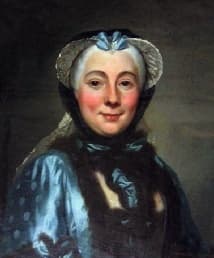
French · Science · Medicine · Literature
Geneviève Thiroux d'Arconville
October 17, 1720 – December 23, 1805
Early Life and Background
Marie‑Geneviève‑Charlotte Thiroux d’Arconville (née Darlus) was born on 17 October 1720 in Paris into a prosperous family connected to royal administration. Her father, André‑Guillaume (or Guillaume) Darlus d’Arconville, served as a government financier and secretary to the king, while her mother, Françoise Gaudicher, came from a notarial family from Angers.[11][14][17] Growing up in this milieu placed her within the wealthy Parisian bourgeoisie, close to the worlds of law, finance, and learned culture.
Like many elite girls in early eighteenth‑century France, she received only a limited formal education in childhood. Several accounts stress that her schooling was far less extensive than that of boys of her class, and that she would later compensate through intense self‑directed study.[8][11][12] Nevertheless, she had access to books and tutors, and the intellectual sociability of Parisian salons offered informal channels of learning. Her early exposure to literature and conversation in such circles fostered an abiding interest in moral reflection, history, and eventually science.
D’Arconville’s later writings reveal familiarity not only with French authors but also with English and Scottish moralists and scientists, suggesting that she learned languages and cultivated a cosmopolitan outlook quite early. Biographers note that she would later make deliberate use of her status as a married woman and magistrate’s wife to pursue knowledge, attending lectures and forming ties with physicians, anatomists, and chemists.[8][11] This trajectory—from relatively modest schooling to rigorous self‑education—became central to how she understood and narrated her own life.
Marriage, Social Position, and Entry into Intellectual Life
Around her mid‑teens, d’Arconville married Louis‑Lazare Thiroux d’Arconville, a magistrate who served as conseiller, later président, in the Parlement de Paris.[1][5][12][14] Sources differ slightly on the exact year and her precise age—some state that she married at about fourteen in 1734, others that the marriage took place in 1735 when she was fifteen—but they agree that she wed very young in accordance with the norms of her milieu.[12][14] Through this marriage she acquired the title by which she became known in her own time: "la présidente Thiroux d’Arconville".
The marriage brought social status, wealth, and a network of connections that would prove crucial to her intellectual development. As the wife of a high magistrate, she had access to elite salons and to contacts among physicians, naturalists, and academicians. She bore three sons, one of whom, Louis Bénigne François Berthier, known as Thiroux de Crosne, later became a prominent royal official and was executed by guillotine during the Revolution.[12][17] Balancing domestic responsibilities with study, she gradually crafted a role for herself as a woman of letters and science within the constraints of aristocratic domestic life.
D’Arconville’s social position also allowed her to attend scientific teaching normally aimed at men. She is known to have studied at the Jardin du Roi (the royal botanical garden in Paris, later the Jardin des Plantes), which also functioned as an important center for medical and scientific instruction.[15] There she could follow courses in anatomy, botany, and perhaps chemistry, and she forged relationships with the anatomist Jean‑Joseph Süe and other savants who later collaborated with her or supported her work.
Self‑Education, Illness, and Turn Toward Science
A significant episode in d’Arconville’s life was her contraction of smallpox, which left her face scarred.[6][9][12] The experience of illness and its aftermath, in a culture that valued women largely for beauty and sociability, altered her sense of self. Several commentators suggest that this event intensified her orientation toward study and inward reflection, reinforcing her pursuit of a life of the mind rather than courtly display.[6][9][12]
In the decades that followed, she developed a disciplined regimen of reading, note‑taking, and writing across several domains—moral philosophy, history, anatomy, and chemistry. She studied English and perhaps other languages well enough to translate complex technical works. Her intellectual trajectory remained largely self‑directed, yet it intersected with institutional science through contacts with physicians and chemists and through attendance at lectures at the Jardin du Roi and other venues.[11][15][16]
Crucially, d’Arconville decided early on to publish most of her works anonymously or under veiled attributions, a choice that shaped her later reputation. Scholars have argued that anonymity allowed her both to circumvent gender prejudice and to move more freely between genres, from fiction and moral essays to technical scientific treatises, without being constrained by expectations of a "feminine" authorial persona.[9][16][17]
Career Beginnings: Translation and Anatomy
D’Arconville’s first major entrance into the world of print came through anatomy. Around 1759, she produced a French translation of Scottish anatomist Alexander Monro’s influential treatise The Anatomy of the Human Bones (originally published in 1726).[1][5][7][13][15] The resulting work, titled Traité d’ostéologie, was more than a simple translation: she collaborated with the anatomist Jean‑Joseph Süe, supervised the production of illustrations, and added explanatory material.
The Traité d’ostéologie is notable for its detailed plates of the human skeleton, including renderings of the female skeleton with proportions differing from those of the male. At the time, these illustrations were attributed to a male artist, but modern research credits d’Arconville as the guiding mind behind the project.[15] The book became a reference in anatomical teaching and remained of scientific interest for many years, despite later corrections to some aspects of the drawings.
By undertaking this translation, d’Arconville contributed to the diffusion of British anatomical knowledge in France and established herself as a serious intermediary between different national scientific traditions. Her work also illustrates a broader pattern in the eighteenth century: women entering scientific culture through translation and editorial labor, which could be framed as a form of "service" rather than direct authorship and therefore appeared more socially acceptable.[1][12][17]
Experimental Chemistry and the Study of Putrefaction
Alongside her anatomical work, d’Arconville embarked on what has become the most celebrated part of her scientific career: a large‑scale experimental study of putrefaction and the preservation of organic matter. Between roughly 1754 and 1764, she carried out an extensive series of experiments—often estimated at around 300—in a laboratory she maintained in suburban Paris.[1][6][12][16][17]
These experiments investigated the decay of a wide range of substances, including beef, fish, milk, eggs, and human bile. She systematically compared the effects of exposure to air and different environmental conditions, and she tested approximately thirty‑two classes of preservatives, among them mineral acids and bases, salts, and plant‑derived substances.[1][12][16][17] Her methods were remarkably systematic for the time: she designed comparative trials, recorded durations of preservation, and carefully described the sensory signs of putrefaction.
From these investigations, d’Arconville concluded that contact with air was the principal factor promoting putrefaction, an insight that anticipated later understandings of the role of oxygen and microorganisms, though she did not identify germs.[6][12][17] She also showed that certain agents, notably quinquina (Peruvian bark, the source of quinine), could slow decay, and she discussed the preservative power of corrosive sublimate (mercuric chloride) as an antiseptic substance.[5][16][17] Although highly toxic, mercuric chloride became an important disinfectant and preservative in later medical and laboratory practice.
D’Arconville’s experimental program was exceptional for a woman of her era. Contemporary and modern commentators emphasize that she was among the very few eighteenth‑century women who not only translated scientific works but also devised and conducted a long‑term series of original experiments in chemistry.[11][16][17] Her work circulated among physicians and chemists and contributed to evolving debates about the nature of decomposition, contagion, and the preservation of food and organic specimens.
Essai pour servir à l’histoire de la putréfaction (1766)
In 1766, d’Arconville published the culmination of this research in a major treatise titled Essai pour servir à l’histoire de la putréfaction (Essay to serve the history of putrefaction).[1][2][4][6][9][12][16][17] The work appeared anonymously, in keeping with her usual practice, but internal evidence and external documentation have firmly established her authorship.
The Essai combined detailed experimental reports with broader theoretical reflections. D’Arconville systematically described her experimental conditions, tabulated results, and proposed generalizations about the stages and causes of putrefaction. She engaged critically with existing theories, including those derived from Newton’s Opticks and from contemporary medical writers, and framed decay as a natural process of breakdown into component elements rather than as a mysterious corruption.[16]
One of the treatise’s most important contributions was its analysis of air as a key agent in putrefaction. By comparing sealed and unsealed containers, varied atmospheres, and different temperatures, d’Arconville showed that exclusion of air significantly delayed decay. She also argued for the antiseptic value of quinquina and described in detail the use of mercuric chloride as a chemical capable of combating putrefaction, suggesting applications in medicine and preservation.[5][16][17]
The Essai was read and cited by physicians and apothecaries and remained a point of reference well into the nineteenth century. Later chemists, including Louis Pasteur, would confirm and deepen some of its core empirical observations about the conditions that favor or retard decay, though they did so without recognizing the anonymous eighteenth‑century woman who had helped prepare the way.[13][16][17]
Chemical Translations and History of Applied Chemistry
During the 1760s, d’Arconville extended her influence on chemistry through major translation projects. She translated Peter Shaw’s Chemical Lectures and Robert Dossie’s The Elaboratory laid open, both important English‑language works that brought together theoretical and practical aspects of chemistry.[2][9][12][17] Once again, she did more than translate: she provided extensive notes and composed a substantial preliminary discourse.
This preliminary discourse has been described as a de facto history of applied chemistry to the arts.[2][9][12] In it, d’Arconville traced the development of chemical techniques in crafts and manufacturing, discussed the relationship between experimental science and artisanal expertise, and reflected on the social uses of chemical knowledge. Her commentary reveals a sophisticated grasp of the interplay between theory and practice and an awareness of how industrial processes shaped and were shaped by scientific investigation.
These translations and commentaries placed her at the center of Enlightenment debates about the role of chemistry in improving society—from dyeing and metallurgy to medicine and preservation. They also exemplify how women could intervene in technical discourse through genres—translation, commentary, prefatory essays—that were more socially accessible than direct claims to original discovery.[11][17]
Other Scientific and Literary Works
D’Arconville’s scientific activity was not limited to chemistry and anatomy. Over the course of her life she produced, often anonymously, a wide range of works in medicine, botany, history, and moral philosophy. She assembled a volume titled Mélanges, which gathered French translations of important medical and botanical papers, including articles originally published in the early eighteenth‑century Philosophical Transactions of the Royal Society of London.[2] Through this and similar collections, she mediated cutting‑edge research for a French‑speaking audience.
In literature and moral philosophy, she wrote novels, essays on morality, and historical and autobiographical texts.[11][12][13] Her moral writings explored themes such as friendship, human passions, aging, and the education of women, often drawing on her own experience in aristocratic society. While these works circulated widely in the eighteenth century, their anonymous publication led to misattribution and gradual obscurity.
She also maintained notebooks and manuscripts that blended personal reflection with philosophical and scientific observation. Modern editors have highlighted these texts as important contributions to Enlightenment moral and social thought, showing how a woman writer could engage critically with the same questions that preoccupied male philosophes, from the foundations of virtue to the nature of sociability.[13][16][18]
Engagement with the Enlightenment Community
Recent scholarship emphasizes that d’Arconville was not an isolated figure but part of a broader community of elite scientists and literati in early modern Paris.[11] She interacted with physicians, apothecaries, anatomists, and chemists who taught at the Jardin du Roi and worked in hospitals and laboratories, and she participated in the world of salons where scientific ideas circulated alongside literature and politics.
Her choice of anonymity did not mean social withdrawal. Rather, it reflected a strategic negotiation of gender norms. Publishing as "Madame***" or leaving works unsigned, she could address controversial topics, critique contemporary theories, and move freely between scientific and moral genres without attracting the kind of personal scrutiny often directed at female authors.[9][16][17] Within her circles, however, her authorship was known and respected.
In this sense, d’Arconville exemplifies a form of "hidden" participation in the Enlightenment: women who were central to intellectual networks and practices yet whose names were effaced in print. Her correspondence and collaborations show that she contributed not only content but also labor—editing, translating, organizing experiments—that underpinned male‑authored works as well.
Political Upheaval, the French Revolution, and Personal Loss
D’Arconville lived through the profound upheavals of the French Revolution, and these events marked her personal life deeply. According to biographical entries, she was an implacable opponent of the Revolution.[12] Her social position as the wife of a magistrate and mother of a high royal official placed her on the side of the old regime in the eyes of revolutionaries.
During the period known as the Reign of Terror (1793–1794), she went into hiding to escape potential arrest. One of her sons, Thiroux de Crosne, who had served as the last lieutenant general of police of Paris and later as an intendant in Normandy, was executed by guillotine.[12] This personal tragedy reinforced her hostility to revolutionary politics and shaped the tone of some of her later reflections.
Despite these dangers and losses, d’Arconville continued to work privately, revising manuscripts and maintaining selected contacts. Her survival through the Terror and the subsequent political shifts of the Directory and Consulate periods testifies both to her social resilience and to the relative invisibility that anonymity could provide, even as it erased her public recognition.
Later Life and Continued Writing
In the post‑Revolutionary years, d’Arconville lived quietly in Paris, devoted largely to reading, writing, and family life. She remained intellectually active well into old age, continuing to reflect on moral, historical, and scientific questions.[11][12] Her later writings, some of which circulated in manuscript, deepened themes that had preoccupied her throughout her life, such as the instability of fortune, the dynamics of friendship, and the education of women.
Although the institutional landscape of science changed dramatically with the creation of new schools and academies under the Revolution and the Napoleonic regime, d’Arconville did not occupy formal positions within these structures. Her scientific legacy thus continued primarily through her earlier publications and the quiet transmission of her insights within medical and chemical literature.
She died on 23 December 1805 in Paris.[1][3][5][6][12][17][19] At the time of her death, her name was already fading from public memory, in part because so much of her work had appeared without clear attribution. Nevertheless, her writings remained in circulation, cited and used by others, even as their authorship was forgotten.
Posthumous Obscurity and Rediscovery
In the nineteenth and early twentieth centuries, d’Arconville’s scientific and literary contributions were largely overlooked in standard histories of chemistry, medicine, and literature. As is common for women whose works were published anonymously or under male names, her authorship became difficult to trace, and some of her texts were wrongly attributed to male contemporaries.[13][17]
Yet her influence persisted indirectly. Her findings on putrefaction and preservation were absorbed into evolving chemical and medical practice. Historians note that Louis Pasteur’s later work on fermentation and decay corroborated some of her empirical insights about the role of air and conditions of storage, even though he almost certainly never knew of her experiments.[13][16][17]
A major turning point came in the early twenty‑first century. In 2007, scholars rediscovered twelve volumes of her manuscripts, long thought to be lost.[17][8][15] This discovery sparked renewed interest in her as a chemist, moralist, and autobiographical writer. Critical editions and translations of selected philosophical, scientific, and autobiographical writings followed, including a modern English collection edited and translated by Julie Candler Hayes.[18] These works have repositioned d’Arconville as a central figure for understanding women’s participation in the French Enlightenment.
Legacy and Historical Impact
Today, Geneviève Thiroux d’Arconville is recognized as a pioneering example of a woman who combined experimental science with literary and moral writing in the eighteenth century. Historians of science emphasize her as one of the very few women of her time to develop and carry out a sustained program of chemical experiments, especially on putrefaction.[11][16][17] Her work helped clarify the role of air and chemical agents in decay and preservation, contributing to the foundations of later microbiology and antiseptic practice.
In anatomy, her Traité d’ostéologie played a significant role in transmitting British anatomical knowledge to a French audience and in shaping visual representations of the human skeleton, even if some details were subsequently corrected. In literature and moral philosophy, her essays and novels add a nuanced female voice to Enlightenment debates about virtue, sociability, education, and the condition of women.
Her life and career also illuminate broader themes in the history of gender and knowledge. D’Arconville navigated rigid gender norms by publishing anonymously, leveraging translation and commentary as socially acceptable forms of scientific labor, and building a private laboratory and intellectual network outside formal institutions. Her story underscores the extent to which women’s contributions to Enlightenment science and letters depended on such strategies and were therefore especially vulnerable to erasure.
Modern recognition of her importance is reflected not only in scholarly work but also in public history projects. She is included on the Heritage Floor of Judy Chicago’s installation The Dinner Party at the Brooklyn Museum, which honors women who have shaped history.[15] Academic articles, monographs, and digital resources now present her as a key case study in the history of women in science and philosophy.
Assessment
From her birth in Parisian high society in 1720 to her death in 1805, Marie‑Geneviève‑Charlotte Thiroux d’Arconville led a life that traversed the Old Regime, the Enlightenment, and the violence of the French Revolution. She transformed limited early schooling and the constraints of gendered expectations into an opportunity for rigorous self‑education, building a career that encompassed anatomy, chemistry, moral philosophy, and literature.
Her experimental work on putrefaction, coupled with her translations and commentaries on anatomy and chemistry, demonstrate a high level of technical competence and originality. At the same time, her moral essays and autobiographical writings reveal a reflective intellect engaged with the ethical and social questions of her time. The rediscovery of her manuscripts and the reconstruction of her oeuvre have not only restored an individual voice to the record but have also prompted historians to rethink the structures of authorship, collaboration, and anonymity that shaped Enlightenment knowledge.
As scholarship continues to explore her manuscripts and contextualize her networks, d’Arconville stands as a crucial figure for understanding how women participated in and helped to shape the scientific and intellectual culture of eighteenth‑century France, often from behind the veil of anonymity but with enduring effect.
Dated achievements
2 indexed.
- Oct171720Science
Birth of Marie-Geneviève-Charlotte Darlus in Paris
Born in Paris to a wealthy family, the future Geneviève Thiroux d'Arconville would become one of the Enlightenment's most prolific, if anonymous, female scientific writers.
View details Geneviève Thiroux d'Arconville - Wikipedia - Dec231805