← All women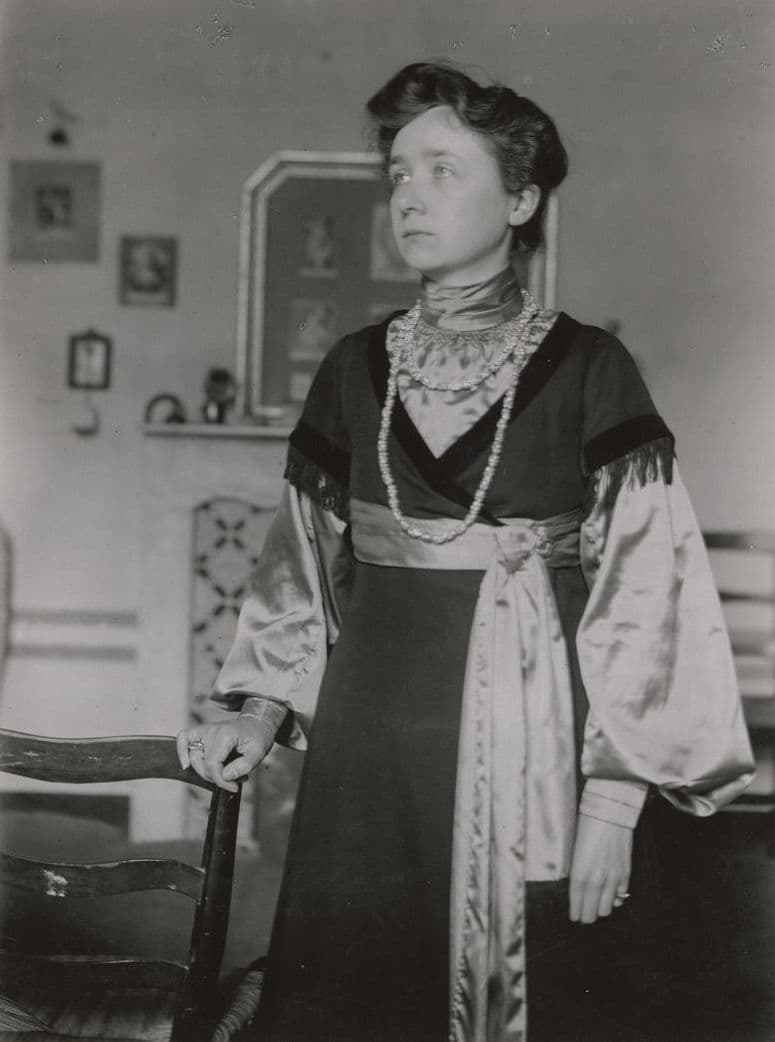
German · Arts
Gabriele Münter
February 19, 1877 – May 19, 1962
Early Life and Background
Gabriele Münter was born on February 19, 1877, in Berlin, Germany. Coming from a middle-class family, she was exposed to art at a young age, showing immense interest and talent. After her father's death when she was nine, Münter's family moved to Düsseldorf, where her passion for drawing and painting was nurtured.
Career Beginnings and Development
In 1901, Münter enrolled at the experimental school "Phalanx" in Munich, where she met Wassily Kandinsky. This relationship, both personal and professional, would greatly influence her artistic journey. Münter was part of the early 20th-century avant-garde movement that sought to explore new language in art. Her work during this period demonstrated bold colors and a frank style indicative of her burgeoning expressionist approach.
Major Works and Achievements
Münter became a founding member of the "Der Blaue Reiter" group in 1911, alongside Kandinsky, Franz Marc, and others. This group was instrumental in the rise of Expressionism. Notable works like "Boating" (1910) and "Portrait of Marianne von Werefkin" (1909) exemplify her innovative style, characterized by vibrant colors and simplified forms. During the Der Blaue Reiter’s first exhibition, Münter showcased her art, affirming her place in the modernist movement.
Awards and Recognition
Though not as widely recognized during her lifetime as some contemporaries, Münter's work has posthumously garnered significant recognition, leading to retrospectives in major museums worldwide, highlighting her influential role in 20th-century art.
Personal Life
Her relationship with Kandinsky was intensively collaborative until their separation during World War I. She moved back to Germany, later residing in a small Bavarian village, Murnau, which became a pivotal site for her artistic production.
Legacy and Historical Impact
Münter's avant-garde approach influenced the course of modern art. Her vibrant canvases and personal dedication to art initiated significant dialogues within the realm of German expressionism and beyond. The rediscovery of her works in the late 20th century highlighted her role as a trailblazer in modern art, elevating her status to that of an influential figure in the German Expressionist movement.
Later Life and Death
After World War II, Münter donated many works to museums, ensuring the preservation of her artistic contributions. She continued to paint and draw up until her death on May 19, 1962, in Murnau.
Dated achievements
1 indexed.
- Feb191877Arts
Birth of Gabriele Münter
Gabriele Münter was born on February 19, 1877, in Berlin, Germany.
View details Gabriele Münter - Wikipedia