← All women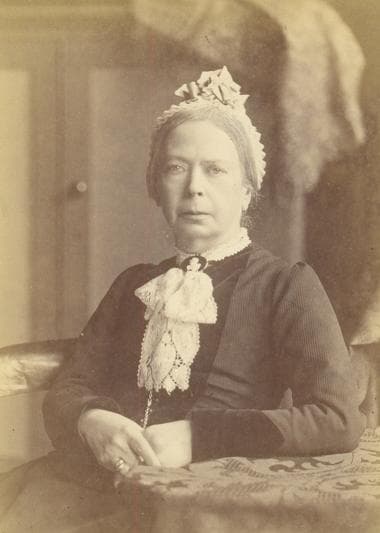
British · Activism
Frances Buss
August 16, 1827 – December 24, 1894
Early Life and Background
Frances Mary Buss was born on August 16, 1827, in London, England, to a family deeply involved in education. Her father, Robert Buss, was a painter known for his work on illustrations, and her mother, Frances Fleetwood, ran a small school. From an early age, Frances was exposed to an enriching educational environment that cultivated her passion for teaching and learning.
Buss's educational journey began at her mother's school and continued at various institutions where she quickly distinguished herself as a student with a love for literature and learning. Her upbringing in a family that valued education played a pivotal role in shaping her future career as a reformer and educator.
Career Beginnings and Development
Frances Buss took her first steps in the field of education by helping her mother manage the family school. However, her considerable ambitions led her to establish her own institution. In 1850, recognizing the need for quality education for girls, Buss founded the North London Collegiate School (NLCS) for girls in Camden Town. Her establishment welcomed just 35 students at its outset but quickly grew under her passionate leadership.
Her innovative approach sought to provide an education for girls equivalent in quality to that offered to boys of the era. She emphasized rigorous academic standards and hired qualified female teachers, many of whom she mentored herself. Her dedication to advancing education for women made her not just an educator but a reformer, challenging the gender norms of Victorian society.
Major Works, Discoveries, and Accomplishments
Frances Buss is renowned for her pioneering role in advancing girls' education during the 19th century. Apart from founding the NLCS, she played a critical role in forming the Kensington Society, a forum for women to discuss social and political issues. This society later influenced the campaigns for women's suffrage and educational reform. Her advocacy led to the formation of the first state-aided secondary school for girls in London in 1871.
In 1879, together with Dorothea Beale and others, she founded the Association of Head Mistresses, which became instrumental in improving the standards of girls' education across England.
Awards, Honors, and Recognition
Buss's contributions to education were widely recognized during her lifetime. She was a revered figure in educational circles and continued to inspire many to pursue equitable education for women. She was also referenced in a nursery rhyme which celebrated her and Beale as leading figures in girls' education.
Personal Life
Despite her lifelong commitment to education, Frances Buss never married. Instead, she dedicated her life to her school and to the cause of educational reform. Her personal life was largely intertwined with her professional endeavors and her manifold impact on the community of educators.
Legacy and Historical Impact
The legacy of Frances Buss resounds profoundly in the education system today. Her efforts opened doors for women and contributed to the progressive education reforms seen in later years. The North London Collegiate School remains a testament to her vision, thriving as one of the UK's leading schools.
Buss's commitment to quality education for girls paved the way for transformative changes in the educational landscape, advocating for rights and access to knowledge long before systemic changes were initiated by state policies.
Later Life and Death
After a life dedicated to education and reform, Frances Mary Buss passed away on December 24, 1894, leaving behind a profound legacy in the form of empowered, educated women who would follow in her footsteps. Her influence transcended her own time, inspiring generations of educators and reformers.
Dated achievements
2 indexed.
- Aug161827Activism
Birth of Frances Mary Buss
Frances Mary Buss was born on August 16, 1827, in London, England.
View details Frances Mary Buss - Britannica - Dec241894