← All women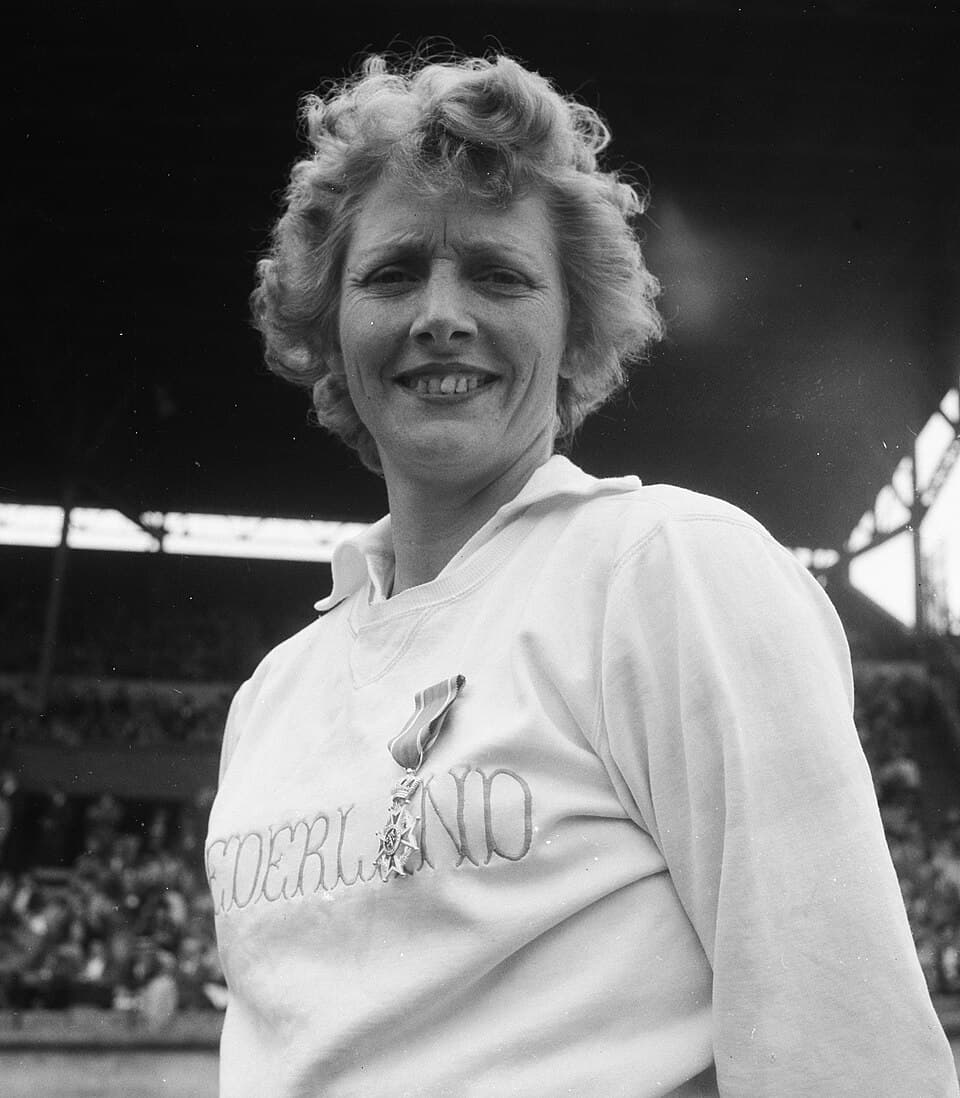
Dutch · Sports
Fanny Blankers-Koen
April 26, 1918 – January 25, 2004
Early Life and Background
Fanny Blankers-Koen, born Francina Elsje Koen on April 26, 1918, in Baarn, Netherlands, was the daughter of a government official and a homemaker, a middle-class family that encouraged her athletic pursuits from a young age. Her early interest in sports was nurtured by her father, who believed running and swimming were critical skills.
Although she was initially inclined towards swimming, Fanny found her true passion in track and field. She joined the Amsterdam Dames Athletic Club, where she started to specialize in running, jumping, and hurdling.
Career Beginnings and Development
Blankers-Koen entered the world stage of athletics as a teenager, participating in the 1936 Berlin Olympics as a sprinter and high jumper, at just 18. Though she did not win a medal, her experience at the Berlin Olympics was formative, teaching her the rigor of international competition and setting the stage for future success.
Major Works and Accomplishments
Fanny's most famous achievement is her performance at the 1948 London Olympics, where she won four gold medals in sprinting and hurdling events at the age of 30—an unprecedented feat for a woman of her time. Her victories in the 100 meters, 200 meters, 80-meter hurdles, and 4×100-meter relay have earned her the nickname "The Flying Housewife," as she was married and a mother at the time.
These wins were monumental not just for their athletic significance but also for challenging the societal perceptions of women in sports. At the time, women were often discouraged from participating in competitive athletics, and Fanny's success proved that women could excel in the highest echelons of sports.
Awards, Honors, and Recognition
Her legacy was cemented when she was named the Female Athlete of the Century in 1999 by the International Association of Athletics Federations. She held multiple world records in various sprint and relay events and was a pioneering figure in Dutch and international athletics.
Personal Life
Fanny married Jan Blankers, a former Olympic Triple jumper and her coach, in 1940. Together, they had two children, Jan Jr. and Fanny Jr. Her family played a crucial supporting role in her career, especially her husband, who was instrumental in her training and competition strategy.
Legacy and Historical Impact
Fanny Blankers-Koen's life and career challenged and reshaped societal norms, especially in the arena of women's sports. She became a symbol of strength and perseverance, encouraging women worldwide to pursue athletic excellence even after marriage and motherhood.
Her victories served as inspiration at a time when women's roles were largely defined by domestic expectations. Blankers-Koen showed that dedication and hard work transcended gender barriers.
Later Life and Death
After retiring from competitive athletics, Fanny remained active in the sports community, supporting youth athletics and contributing to sports organizations in various capacities. Sadly, she began suffering from Alzheimer's disease in her later years and passed away on January 25, 2004, in Hoofddorp, Netherlands, leaving a lasting legacy in the world of sports.
Dated achievements
4 indexed.
- Apr261918Sports
Birth of Fanny Blankers-Koen
Born in Baarn, Netherlands, she became an iconic female athlete.
View details Wikipedia - Aug021948Sports
Wins First Gold at 1948 Olympics
Won first gold medal in the 100 meters, marking a historic triumph.
View details