← All women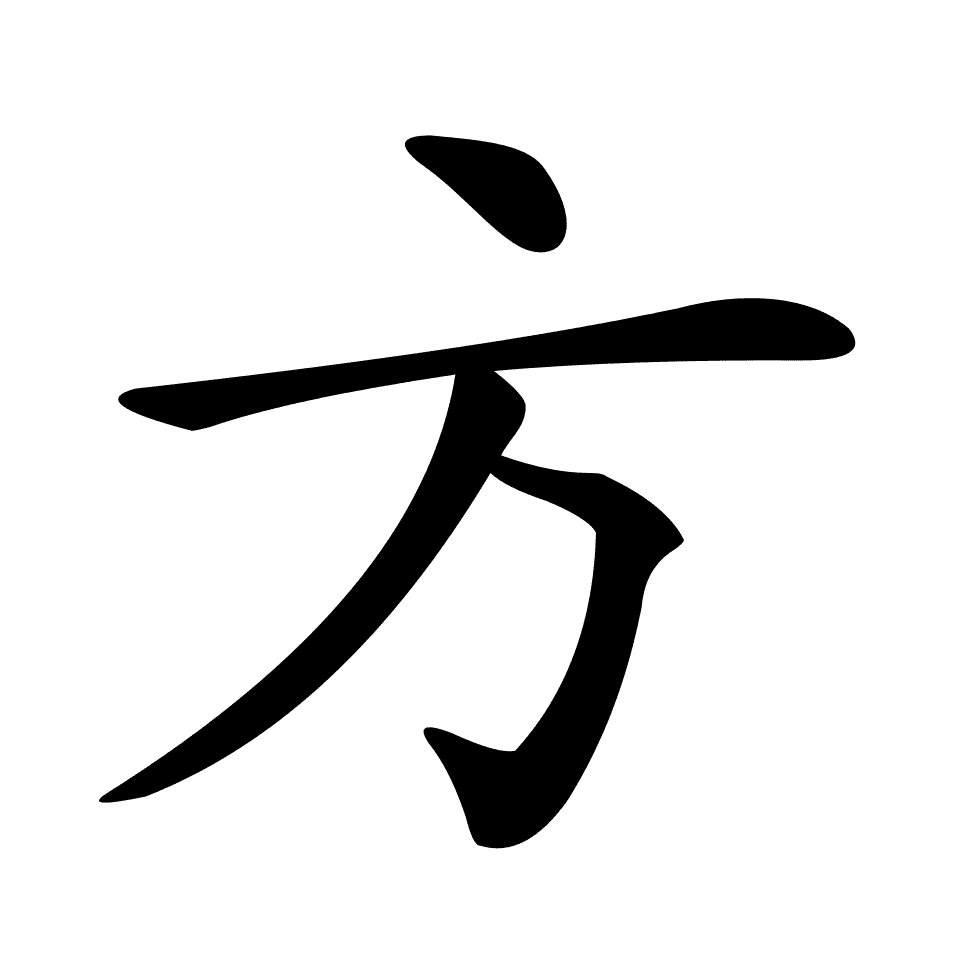
Chinese · Literature · Activism
Fang
May 1, 1955 – present
Early Life and Background
Fang Fang (Chinese: 方方) is the pen name of Wang Fang (汪芳), a prominent Chinese novelist, essayist, and chronicler of contemporary urban life. She was born on 11 May 1955 in Nanjing, Jiangsu Province, China, into an intellectual family.[1][2][10][13] Her parents’ education and status meant that books, discussion of public affairs, and a respect for learning were present in her childhood environment, even as China underwent intense political turmoil.
When she was still young, Fang Fang’s family moved to Wuhan, the capital of Hubei Province, and it was in this city that she spent most of her formative years.[1][4][10] Growing up in Wuhan during and after the Cultural Revolution exposed her to the hardship of ordinary workers and the dislocation of intellectual families. Later biographical notes describe how she witnessed a series of political movements from the late 1950s into the 1970s, experiences that provided the raw material for her later depictions of marginalized and working-class lives.[6][10]
As a teenager during the Cultural Revolution, Fang Fang—like many of her generation—faced disruptions to formal education. Public information about her exact schooling in those years is limited, but multiple profiles note that she worked in manual or basic jobs before advancing to higher education, which was only fully restored after the Cultural Revolution ended.[1][4] These experiences deepened her familiarity with factory workers, street vendors, and low-income families in Wuhan, groups that would become the focus of her early fiction.
Education and Literary Formation
With the reopening of universities following the Cultural Revolution, Fang Fang entered Wuhan University in 1978 to study Chinese language and literature.[1][2][4][13] Wuhan University has long been considered one of China’s leading institutions, and gaining admission in that first generation after the resumption of the national college entrance examination was highly competitive. Her studies exposed her to classical Chinese literature, modern fiction, and literary theory, and connected her to a cohort of young writers and intellectuals eager to make sense of the recent past.
Before university, she had already begun to write. Sources note that she started writing poetry in 1975, while still quite young and before the full reopening of the literary field in post-Mao China.[4] This early engagement with poetry sharpened her sense of rhythm, image, and concision. After enrolling at Wuhan University, she shifted her focus increasingly toward prose fiction, finding in the short story and novella forms an effective vehicle for portraying the texture of everyday life.
Fang Fang graduated from Wuhan University with a degree in Chinese and remained in Wuhan after completing her studies.[1][10] The city’s industrial neighborhoods, riverfront, and dense residential districts continued to provide the social and spatial backdrop for her literary imagination. Her commitment to remaining in Wuhan, rather than relocating to Beijing or Shanghai, distinguished her from many contemporaries and contributed to her reputation as a writer deeply rooted in a specific urban milieu.
Career Beginnings and Development
Fang Fang’s professional literary career began in the early 1980s, a period of relative liberalization in Chinese cultural life. Her first novel was published in 1982, marking her emergence within a new generation of post-Mao writers.[4] Over the decade that followed, she wrote a series of short stories, novellas, and novels that appeared in influential literary journals and in book form, gradually earning her a national readership.
Her fiction is most closely associated with the depiction of working-poor and lower-middle-class residents of Wuhan—factory laborers, laid-off workers, small-time hustlers, and families struggling with housing and employment.[1][2][13] In contrast to more experimental or avant-garde authors of the 1980s, Fang Fang’s realist narratives emphasized psychological nuance and social detail rather than formal innovation. Critics have described her style as restrained yet emotionally direct, with particular attention to women’s experiences in constrained economic and familial circumstances.
During these years, Fang Fang also took on roles as an editor, journalist, and screenwriter, as reflected in biographical summaries that list multiple professional activities in the cultural sector.[9] Working across media broadened the reach of her stories and familiarized her with the dynamics of publishing, censorship, and audience response in the state-controlled cultural system.
By the 1990s and 2000s, Fang Fang had become a well-established figure in Chinese letters. She published numerous novels and collections; some were adapted for television or film, further expanding her recognition among the general public. Her works circulated widely in China, and she participated in writers’ conferences, literary juries, and professional associations.
Major Works and Literary Themes
Across her oeuvre, Fang Fang is known for sympathetic yet unsentimental portrayals of ordinary urban Chinese during the country’s transition from planned to market economy.[1][4] Her characters include laid-off state workers adjusting to privatization, elderly residents of dilapidated neighborhoods facing demolition, and women coping with divorce, illness, or domestic constraints.
Among her notable works are several novels and short story collections that received national recognition, though many have not yet been translated into English. Listings in multiple-language editions of her biography refer to award-winning books published in the 1990s and 2000s, including works that were honored with prestigious Chinese prizes.[1][2][4][9] While specific plot details vary, her fiction consistently returns to themes of dignity in poverty, moral ambiguity, and the emotional costs of rapid economic change.
Fang Fang’s prose is often described as plainspoken and accessible, a deliberate aesthetic choice that allows her to reach broad readerships. Rather than focusing on elite intellectuals or state leaders, she turns her attention to overlooked individuals—retirees in crumbling housing blocks, migrant workers on the fringes of legality, and women whose aspirations conflict with patriarchal norms. This social focus has led some commentators to associate her with a tradition of “neorealist” writing in contemporary Chinese literature.
Leadership in the Literary Community
In addition to her work as a writer, Fang Fang has played a significant institutional role in Hubei’s literary scene. French biographical sources and other profiles note that she has served since 2007 as the chair (or president) of the Hubei Writers’ Association, the official provincial branch of China’s state-sanctioned writers’ union.[9] In this capacity, she has overseen literary programs, mentorship initiatives, and the evaluation of manuscripts for publication at the provincial level.
The position indicates both her standing within the officially recognized literary establishment and her ability to navigate the complexities of state-sponsored cultural institutions. As chair, she would have been involved in promoting emerging writers, organizing conferences, and representing Hubei authors at national events, though detailed accounts of her specific initiatives are limited in public sources.
Wuhan Diary and the COVID‑19 Pandemic
Fang Fang gained international prominence in 2020 with her work commonly known in English as Wuhan Diary.[1][2][4][6][19] In late January 2020, shortly after authorities imposed a stringent lockdown on Wuhan to contain the novel coronavirus outbreak, she began posting daily online entries on Chinese social media platforms, including Weibo.[6] These posts combined personal observations, reports from friends and neighbors, commentary on policy implementation, and reflections on fear, grief, and solidarity among residents.
Her online diary rapidly attracted a large readership within China, with many people sharing her posts as an alternative to official accounts. The entries documented shortages of medical supplies, the conditions in hospitals, and the stress faced by frontline workers, while also noting instances of mutual aid, volunteerism, and small acts of kindness. Media outlets outside China later described her diary as one of the earliest and most sustained eyewitness chronicles from inside Wuhan during the crisis.[6][19]
As the diary gained visibility, it also drew criticism from nationalist commentators and some online users who accused her of spreading “negative energy” or providing material for foreign criticism of China.[6][19] Her posts were at times censored or deleted, and she faced waves of harassment and threats on social media. Nonetheless, she continued writing for roughly two and a half months, providing an almost daily window into life under lockdown.
Recognizing the historical and documentary value of these entries, editors compiled and translated them into book form. An English-language edition, titled Wuhan Diary: Dispatches from a Quarantined City, was published internationally by HarperVia, an imprint of HarperCollins, with the release timed to coincide with her 65th birthday on 11 May 2020.[10] The book brought her work to a global audience and was discussed in major international media as a rare first-person account from the original epicenter of COVID‑19.[6][10][19]
Advocacy, Censorship, and Public Controversy
Fang Fang’s diary did more than describe everyday life; it also included explicit reflections on governance, transparency, and the responsibilities of officials and intellectuals. International reports note that she used her platform to call for an end to strict internet censorship in China and to advocate for frank discussion of policy failures during the early stages of the outbreak.[1][2][6][19] She argued that honest testimony and critical reflection were necessary to prevent future disasters and to honor those who suffered.
These stances intensified the backlash against her inside China. Nationalist critics accused her of betrayal and of providing material for “anti-China” narratives abroad once news emerged that her diary would be published overseas.[6][19] She became the subject of online smear campaigns, with some detractors questioning her motives or patriotism. Human-rights and press-freedom organizations pointed to the attacks on Fang Fang as evidence of the risks faced by writers who document sensitive events and challenge official narratives.[19]
Despite the pressure, she defended the importance of candid documentation. In interviews and statements highlighted in foreign media coverage, Fang Fang emphasized that her aim was not to attack China but to preserve an honest record of what ordinary people had endured.[6][19] Her stance situated her within a broader tradition of Chinese intellectuals who have sought to combine literary work with civic responsibility.
Awards, Honors, and Recognition
Over the course of her career, Fang Fang has received numerous literary honors within China. Among the most prominent is the Lu Xun Literary Prize, one of the country’s major national awards for short fiction and essays, which she was awarded in 2010.[1][2][4][13] The prize, named after the influential modern writer Lu Xun, is administered by official literary organizations and recognizes works demonstrating significant artistic merit and social engagement.
Biographical notes also mention that she has received the Chinese Literature and Communications Prize for Outstanding Writer, further signaling her recognition within the national literary establishment.[10] While detailed citations and dates for some of these awards are not always provided in English-language sources, their repeated mention across publisher profiles and encyclopedia entries underscores her sustained standing in the field.
Internationally, Fang Fang’s reputation grew substantially after the publication of Wuhan Diary. The book was widely reviewed and discussed in global media, and she received attention from organizations concerned with freedom of expression and the documentation of crises.[6][19] Press-freedom groups have highlighted her case to illustrate both the potential and the peril of digital testimony under an authoritarian information regime.[19]
Personal Life
Publicly available sources provide limited detail about Fang Fang’s private life, including marital status or children. This relative privacy is typical for many Chinese writers of her generation, whose biographies often emphasize professional achievements and political context rather than domestic arrangements.
What is clear from available information is that she has remained closely tied to Wuhan throughout her adult life, both as a resident and as a chronicler of the city’s transformations.[1][4][10] Her sustained engagement with Wuhan’s neighborhoods, factories, and local institutions has given her fiction and nonfiction a grounded sense of place. As chair of the Hubei Writers’ Association and a leading local author, she occupies a central role in the city’s literary community.
Legacy and Historical Impact
By the mid-2020s, Fang Fang was widely recognized as one of the most significant contemporary Chinese writers whose work focuses on the experiences of the urban working poor.[1][4][13] Her fiction has contributed to a literary record of how economic reform and social change have affected ordinary people outside the country’s most glamorous cities. In emphasizing empathy, moral complexity, and attention to marginalized voices, her stories expand the range of characters and experiences represented in mainstream Chinese literature.
The historical significance of her work, however, extends beyond fiction. Wuhan Diary stands as an important document of the early COVID‑19 pandemic, offering a day-by-day account from within the original epicenter of the outbreak. Scholars, journalists, and general readers alike have drawn on her testimony to understand how residents navigated fear, uncertainty, and state control during an unprecedented public health emergency.[6][10][19]
Furthermore, the intense domestic backlash she faced for her diary underscores the contested nature of memory and narrative in contemporary China. Her insistence on bearing witness, even at personal cost, situates her within a tradition of writers who use literature and personal testimony to challenge erasure and to demand accountability. For researchers in women’s history, Fang Fang’s case illustrates how a woman writer in 21st‑century China negotiates the overlapping pressures of state authority, online nationalism, and global readership.
Later Life and Continuing Work
As of the mid-2020s, Fang Fang remains alive and continues to be active as a writer and public figure.[1][4] While much attention has focused on Wuhan Diary, she has a substantial body of earlier work and continues to contribute essays and commentary to literary and cultural forums. Her role in the Hubei Writers’ Association and her visibility in domestic debates ensure that she remains a reference point in discussions about the responsibilities of intellectuals and the boundaries of permissible criticism.
Fang Fang’s later career is marked by the dual legacy of official recognition and political controversy. On one hand, she is a decorated author and institutional leader; on the other, she has been subjected to hostility and censorship for her candid writings on a national crisis. This duality reflects the broader tensions in contemporary Chinese cultural life, where celebrated figures can quickly become targets when their work intersects with sensitive political issues.
For historians and literary scholars, Fang Fang’s life and career offer a rich case study in the intertwined histories of gender, urbanization, public health, and state power in modern China. Her sustained attention to the lives of working-class women and men, and her willingness to document and criticize the handling of a major pandemic from within an authoritarian system, ensure her place in any comprehensive account of women’s intellectual and literary contributions in the early 21st century.
Dated achievements
2 indexed.
- Nov091985Science
Publication of Fang Fang's early acclaimed novella era begins
Fang Fang rose to prominence in the mid-1980s as part of China's 'New Realism' literary movement.
View details Fang Fang - Wikipedia - Jan252020Science
Begins publishing the 'Wuhan Diary' during COVID-19 lockdown
Fang Fang began her daily online 'Wuhan Diary,' documenting life inside the locked-down city during the COVID-19 outbreak.