← All women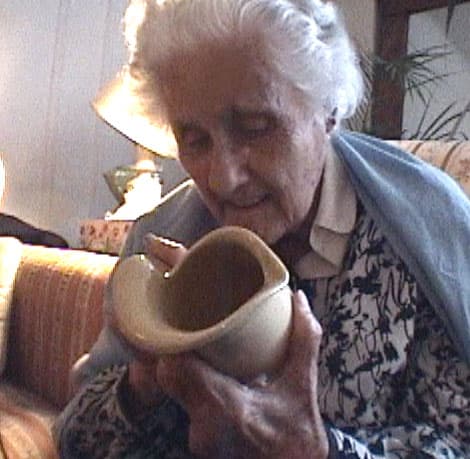
Hungarian, American · Arts
Eva Zeisel
November 13, 1906 – December 30, 2011
Early Life and Background
Eva Zeisel was born on November 13, 1906, in Budapest, Hungary. She was originally named Éva Amália Striker. Her family was of an intellectual background, with her mother, Laura Polányi, being a historian and her father, Alexander Striker, an industrial engineer. Zeisel showed early signs of creativity and an interest in the arts, which her family supported. She pursued her studies at the Royal Academy of Fine Arts in Budapest, a commitment that would set the stage for her influential career in ceramics.
Career Beginnings and Development
Zeisel's career in ceramics began in 1923, when she apprenticed as a potter in Budapest. Her early experiences included work at factories in Germany and training at the Schramberger Majolikafabrik. Her perseverance and talent led her to become the creative director at the Kispester-Granit manufacturer in Hungary by the age of 29.
In 1932, Zeisel moved to the Soviet Union, where she became the artistic director of the porcelain factory in Leningrad. However, her career was interrupted in 1936 when she was falsely accused of participating in a plot against Stalin, leading to her imprisonment for over a year. This period deeply affected Zeisel but also inspired resilience in her ensuing work.
Major Works, Discoveries, or Accomplishments
After being released from prison and departing the Soviet Union, Zeisel relocated to the United States in 1938. Here, she flourished, first teaching at the Pratt Institute in New York. Her American career truly began when the Museum of Modern Art featured her ceramic work in 1946 through the "Modern Art in Your Life" exhibit. Zeisel became renowned for her innovative designs of dinnerware and ceramics, often characterized by their organic shapes and whimsical forms.
In the 1940s and 50s, she developed collections for companies like Castleton China and Red Wing Pottery. Her designs eschewed harsh angles for soft, organic shapes, and she emphasized the relationship between form and function, which was a hallmark of her work. Some iconic lines include the "Town and Country" and "Classic Century," products that have achieved timeless acclaim.
Awards, Honors, and Recognition
Zeisel received numerous accolades throughout her career. She was awarded the Lifetime Achievement award from the Cooper-Hewitt National Design Museum in 2005 and named an honorary member of the Royal Designers for Industry by the Royal Society of Arts in London.
Personal Life
Eva Zeisel married Hans Zeisel, a sociologist, in 1938. The couple had two children, and their family life paralleled the ebbs and flows of Eva's professional journey. Her marriage to Hans was a supportive partnership, reflected in their mutual interest in innovation and creativity.
Legacy and Historical Impact
Eva Zeisel's work has left a lasting impact on industrial design. Her ability to blend functionality with artistic expression broadened the scope of ceramics, earning her a place among design pioneers of the 20th century. Her influence continues to be acknowledged in museums and design schools globally, where her emphasis on the beauty of the curve is celebrated.
Later Life and Death
Zeisel continued to be creatively active well into her later years, releasing new lines and participating in exhibits well past her centenary. She passed away on December 30, 2011, at the age of 105, leaving behind a legacy celebrated by designers and artists worldwide.
Dated achievements
1 indexed.
- Nov131906Arts
Birth of Eva Zeisel
Eva Zeisel was born on November 13, 1906.
View details Zeisel, Eva (1906–) | Encyclopedia.com