← All women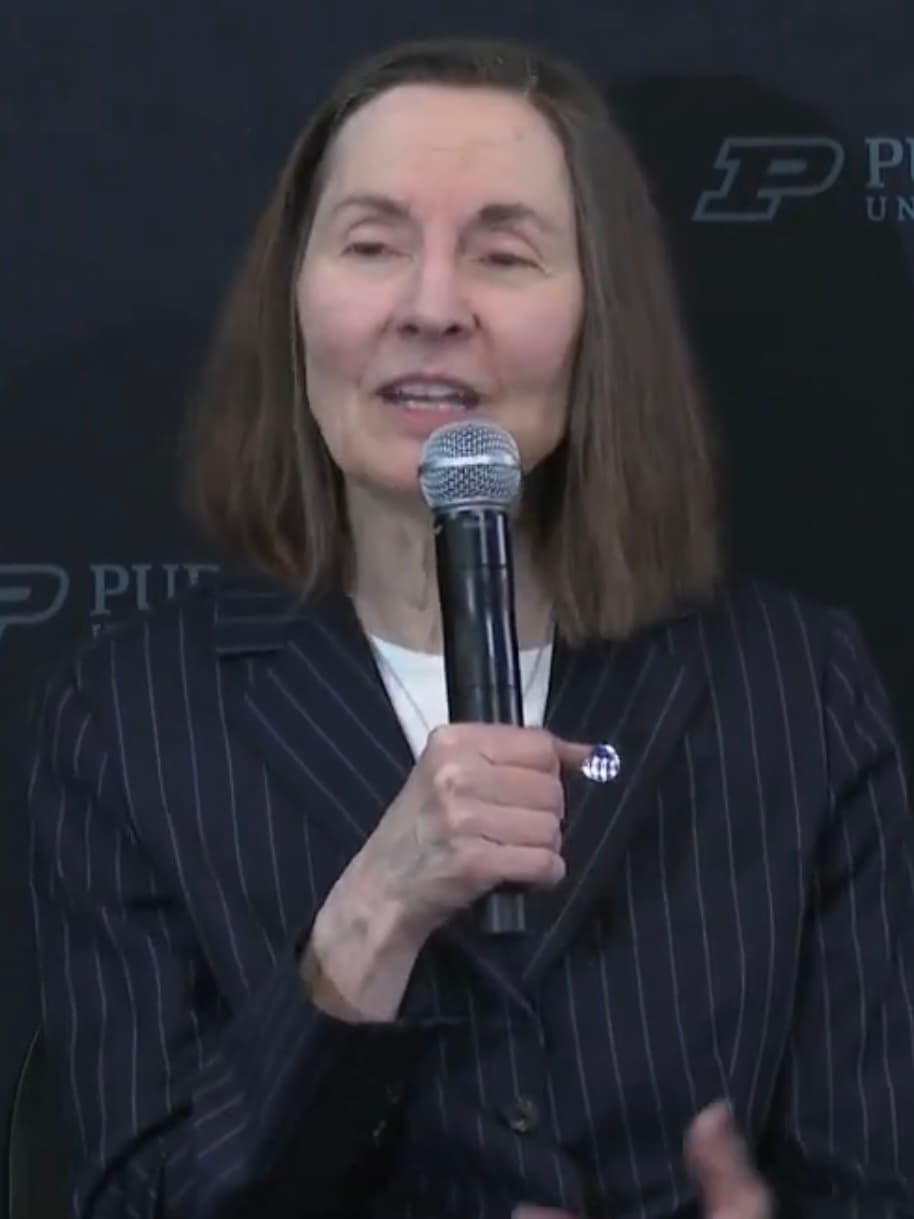
American · Science · Medicine
Esther Sans Takeuchi
September 8, 1953 – present
Early Life and Background
Esther Sans Takeuchi (born Esther Sans, Latvian: Estere Sāns) was born on 8 September 1953 in Kansas City, Missouri, United States.[1][7][14] She is of Latvian heritage, and her family history and immigrant background are noted in biographical sketches and in her own autobiographical writing.[1][2][9][15] Shortly after her birth, her family relocated, and she was raised primarily in Akron, Ohio, where her scientific curiosity began to develop.[7][15]
Takeuchi has described in autobiographical reflections how she grew up in a household that valued education and resilience, experiences that shaped her determination to pursue scientific training despite the limited visibility of women in physical sciences in the mid‑20th century.[9][15] As a school student she showed strong aptitude in mathematics and science, interests that would later lead her into chemistry and electrochemistry.
She pursued higher education in chemistry, undertaking undergraduate and graduate studies that equipped her with expertise in organic chemistry and electrochemistry—the twin pillars of knowledge that would later underpin her most important technological contributions.[9][15] Her formal training laid the foundation for a career that would straddle academia, industrial research, and national laboratories.
Education and Academic Formation
In published biographical notes and festschrift materials, Takeuchi emphasizes the importance of rigorous academic training in chemistry to her development as a scientist.[9][10][15] She completed university-level studies in chemistry and went on to advanced work in electrochemistry, positioning herself in a field where fundamental chemical principles could be applied directly to practical energy-storage and power-source problems.
Her early research interests focused on understanding electrochemical reactions and the behavior of materials under operating conditions relevant to batteries and other energy devices.[9][10][15] This dual focus on fundamental science and application would become a defining feature of her later work.
Career Beginnings and Development
After completing her academic training, Esther Takeuchi began her professional career in industrial research. She joined Greatbatch, Inc., a company known for developing batteries and components for medical devices.[6][7][8][12] At Greatbatch, she became deeply involved in efforts to design and refine power sources for implantable medical devices, especially implantable cardioverter defibrillators (ICDs).
At Greatbatch, Takeuchi and her colleagues confronted the limitations of existing battery technologies for ICDs. Early devices were bulky, had limited battery life, and required frequent replacement surgeries, which posed substantial risks and burdens for patients.[6][11] Recognizing the need for a new approach, she turned her expertise in electrochemistry toward developing a high‑energy, high‑power battery system suitable for long‑term implantation.
It was during this industrial research phase, in the mid‑1980s, that Takeuchi played a leading role in inventing and perfecting the lithium/silver vanadium oxide (Li/SVO) battery.[6][7][8] According to the European Patent Office, the compact Li/SVO batteries she developed, together with key patents on the technology, resulted in the first defibrillator equipped with a powerful yet small battery with significantly greater longevity than its predecessors.[6] The National Inventors Hall of Fame credits her as having led efforts to invent and refine this Li/SVO battery technology.[7]
By 1987, the first implantable cardioverter defibrillator using Li/SVO battery technology was implanted in a patient, marking a turning point in ICD design and performance.[6] This milestone demonstrated that her electrochemical innovations could be translated into safe, effective clinical devices.
Major Works, Discoveries, and Accomplishments
Esther Takeuchi’s most widely recognized contribution is the development of the Li/SVO battery technology that powers the majority of modern ICDs.[6][7][8][9][10][11] These batteries use lithium as the anode and silver vanadium oxide as the cathode, delivering high power and long service life in a small form factor. The National Inventors Hall of Fame and the U.S. Patent and Trademark Office both acknowledge her as the leading inventor behind this technology.[7][8]
The Li/SVO battery dramatically improved ICDs by providing:
- Significantly longer battery life, reducing the number of replacement surgeries.[6][11]
- Higher power output to deliver effective therapeutic shocks.[6][11]
- A smaller size, enabling more compact, less invasive devices.[6][11]
As the European Patent Office notes, these improvements paved the way for smaller ICDs with significantly longer battery life, resulting in fewer surgeries for device replacement and greatly improving patient outcomes.[6] The USPTO highlights that her battery technology benefits more than 150,000 people annually, illustrating the scale of its impact.[8]
In addition to ICDs, Takeuchi’s battery innovations have been applied in other medical devices and technology platforms, contributing to advances in bioelectronic medicine and specialized energy-storage systems.[7][8][9] Her expertise extends across electrochemical energy storage, including work relevant to clean energy, electrified transportation, and grid-level storage, as highlighted by the Journal of Physical Chemistry C festschrift in her honor.[10]
Takeuchi is noted for having an exceptionally large patent portfolio. The National Inventors Hall of Fame reports that she is named on more than 150 U.S. patents.[7] Other sources, including Wikipedia and SUNY materials, similarly emphasize her 145+ or 150+ U.S. patents, underscoring her productivity as an inventor.[1][3][5][12][13] This makes her one of the most prolific women inventors in the United States in the field of chemical engineering and materials science.
Academic and National Laboratory Roles
Following her industrial career, Esther Takeuchi transitioned into prominent roles in academia and at a national laboratory. She is a SUNY Distinguished Professor and holds the William and Jane Knapp Chair in Energy and the Environment at Stony Brook University.[1][12][16] She is also a Chief Scientist at the U.S. Department of Energy’s Brookhaven National Laboratory, where she chairs the Interdisciplinary Science Department.[1][9][12]
In these positions, she continues to lead research in electrochemical energy storage systems, with work spanning batteries for medicine, transportation, and grid applications.[9][10][12] The ACS festschrift notes that she is an international leader in electrochemical energy storage systems and that her current research focuses on new frontier systems that can support a clean energy future, from electrified transportation to grid‑level storage and specialized demanding applications.[10]
At Stony Brook and Brookhaven, Takeuchi contributes to education and mentorship, training graduate students and postdoctoral researchers while directing multi‑disciplinary research teams.[9][12] Her leadership has helped integrate academic research with national-laboratory capabilities to address complex energy challenges.
Awards, Honors, and Recognition
Esther Takeuchi has received numerous prestigious awards recognizing both her scientific achievements and her impact as an inventor.
- National Medal of Technology and Innovation (United States): In 2009, she received the National Medal of Technology and Innovation, the highest U.S. honor for technological achievement.[7][12][13][14] The medal citation credits her seminal development of the silver vanadium oxide battery that powers most lifesaving ICDs and her achievements in other medical battery technologies that improve health and quality of life for millions of people.[14] The official medal presentation ceremony took place on 5 May 2019 at the White House.[14]
- National Inventors Hall of Fame: She was inducted into the National Inventors Hall of Fame in 2011, with the Hall of Fame specifically honoring her Li/SVO battery technology used in ICDs.[7][8] Her class year is listed as 2011.[7][8]
- European Inventor Award: In 2013, she received the European Inventor Award in the Non‑European Countries category from the European Patent Office, recognizing her pioneering Li/SVO battery technologies for implantable cardiac defibrillators.[6]
- Memberships and Fellowships: Takeuchi is a member of the National Academy of Engineering, the National Inventors Hall of Fame, and the American Academy of Arts and Sciences, and a charter member of the National Academy of Innovation.[12] These memberships reflect her standing in multiple scientific and innovation communities.
- Professional Society Awards: She has received the E. V. Murphree Award and the Astellas Award from the American Chemical Society (ACS), and the Edward G. Acheson Award from the Electrochemical Society (ECS).[12] She has also been honored with the Sigma Xi Walston Chubb Innovation Award and the National Academy of Sciences Chemical Sciences Award, among other distinctions.[12]
- Honorary Doctorate: She holds an honorary doctorate from Notre Dame University, acknowledging her scientific and technological contributions.[12]
- ACS Festschrift: In 2024, the Journal of Physical Chemistry C published a special Esther Sans Takeuchi Festschrift issue, recognizing her as an international leader in electrochemical energy storage and as the inventor of the battery that enabled the implantable cardiac defibrillator.[9][10][15]
These honors collectively underscore her role as a leading figure in the fields of chemical engineering, electrochemistry, and energy storage, and as a transformative inventor in medical technology.
Personal Life
Biographical sources indicate that Esther Sans Takeuchi married and adopted the surname Takeuchi, becoming known professionally as Esther Sans Takeuchi.[1][2][5] Details about her spouse, children, or broader family life are not extensively documented in the publicly available institutional biographies and scientific literature provided, reflecting her focus on scientific and professional accomplishments in public narratives.
Her Latvian heritage and immigrant family background are occasionally highlighted, offering context for her perspective on opportunity and perseverance in science.[2][9][15] She has spoken about the support of loved ones and mentors as critical to her ability to sustain a demanding career in research and innovation.[8][15]
Legacy and Historical Impact
Esther Takeuchi’s legacy rests foremost on her invention and refinement of the Li/SVO battery that enabled modern implantable cardioverter defibrillators. The ACS festschrift notes that she invented the battery that enabled the ICD, technology that has saved millions of human lives worldwide.[10] The USPTO and National Inventors Hall of Fame likewise emphasize that her battery powers the majority of today’s lifesaving ICDs and benefits more than 150,000 people annually.[7][8]
Her work transformed ICDs from relatively experimental, short‑lived devices into reliable, long‑term therapeutic tools, changing the prognosis for patients at risk of lethal arrhythmias. This contribution sits at the intersection of medicine, materials science, and electrochemistry, illustrating how fundamental chemical understanding can be harnessed to solve urgent clinical problems.
Beyond ICDs, Takeuchi has significantly influenced the broader field of electrochemical energy storage. Her current research spans new battery systems aimed at enabling a clean energy future, with applications in electrified transportation, grid‑level storage, and specialized systems.[9][10] In this sense, her career bridges the earlier era of medical device batteries with contemporary challenges in sustainable energy.
Historically, she is notable as one of the most prolific women inventors in the United States and as a woman leader in fields—industrial battery R&D, chemical engineering, and national‑laboratory science—where women have been underrepresented. Her induction into the National Inventors Hall of Fame, membership in the National Academy of Engineering and American Academy of Arts and Sciences, and receipt of the National Medal of Technology and Innovation all mark her as a path‑breaking figure whose achievements demonstrate the central role women can play in technological innovation.
Her story has been featured in various media, including videos produced by the National Inventors Hall of Fame and the European Patent Office, which present her as a role model for future generations of scientists and engineers.[4][6][11] These portrayals emphasize both her technical achievements and her perseverance in a male‑dominated domain.
Later Life and Continuing Work
As of the most recent sources, Esther Sans Takeuchi remains professionally active. She continues to serve as a SUNY Distinguished Professor at Stony Brook University and as a Chief Scientist at Brookhaven National Laboratory.[1][9][12][16] Her research focuses on advanced electrochemical energy storage systems that can support a transition to cleaner, more reliable energy infrastructures.[9][10]
The 2024 ACS festschrift dedicated to her work, including her autobiographical article "A Window into the Life and Science of Esther Sans Takeuchi," attests to her ongoing influence in the scientific community and reflects her stature as an international leader in electrochemistry.[9][10][15] She remains a mentor to students and colleagues, and her portfolio of more than 150 U.S. patents continues to shape both medical technologies and future energy systems.[7][9][10]
No reliable sources report a date of death for Esther Sans Takeuchi; she is currently regarded as a living scientist and inventor.[1][7][14] Her continuing work and recognition solidify her place in women’s history as a figure whose impact is both historical and contemporary.
Dated achievements
5 indexed.
- Sep081953Science
Birth of Esther Sans Takeuchi
Esther Sans (later Esther Sans Takeuchi) was born in Kansas City, Missouri, United States.
View details Esther Takeuchi - Wikipedia - May042011Science
Inducted into the National Inventors Hall of Fame
Takeuchi was formally inducted into the U.S. National Inventors Hall of Fame for her lithium/silver vanadium oxide battery used in implantable defibrillators.