← All women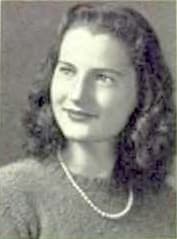
American · Science
Erna Schneider Hoover
June 19, 1926 – present
Early Life and Background
Erna Schneider Hoover was born on 19 June 1926 in Irvington, New Jersey, United States. She grew up in nearby South Orange, the daughter of a dentist father and a mother who had worked as a teacher.[6][13] This combination of scientific professionalism and educational commitment shaped a family environment that encouraged intellectual ambition and resilience.
As a girl, Hoover developed an early fascination with science and the possibility of women participating in it. According to later biographical research, she read a biography of Marie Curie, which impressed upon her that women could succeed in scientific fields traditionally dominated by men and under difficult social conditions.[13] This realization became a formative influence, helping to orient her toward rigorous academic pursuits at a time when U.S. women had limited access to advanced scientific careers.
Hoover attended Columbia High School in Maplewood, New Jersey, where she distinguished herself as an excellent student.[4][13] Her success there led to admission to Wellesley College, an elite women’s college known for producing academically accomplished graduates. At Wellesley, she majored in history and philosophy, with particular emphasis on the ancient and medieval periods.[4][10] She graduated in 1948 as a Durant Scholar and a member of Phi Beta Kappa, reflecting high academic standing and intellectual promise.[4][10]
Advanced Education and Intellectual Formation
After Wellesley, Hoover pursued graduate study at Yale University, where she focused on philosophy, symbolic logic, and the foundations of mathematics.[2][4][8][10] She earned her Ph.D. at Yale in 1951.[2][8] At that time, only a very small fraction of doctoral degrees in mathematics-related fields were awarded to women; one detailed study notes that women constituted about five percent of doctoral recipients in 1951.[13] Hoover’s achievement therefore placed her among the early cohort of women entering the advanced ranks of STEM and philosophy in mid‑20th‑century America.
Her doctoral work in symbolic logic and mathematical foundations was crucial to her later technical contributions. Logic and the formal analysis of systems equipped her to think abstractly about complex processes such as telephone traffic and to design algorithms that could control and prioritize events. This intellectual training made her well suited to the emerging field of computer‑based systems, even though she initially pursued a career in academic philosophy rather than engineering.
Career Beginnings: Swarthmore College
In 1951, after completing her Ph.D., Hoover began teaching at Swarthmore College, a liberal arts college known for its rigorous curriculum.[2][4][7][10] She spent approximately three years there, teaching various branches of philosophy, including logic.[4][10] At Swarthmore she continued to refine her expertise in symbolic reasoning, while also navigating the gender expectations of academic life in the early 1950s.
During her time at Yale she had met Charles Hoover Jr., a physicist, and the two married while she was teaching at Swarthmore.[4] Her husband later accepted a position at Bell Telephone Laboratories in New Jersey.[10] When the couple relocated to New Jersey in 1954, Hoover encountered the structural barriers faced by married women academics: tenure‑track positions were scarce for women, and some institutions were reluctant to hire married women at all.[10][13]
These constraints pushed Hoover to consider employment outside traditional academia. Rather than leave intellectual work altogether, she decided to join the research community at Bell Labs, an institution that would become famous for its contributions to telecommunications, computing, and information theory.
Joining Bell Labs and Transition to Computing
Hoover joined Bell Telephone Laboratories as a researcher in 1954.[2][7][8][9][10] Bell Labs, located in New Jersey, was then the research arm of the Bell System and one of the leading industrial laboratories in the world. It attracted mathematicians, physicists, engineers, and emerging computer scientists to work on cutting‑edge problems in communications and electronics.
As one of the few women researchers in the organization, Hoover quickly found herself in an environment that was both intellectually stimulating and structurally challenging. She later remarked that when she was hired, "the glass ceiling was somewhere between the basement and the sub-basement," encapsulating the low expectations for women’s advancement.[12] Nonetheless, she became deeply involved in complex technical projects that drew directly on her mathematical and logical training.
Early in her Bell Labs career, Hoover worked on surveillance and control programs for radar associated with the Safeguard Anti‑Ballistic Missile Defense System, directing Bell’s software for that system’s radar operations.[10] This work placed her in the heart of Cold War research on defense technologies, where the development of reliable computer‑controlled systems was critical. Her role as a director in these programs already marked a notable achievement for a woman in a major industrial laboratory.
Development of Computerized Telephone Switching
In the 1960s, Hoover shifted her focus to one of Bell Labs’ largest undertakings: the modernization of the national telephone network through electronic and computer‑controlled switching systems.[1][7][10][14] Traditional electromechanical switches, relying on relays and mechanical components, were increasingly strained by rising call volumes. Peak traffic could overload switching equipment, causing calls to be blocked or dropped.
Hoover recognized that this problem could be addressed using stored‑program control—the idea that a computer program could manage the complex tasks of a telephone exchange by monitoring traffic and adjusting operations.[8][14] Drawing on her background in logic and mathematical systems, she designed algorithms that treated incoming calls and related processing tasks as events to be prioritized and scheduled.
Her solution was a feedback control mechanism within the stored‑program control system. It continuously monitored the state of the switching network and call center traffic, assigning higher priority to essential switching functions and lowering the priority of less critical tasks such as record‑keeping during periods of heavy demand.[1][7][14] By controlling the order and timing of tasks, the system could prevent overload and maintain service quality, even when call volume spiked.
Hoover’s work was integrated into Bell Labs’ No. 1 Electronic Switching System (ESS), announced in the mid‑1960s as the company’s largest project to date.[10] The first No. 1 ESS was installed in Succasunna, New Jersey, in 1965, and it represented a major milestone in the transition from electromechanical to electronic, software‑driven telephone exchanges.[4][10] Hoover’s traffic‑management concepts became central to how these systems were implemented.
The 1971 Software Patent: Feedback Control Monitor
Hoover formalized her innovation in a patent application that described her Feedback Control Monitor for Stored Program Data Processing System. The patent explained in detail how the system monitored operational load, identified imminent overload conditions, and adjusted task priorities to keep the system functioning efficiently.
On 30 November 1971, the U.S. Patent and Trademark Office issued U.S. Patent No. 3,623,007 to Hoover for this invention.[2][8][9] The patent became known as one of the first patents ever granted for computer software, and some sources describe it as potentially the first software patent awarded to a woman.[8][9] While legal historians often note that software patenting was just beginning in this era, Hoover’s patent clearly occupies an early and pivotal position in the recognition of software as patentable technology.
The patent’s significance was twofold. Technologically, it codified an approach to network traffic management that became foundational for modern telecommunications. By proving that computer algorithms could be used to control large‑scale infrastructure, Hoover’s work helped shift the industry toward software‑centric design. Legally and socially, the patent signaled that algorithmic methods integrated into communication systems could be treated as inventions worthy of protection, influencing how later software innovations were conceived and commercialized.
Progress and Promotion within Bell Labs
Hoover’s success with the computerized switching system enhanced her reputation within Bell Labs. Her work on ESS and network control showed that she could tackle complex systems problems with both theoretical rigor and practical effectiveness. Over time, she assumed greater responsibilities in managing software projects and technical teams.
In 1978, Hoover was appointed head of the operations support technical department at Bell Labs.[1][5][7][9][10] Multiple sources note that she thereby became the first woman to supervise a technical department at Bell Labs and the first woman to reach the rank of technical department head there.[1][5][7][9][10] This promotion marked a major breakthrough in the laboratory’s gender hierarchy, where leadership roles had historically been held almost exclusively by men.
As department head, Hoover oversaw the development of software applications with particular emphasis on artificial intelligence and IMS‑IBM/Unix-based systems communications.[10] Her leadership coincided with critical years in which telecommunications and computing were becoming increasingly intertwined. She guided teams working on systems that supported emerging data communications and more sophisticated forms of network management.
Hoover worked at Bell Labs for 32 years, focusing not only on telephone switching but also on anti‑ballistic missile systems and artificial intelligence research.[9][10] She retired from the laboratory in 1987.[9][10]
Service in Public Higher Education Governance
Alongside her industrial research career, Hoover became active in the governance of public higher education in New Jersey. A champion of accessible and high‑quality education, she joined the New Jersey Board of Higher Education in the early 1980s, serving from approximately 1983 onward.[10]
She also served as chairperson of the Board of Trustees of Trenton State College (now The College of New Jersey), beginning around 1980.[10] In these roles, Hoover advocated for policies that strengthened public institutions and supported students’ access to education. Her involvement reflected a broader commitment to public service and the belief that the benefits of scientific and technological advancement should be coupled with robust educational opportunities.
Awards, Honors, and Recognition
Hoover’s pioneering work in computerized telephone switching and her role as a barrier‑breaking woman in technology attracted increasing recognition over time. Wellesley College honored her with an Alumnae Achievement Award, highlighting her contributions to telecommunications, her leadership at Bell Labs, and her service in education.[10]
In 2008, Hoover was inducted into the National Inventors Hall of Fame in Akron, Ohio, in recognition of her invention of a computerized telephone switching system and its profound impact on modern communications.[1][2][5][9] The Hall of Fame emphasized that her method had revolutionized how telephone calls were connected by preventing system overloads and making reliable, high‑volume communication possible.
Various profiles and institutional tributes have continued to celebrate her achievements. The National Center for Women & Information Technology (NCWIT) has featured her as a role model, emphasizing her early entry into computing and her status as one of the first women to hold a software patent.[4] Museum and advocacy projects focused on "hidden innovators" also highlight her as "believed to be the first woman to receive a computer software patent in the history of technology," underscoring both her technical and symbolic importance.[8]
Personal Life
Hoover’s personal life was closely intertwined with her professional trajectory. She married Charles Hoover Jr., a physicist she met during her time at Yale.[4] Their move to New Jersey when Charles accepted a position at Bell Labs directly influenced her transition from academia to industrial research.[10]
Biographical accounts describe Hoover as balancing family responsibilities with a demanding career in a male‑dominated laboratory.[10][13] While specific details about her children are less well documented in public sources, narratives of her life often emphasize the difficulty of securing career advancement as a married woman and mother in mid‑century America, alongside her determination to pursue intellectually challenging work.
Legacy and Historical Impact
Erna Schneider Hoover’s legacy rests on several intertwined contributions: the technical innovation of her computerized telephone switching method, her role in legitimizing software patents, and her success in breaking gender barriers in a major industrial research institution.
Technically, her feedback‑controlled stored‑program system provided a robust solution to the problem of telephone network overload, enabling the Bell System and later telecommunications networks to handle vastly increased call volumes with reliability.[1][2][7][14] The concept of dynamically prioritizing tasks based on system load is now a standard feature of network and operating system design, and Hoover’s early work anticipated many later developments in resource allocation and traffic management.
Her patent, issued in 1971, occupies a key place in the history of software intellectual property. As one of the earliest recognized software patents, it demonstrated that algorithmic methods embedded in communication systems could be treated as patentable inventions.[2][8][9] This helped shape legal and commercial practices in the computing industry, even as debates about software patenting continued.
Socially and institutionally, Hoover stands as a pioneering figure for women in computing and engineering. She was one of the very few women with a Ph.D. in logic and mathematical foundations working in industrial research in the 1950s and 1960s.[4][8][13] Her promotion in 1978 to head a technical department at Bell Labs marked a significant breaking of the "glass ceiling" in a premier research organization.[1][7][9][10]
Her story has been invoked in educational and advocacy contexts as an example of a "hidden figure" whose contributions are often overshadowed by those of more widely publicized male contemporaries but are nonetheless central to the development of modern technology.[13] By highlighting her biography, contemporary projects seek to broaden public understanding of women’s indispensable roles in STEM.
Later Life and Status
Hoover retired from Bell Labs in 1987 after 32 years of service.[9][10] She continued her involvement in education governance for some time and has been frequently profiled in institutional publications and media pieces that emphasize her trailblazing career.[1][2][10][12]
As of the latest available sources, Hoover is still described in the present tense as a living figure, and no reliable public record provides a confirmed date of death.[1][2][7][9] Her later life has largely been characterized through reflections on her career, interviews, and honors recognizing her influence on telecommunications and women in technology.
Hoover’s life spans a transformative period in the history of communications—from electromechanical telephone exchanges to digital networks controlled by sophisticated software. Her journey from a young girl reading Marie Curie’s biography in New Jersey to a senior technical leader at Bell Labs and National Inventors Hall of Fame inductee underscores both the challenges and the possibilities for women who pursued scientific and technical careers in the 20th century. Her work continues to resonate in the infrastructure of modern communication systems and in ongoing efforts to make STEM fields more inclusive.
Dated achievements
2 indexed.
- Jun191926Science
Birth of Erna Schneider Hoover
Erna Schneider was born in Irvington, New Jersey, United States.
View details Erna Schneider Hoover | National Inventors Hall of Fame - Nov301971Science
Granted U.S. Patent for Computerized Telephone Switching System
Awarded U.S. Patent No. 3,623,007 for a stored-program telephone switching method, among the first software patents ever issued.