← All women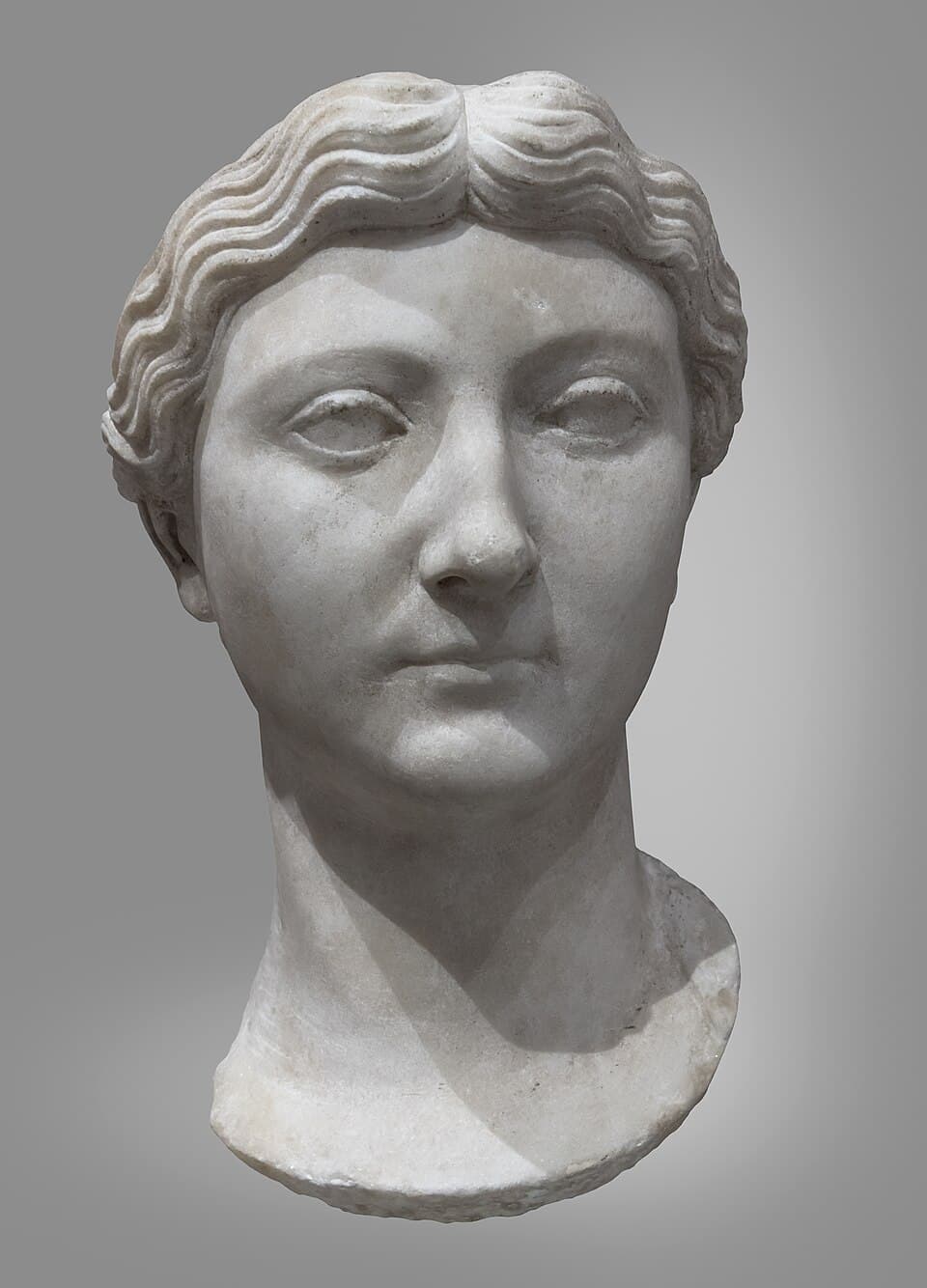
Roman · Politics
Empress Livia 2nd Wife of Octavian
58 – 29
Early Life and Background
Livia Drusilla was born on January 30, 58 BCE, into a prominent Roman family, the Claudii, known for its political influence. Her father, Marcus Livius Drusus Claudianus, was a key figure in the late Republic. Livia's formative years were steeped in political machinations, as the Roman Republic transitioned into the Roman Empire. The strong political legacy of her family, along with her marriage to Tiberius Claudius Nero, positioned her within the sphere of Roman elite society.
Marriage to Augustus and Rise to Power
Livia's life took a significant turn when she married Gaius Julius Caesar Octavianus, who would become Augustus, the first Roman Emperor. This strategic union, which occurred in 38 BCE, was facilitated by her former husband, demonstrating the intricate political arrangements of the time. Livia quickly rose to prominence, becoming a trusted advisor and partner to Augustus, influencing numerous political decisions and helping to shape the Roman Empire’s governance.
Influence and Accomplishments
Livia was known for her involvement in major political partnerships and was considered a guardian figure of the Julio-Claudian dynasty. She set a precedent as the first Roman Empress, holding the title of Augusta, and thus established a new model for female power in Roman leadership. Livia was instrumental in securing the succession of her son, Tiberius, to the imperial throne, thereby ensuring the continuity of Augustus's legacy. Her adept handling of political affairs and her role as a mother to figures like Tiberius cemented her status as a formidable political operator.
Legacy
Livia's legacy endures in Roman history as a pioneer in wielding female political power. Her influence was significant in securing the long-term stability of the Roman Empire, particularly through her dynastic ambitions for the Julio-Claudian line. Her life was celebrated in literature and art, and she remains a subject of interest for scholars exploring gender and power in ancient Rome.
Later Life and Death
Following Augustus's death in 14 CE, Livia continued to wield considerable influence during her son Tiberius’s reign, although their relationship was often strained. Her eventual deification after her death in 29 CE was a testament to her enduring impact on Roman society. Livia's life offers a compelling study of the power behind the throne during one of history’s pivotal moments.
Dated achievements
1 indexed.
- Jan3058Politics
Birth of Livia Drusilla
Livia Drusilla was born, setting the stage for her future role as Empress.
View details Livia Drusilla