← All women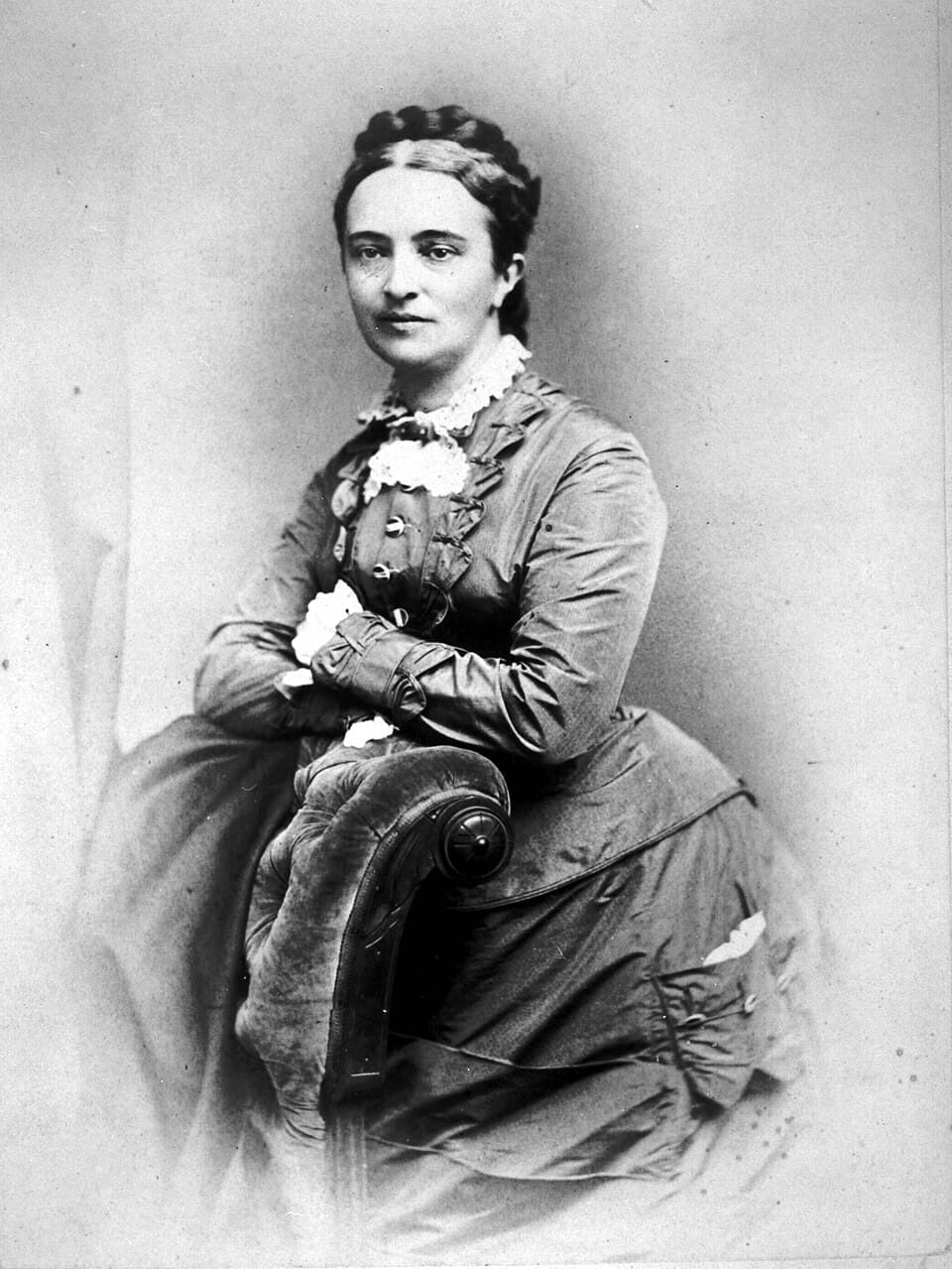
American · Activism
Emma Amelia Hall
February 28, 1837 – December 27, 1884
Early Life and Background
Emma Amelia Hall (February 28, 1837 – December 27, 1884) was an American prison reformer and penal administrator whose work helped redefine the treatment of women offenders and expanded women’s roles in state institutions.[1][2] She was born on a farm in Raisin Township, Lenawee County, Michigan, into a family that combined educational and religious traditions with the everyday demands of rural life.[1][3]
Hall’s parents were Reuben Lord Hall and Abby Wells (Lee) Hall
Reuben Hall’s background as a teacher and Abby’s upbringing as the daughter of a Congregational minister exposed Emma to the importance of schooling and religious ethics from an early age.[2][3] These influences helped shape her conviction that moral guidance and education were essential for individual improvement, themes that would later characterize her work with incarcerated and at-risk women. Her childhood in Michigan, in a community shaped by both frontier realities and New England religious culture, provided the social and moral framework for her later reform efforts. Specific details of Hall’s early schooling are sparse, but multiple sources agree that she was educated at the Michigan State Normal School in Ypsilanti, an institution created to train teachers and professionalize public education in the state.[1][2] This formal teacher training distinguished her from many nineteenth-century women whose educational opportunities remained limited, and it equipped her with pedagogical skills that she would later apply in both classroom and institutional settings. After completing her studies at Michigan State Normal School, Hall embarked on a career in education.[1][2] Biographical accounts report that she taught in the Detroit public schools and at a private seminary before shifting her focus toward prison reform and social work.[1][2] Although the exact years and institutions are not fully documented in accessible sources, these teaching positions placed her within the expanding system of urban education and gave her experience with diverse student populations. Her early teaching career coincided with broader nineteenth-century movements to professionalize teaching and to expand schooling for children in American cities. Women teachers, including Hall, were central to these developments, though they typically lacked formal authority beyond the classroom. Hall’s later transition into administrative work in female correctional institutions represented a significant departure from these norms, moving her from instruction to institutional leadership. Through experience in Detroit’s schools and a private seminary, she honed skills in discipline, curriculum planning, and moral instruction.[2] These competencies would prove crucial when she confronted the complex challenges of managing facilities for women who were either incarcerated or considered wayward by contemporary standards. Emma Amelia Hall’s notable work in prison reform began when she was appointed as a teacher at the House of Shelter for Women in Detroit, a pioneering institution aimed at assisting women as they transitioned from incarceration back into society.[2] In time she rose to become head matron of the House of Shelter, a role that gave her direct oversight over the daily lives and rehabilitation of female inmates.[1][2] The House of Shelter represented an early attempt to create a specialized environment for women offenders, distinct from male-dominated prisons and jails. As head matron, Hall developed a system that emphasized education and rehabilitation rather than punishment.[2] She believed that many female offenders were not inherently criminal but were the products of unfortunate circumstances, including poverty, exploitation, and abusive relationships.[2] This view stood in contrast to prevalent attitudes that saw female criminality as evidence of moral depravity or inherent vice. Hall’s work at the House of Shelter involved implementing structured routines, educational programs, and opportunities for work that could support reentry into society.[2] She advocated compassionate treatment grounded in the conviction that change was possible if women were offered guidance and support rather than solely punitive measures. Her role as head matron also placed her within a small but growing circle of women engaged in the reformatory movement, which sought to transform prisons into institutions focused on moral rehabilitation. Despite significant obstacles, including skepticism and resistance from more conservative authorities uncomfortable with both her approach and her authority as a woman, Hall’s initiatives at the House of Shelter laid important groundwork for the creation of a separate state reform school for girls.[2][3] Her success in managing the institution and promoting non-punitive strategies demonstrated that women administrators could effectively lead correctional facilities. Hall’s experience at the House of Shelter contributed to broader advocacy for a state-supported institution dedicated to minor female offenders. According to EBSCO and other accounts, her innovative methods helped inspire the establishment of the state female reform school in Adrian, Michigan, later known as the Girls Training School.[1][2] This institution adopted a cottage system, organizing girls into smaller, home-like units rather than large cell blocks, and focused on rehabilitation rather than retribution.[1][2] The cottage system, which Hall strongly supported, was designed to offer individualized attention and to create conditions more conducive to moral and educational development. Labor, religious instruction, and schooling were integrated into daily life, reflecting her belief that a combination of work, faith, and education could redirect the lives of young women who had fallen into conflict with the law.[1][2] A Michigan history narrative notes that the Michigan Reform School at Adrian was staffed entirely by women and accepted its first inmate on August 3, 1881, underscoring the institution’s distinctive structure and gendered leadership.[3] Within this environment, Hall’s contributions as planner, advocate, and later superintendent helped demonstrate that women could design and manage reform-oriented facilities effectively. In July 1881, Emma Amelia Hall’s career reached a landmark when she was appointed superintendent of Michigan’s Girls Training School at Adrian.[1] This appointment made her the first woman to head a state institution in Michigan, a barrier-breaking achievement recognized in reference works on women’s firsts in the United States.[1] As superintendent, Hall oversaw all aspects of the Girls Training School, including its educational programs, disciplinary policies, and daily operations.[1][2] She applied the principles she had developed at the House of Shelter, emphasizing labor, education, and religion as central to the institution’s mission.[1][2] Her approach sought to cultivate responsibility, skills for future employment, and moral grounding for the girls under her care. This role placed Hall among the earliest women to serve as practical penal administrators in the United States, not merely in advisory or philanthropic capacities but in direct executive control of a state-run facility.[1][2] In a period when women were primarily expected to confine their public work to voluntary charity or domestic spheres, her superintendency challenged assumptions about women’s capabilities and appropriate roles. Hall confronted significant barriers, including institutional resistance from officials skeptical of female leadership and ideological conflicts with those who favored punitive over reformative strategies.[2][3] Yet her management of the Girls Training School earned respect from colleagues and contributed to evolving professional standards in correctional administration. A detailed account of the Adrian school characterizes her as Michigan’s first woman to lead a state penal institution and notes that she was later appointed to a national prison advisory committee, further reflecting the recognition of her expertise.[3] Across her career, Emma Amelia Hall advocated a correctional philosophy grounded in labor, education, and religion, aligning with but also shaping the broader reformatory movement.[1][2] She argued that women and girls who had come into conflict with the law were often victims of structural and personal misfortune rather than innate criminality.[2] Accordingly, she prioritized environments that could foster personal growth and social reintegration. Hall’s belief in the transformative power of work led her to incorporate productive labor—such as domestic tasks or vocational training—into institutional routines. Education, drawn from her own teacher training, was central to her programs, providing basic literacy, moral instruction, and practical skills.[1][2] Religious practice, influenced by her Congregational family background, was integrated as a means of cultivating conscience and ethical reflection.[2][3] Contemporary accounts and later analyses identify her as one of the first women practical penal administrators, emphasizing that she moved beyond advocacy to implement specific correctional policies and institutional designs.[1][2] Her work contributed to debates about the relative merits of reformatory versus punitive models, and she stands as an example of women using administrative authority to promote more humane treatment of offenders. Emma Amelia Hall’s success in Michigan drew national attention. A historical narrative about the Adrian reform school notes that she was appointed to a national prison advisory committee, placing her among a select group of professionals consulted on the future of correctional policy.[3] While surviving sources do not specify the exact date or the particular body on which she served, this recognition indicates that her expertise was valued beyond her home state. Being invited to serve on such a committee was especially notable for a woman in the late nineteenth century, when national policymaking in criminal justice was dominated by men. Hall’s inclusion suggests that her practical experience and reformist insights were considered important contributions to the evolving discourse on prisons and reform schools. Through these advisory roles and her published or circulated ideas, Hall helped disseminate the concept of cottage-style institutions and the integration of moral and educational training into correctional practice. Her work offered a model for other states considering the establishment of separate facilities for women and girls. In the later years of her life, Emma Amelia Hall moved from Michigan to the New Mexico Territory, where she served as a missionary teacher.[2] This phase of her career extended her commitment to education and moral instruction into a frontier context characterized by significant cultural diversity and social upheaval. While sources provide limited detail on the specific mission or community where she taught, EBSCO’s biography notes that she continued her work as a teacher and religious worker until her death.[2] Her move to New Mexico reflects both the mobility of nineteenth-century reformers and the expansion of missionary educational efforts into the American West. In New Mexico, Hall likely confronted challenges very different from those she faced in Detroit and Adrian, including linguistic and cultural differences and the hardships of frontier life. Nevertheless, her presence there underscores the consistency of her vocation: wherever she worked, she sought to use education and moral guidance to support those on society’s margins. Surviving biographical sources focus primarily on Emma Amelia Hall’s professional and reform activities and provide only limited information about her personal life beyond her family of origin. There is no clear documentation in accessible reference materials indicating that she married or had children, and many accounts treat her biography in terms of her public work rather than domestic relationships.[1][2][3] What is known is that she remained closely connected to Michigan through her family and institutional work, even after relocating to the New Mexico Territory in her final years. Her body was returned to Ypsilanti, Michigan, after her death, suggesting enduring ties to the community where she had been educated and where she had contributed to state reform efforts.[3] The relative lack of detail about her private life is itself telling; nineteenth-century women reformers often had their domestic experiences under-documented compared to their public accomplishments. In Hall’s case, the historical record highlights her professional identity as an educator and penal reformer, emphasizing the importance contemporaries attached to her institutional achievements. Emma Amelia Hall died on December 27, 1884, in Albuquerque, New Mexico Territory, reportedly of heart disease.[1][2] She was forty-seven years old at the time of her death.[2] Her passing occurred while she was still engaged in missionary teaching work, underscoring that she remained active in education and religious service until the end of her life. Following her death, her body was transported back to Michigan and interred in or near Ypsilanti, reconnecting her story to the state where she had undertaken her pioneering prison reform work and where she had studied at the Michigan State Normal School.[3] This return symbolically links the different phases of her life—rural childhood, professional education, reform leadership, and frontier mission work. Her death closed a relatively short but impactful career. By 1884, she had already achieved recognition as Michigan’s first woman to lead a state institution and as one of the earliest women to exercise practical authority over penal administration. The institutions and approaches she helped shape continued to influence discussions of prison reform and the treatment of women offenders long after her death.[1][2] Emma Amelia Hall’s legacy lies primarily in her pioneering role in women’s leadership in penal institutions and her contributions to the reformatory movement. Her appointment in July 1881 as superintendent of the Girls Training School at Adrian, making her the first woman to head a state institution in Michigan, marked a significant step in the expansion of women’s authority in public administration.[1] Hall’s work demonstrated that women could effectively manage complex correctional facilities and could bring distinct perspectives to the treatment of offenders, particularly women and girls. She emphasized rehabilitation through structured labor, education, and religious instruction, challenging prevailing punitive practices and contributing to more humane models of incarceration.[1][2] Her role as one of the first women practical penal administrators placed her at the forefront of efforts to professionalize correctional management. She helped validate the idea that expertise in education and moral guidance could translate into effective institutional leadership, thereby broadening the perceived qualifications for such roles beyond traditional legal or military backgrounds.[1][2] Hall’s influence extended beyond Michigan. Through her participation in national advisory committees and the visibility of the all-female staff at the Adrian reform school, her ideas informed wider debates about how best to address juvenile and female delinquency.[3] The cottage system and integrated rehabilitative programs she supported became reference points in discussions of reformatory design. In the context of women’s history, Hall is recognized in lists of American women’s firsts, which highlight her as the first woman to head a state institution in Michigan and situate her among a broader cohort of women who broke gender barriers in public life.[1] Her story illustrates how women in the nineteenth century used expertise in education and social work to claim authority in domains—such as prison administration—that had previously excluded them. Although she did not leave behind major published works, the institutions she shaped and the policies she implemented constitute her enduring contribution. Modern scholarship and reference materials on prison reform continue to cite her as a significant figure in the development of correctional practices for women and girls.[1][2] Emma Amelia Hall’s life and career thus represent a crucial chapter in the history of women’s activism and penal reform. From her birth on a Michigan farm in 1837 to her death in New Mexico in 1884, she consistently applied education, moral conviction, and administrative skill to the challenge of transforming how society treated its most marginalized women.Education and Teaching Career Beginnings
Entry into Prison Reform: House of Shelter for Women
Establishing the Girls Training School at Adrian
First Woman to Head a State Institution in Michigan
Philosophy of Correctional Reform
National Recognition and Advisory Roles
Later Life and Missionary Work in New Mexico
Personal Life
Death
Legacy and Historical Impact
Dated achievements
3 indexed.
- Feb281837Science
Birth of Emma Amelia Hall
Emma Amelia Hall was born in Raisin Township, Lenawee County, Michigan, the second child of Reuben Lord Hall and Abby Wells (Lee) Hall.
View details Emma Amelia Hall - Wikipedia - Jul011881Activism
First woman to head a state institution in Michigan
Appointed first superintendent of Michigan's Girls Training School at Adrian, becoming the first woman to head a state institution in Michigan.