← All women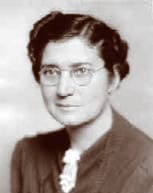
American · Science · Exploration
Elzada U Clover
September 12, 1896 – November 2, 1980
Early Life and Background
Elzada Urseba Clover was born on 12 September 1896 in Auburn, Nebraska, United States, the seventh of nine children of Maynard French Clover and Sarah Gates Clover.[1][5][15] She grew up in a farm family that contended with harsh weather and demanding agricultural work, an environment that fostered her practical familiarity with plants and landscapes.[15][13] Although some later biographical sources list her birth year as 1897, University of Michigan materials and English-language references generally support 1896 as the correct year.[1][5][13][15] This discrepancy has been noted by historians, reflecting the often-fragmentary documentation of women scientists’ early lives.
During her childhood, the Clover family moved from Nebraska to the Southwest, including Texas, where she encountered the arid environments and distinctive cacti that would shape her scientific interests.[5][13] Living in a region where drought-resistant plants were both ecological necessities and objects of curiosity, Clover developed an enduring fascination with succulents and desert flora. These formative experiences in rural and semi-arid landscapes later informed her choice of research specialization and her comfort with rugged field conditions.
Educationally, Clover came of age at a time when higher education for women was expanding but still constrained. She attended Nebraska State Teachers College (now Peru State College), graduating in 1930.[5] That relatively late completion of an undergraduate degree—when she was in her thirties—reflected both economic realities and the limited pathways open to women seeking advanced scientific training in the early twentieth century.
Education and Career Beginnings
After earning her teaching degree, Clover pursued graduate study in botany at the University of Michigan, one of the leading centers for plant science in the United States. She completed her Master of Science in botany in 1932, then her Ph.D. in 1935 at about 39 years of age.[5][7][13] Her doctoral work focused on cacti and succulents, reflecting the influence of her time in the Southwest and positioning her within a relatively specialized taxonomic field.
At Michigan she joined a Botany Department that was almost entirely male at the senior levels. Clover’s graduate and early professional years involved both classroom teaching and curatorial work with plant collections. She became associated with the university’s botanical gardens—later named Matthaei Botanical Gardens—where she helped develop cactus and succulent holdings.[6][14] Her dual role as researcher and educator foreshadowed the combination of scientific and public-facing work that would characterize her career.
In the early 1930s, modern ecological and taxonomic methods were reshaping botany, and systematic field studies of North American desert flora were still limited. Clover entered this milieu as a specialist prepared to bridge careful morphological study with extensive field collection. Her training at Michigan placed her among a small but growing cohort of women with doctorates in plant science, a rarity at the time.
Colorado River and Grand Canyon Expedition
Clover’s most celebrated work arose from her decision to extend botanical research into one of the continent’s most formidable landscapes: the Colorado River through the Grand Canyon. In 1938, she helped organize a scientific river expedition with the explicit aim of conducting the first formal botanical survey of the canyon’s river corridor.[10][14][17][18]
On 20 June 1938, the expedition led by river runner Norm Nevills launched from Green River, Utah, with Clover, her graduate assistant Lois Jotter, and a small crew aboard wooden cataract boats.[10][17] At the time, the Colorado River was widely considered the most dangerous river in North America, and prior runs through Grand Canyon had involved significant risk and occasional fatalities.[7][14] Clover originally envisioned a mule trip to study cacti and succulents in the canyon, but worked with Nevills to transform it into a river journey that would access otherwise unreachable floristic zones.[11]
Throughout the approximately 41‑ to 45‑day expedition, Clover and Jotter collected, pressed, and documented plants at campsites and side canyons along more than 650–660 miles of river from the confluence of the Green and Colorado rivers, through Grand Canyon, to Lake Mead.[10][14][17] They endured large rapids, capsizes, heat, and logistical challenges while maintaining systematic scientific procedures: specimens were pressed in field presses, labeled with location and elevation data, and accompanied by field notes on habitat and morphology.[14][17]
A photograph taken on 31 July 1938 at Bright Angel Creek in Grand Canyon shows Clover in the boat Wen, providing visual evidence of women scientists actively engaged in river running and fieldwork in terrain dominated by male explorers.[3][11][14] The expedition concluded successfully at Lake Mead on or about 6 August 1938, making Clover and Jotter the first documented women to boat the Colorado River through the full length of the Grand Canyon and reach the downstream reservoir.[10][14][17]
Scientifically, the expedition yielded more than 50 identified species of desert plants and four newly recognized cactus species, including forms of claret cup, fishhook cactus, strawberry hedgehog cactus, and beavertail prickly pear endemic or distinctive to Grand Canyon habitats.[6][10][14][17] Clover and Jotter also delineated several plant zones related to elevation, substrate, and proximity to the river, laying a descriptive foundation for later ecological studies.
Historically, their presence on the river challenged prevailing gender norms. National Park Service and university accounts emphasize that Clover and Jotter were the first recorded non‑Native women to successfully run the Grand Canyon section of the Colorado River and survive.[7][9][12][14] Newspapers and popular media of the time focused on the novelty and perceived danger of women attempting such a feat, often underestimating their scientific purpose and competence.[14][16]
Floristic Studies of the Grand Canyon
The systematic documentation from the 1938 expedition culminated in a landmark scientific publication. On 30 January 1939, the journal American Midland Naturalist received Clover and Jotter’s manuscript, “Floristic Studies of the Grand Canyon of the Colorado River.”[3] The paper, published on 1 April 1939 in Volume 21, Number 2, offered the first comprehensive catalog of plant life along the Colorado River through Grand Canyon.[3]
In this article, Clover and Jotter listed and described over fifty species collected during the expedition, organized by location and ecological zone. They discussed associations among plants, the influence of elevation and substrate, and the distribution of cacti and other desert taxa along the canyon walls and riverbanks.[3][16] The paper identified several new species and varieties, formalizing names that reflected Grand Canyon localities.
Prior to their work, botanical knowledge of the canyon had been scattered across small collections and anecdotal observations. Clover and Jotter’s study transformed that patchwork into a floristic baseline, enabling comparisons over time and serving as a reference for park botanists, ecologists, and conservation planners.[6][14][16] It also demonstrated the scientific payoff of high‑risk field expeditions led by or prominently involving women.
The publication reinforced Clover’s reputation as the first botanist to systematically catalog plant life along the Colorado River within Grand Canyon.[1][4][5] It has continued to be cited in subsequent research and is referenced in contemporary narratives about women in science at Grand Canyon and the history of river exploration.[9][16][18]
Academic Career at the University of Michigan
Beyond her river work, Clover built a substantial academic career at the University of Michigan. She held teaching appointments in botany and was closely linked with the university’s botanical gardens.[6][7][14] Her research centered on cactus taxonomy and desert plant ecology, contributing to the understanding of succulent diversity in North American arid regions.
In 1957, Clover became assistant curator at the Matthaei Botanical Gardens, recognized as the institution’s first female curator.[6][14] Her appointment on 15 March 1957 expanded her responsibilities to include curation of living collections, design of exhibits, and public outreach.[6][12][14] She helped build and interpret cactus and succulent collections that conveyed the ecological and aesthetic significance of desert flora to students and visitors in the Midwest.
Clover’s dual role as professor and curator exemplified an integrated approach to plant science: she linked taxonomic research with education and public engagement. Her cactus expertise informed garden acquisitions and layout, and her experience in the Grand Canyon shaped interpretive narratives about adaptation, survival, and biodiversity in extreme environments.[6][14]
On 1 September 1960, Clover was promoted to full professor in the Botany Department, becoming the department’s first woman full professor.[1][4][5][14] This promotion, following her years of teaching, research, and curatorial work, marked a significant moment in the history of women in academic science at Michigan. She served as professor from about 1960 until her retirement in 1967.[6][14]
Her academic contributions included mentoring graduate students, publishing taxonomic and floristic studies, and participating in departmental governance. Within the broader context of mid‑twentieth‑century academia, her role as a senior woman scientist was unusual and often pioneering, particularly in a field that valued extensive fieldwork and institutional seniority.
Retirement and Later Life
Clover retired from her professorial duties on 30 June 1967, ending her formal academic career.[6][14] Even after retirement, accounts note that she continued to travel and explore waterways by motorboat into her eighties, suggesting that her love of rivers and field environments persisted beyond her institutional roles.[7]
She eventually settled in McAllen, Texas, near the Mexico border, a region whose semi-arid climate and plant communities echoed the landscapes that had first inspired her botanical interests.[5][7] On 2 November 1980, she died in McAllen at the age of 83.[1][5][7] Her death closed a life that had spanned rural Nebraska, the deserts of the Southwest, and the academic and curatorial worlds of Michigan.
Personal Life
Sources on Clover’s personal life are limited, a common pattern for women scientists of her era whose private histories were seldom documented in detail. Available biographical accounts emphasize her professional identity, her family background as one of nine children, and her long-standing affinity for desert plants and rivers rather than marital status or children.[1][5][13][14] Some references mention her as self-reliant and determined, qualities reflected in her willingness to undertake risky field expeditions and to persevere through graduate school in her thirties.[14][15]
Her close professional partnerships—including her collaboration with Lois Jotter on the Grand Canyon expedition—were central to her life story. Jotter, then a young graduate student, later became a botanist and teacher in her own right, and their relationship has been described as both mentoring and collegial.[10][16] Clover’s interactions with river runner Norm Nevills and photographer Emery Kolb also illustrate the cross-disciplinary networks that formed around western exploration.[10][11]
Awards, Honors, and Recognition
During her lifetime, Clover’s work was acknowledged within scientific circles through publications, institutional appointments, and her leadership roles at the University of Michigan. Her Grand Canyon research contributed to her advancement to assistant curator and full professor, positions that themselves signified recognition.[4][6][14]
Posthumously, her achievements have received renewed attention. In 2016, Clover and Jotter were inducted into the John Wesley Powell River History Museum Hall of Fame, explicitly honoring their 1938 expedition as a transformative event in the history of Colorado River running and river science.[10] The Hall of Fame citation emphasized their status as the first women to successfully run the length of the Colorado River through Grand Canyon and as the first botanists to complete a comprehensive survey of its river corridor.[10]
Her story has also been revisited in works such as Melissa L. Sevigny’s book Brave the Wild River, which foregrounds Clover and Jotter’s roles in mapping the canyon’s botany and critiques the historical erasure of women from exploration narratives.[13][15][16] Articles in outlets like Orion Magazine, Los Angeles Review of Books, and Atlas Obscura, as well as features by the University of Michigan and the National Park Service, have further elevated her profile.[6][9][14][16][17][18]
Legacy and Historical Impact
Clover’s legacy rests on three interconnected pillars: scientific contribution, exploration history, and gender barriers in science.
Scientifically, her work with cacti and desert flora, and especially her co-authored Floristic Studies of the Grand Canyon of the Colorado River, established a foundational understanding of plant communities along one of the world’s most iconic canyons.[1][3][6][14] Subsequent ecologists and park scientists have built on her zonal descriptions and species lists to study ecological change, invasive species, and conservation priorities in Grand Canyon National Park.[6][9][16]
In exploration history, Clover and Jotter’s 1938 river run helped redefine the Colorado River from a purely hazardous obstacle into a scientific resource. Their expedition has been compared to John Wesley Powell’s nineteenth-century journeys in terms of its significance for knowledge of the canyon, with the key distinction that it placed plant ecology rather than geological mapping at the center of inquiry.[10][16] The story of their trip now figures prominently in museum exhibits and public histories of Grand Canyon river running.[11][16][18]
Regarding gender barriers, Clover was among the first women to attain senior academic rank in plant science at a major U.S. research university,[4][5][14] and the first woman full professor in Michigan’s Botany Department.[4][5] She also broke new ground as the first female curator at Matthaei Botanical Gardens.[6][14] Her participation in the 1938 expedition, and the media coverage that followed, challenged assumptions that women were unsuited for extreme fieldwork or could only occupy supportive roles on scientific trips.[7][9][12][14]
Contemporary discussions of women in science at Grand Canyon and in river history frequently highlight Clover as a key figure whose achievements were underrecognized for decades.[9][16][18] Her rediscovery in recent scholarship reflects broader efforts to correct the historical record and to document the contributions of women scientists whose work was essential to the development of ecological and conservation sciences.
Historical Debates and Documentation
One notable detail in Clover’s biographical record is the disagreement about her birth year. English-language and Spanish Wikipedia entries, along with University of Michigan sources and recent historical works, often give 1896 as her birth year.[1][2][13][15] German, Basque, Igbo, and some local materials list 1897
Historians have tended to favor 1896, aligning with university records and detailed biographical reconstructions in works like Brave the Wild River, which identifies 12 September 1896 and situates her upbringing in that timeframe.[13][15] This discrepancy underscores the challenges of reconstructing accurate life histories for women scientists, whose vital records were not always prioritized or preserved. Another historical nuance involves the scope of Clover and Jotter’s river "first." While some popular accounts have described them as the first women to raft the entire Colorado River, most primary and National Park Service sources specify the stretch through the full length of the Grand Canyon or Grand Canyon National Park.[1][4][9][12][14] Careful historians therefore limit the claim to the canyon segment, acknowledging that other parts of the Colorado River system present different historical contexts and possible earlier runs. Elzada Urseba Clover stands as a significant figure in twentieth-century botany and exploration. From a Nebraska farm and Southwestern deserts, she moved into the academic corridors of the University of Michigan and onto the turbulent waters of the Colorado River, using each environment as a laboratory for understanding plant life. Her pioneering Grand Canyon expedition with Lois Jotter, her floristic catalog of the canyon’s river corridor, and her barrier-breaking roles as curator and full professor collectively reshaped both the scientific study of desert flora and the place of women in field science. Her death in 1980 did not end the influence of her work; instead, subsequent generations have rediscovered and celebrated her contributions, ensuring that the story of the Grand Canyon’s plants—and the women who first documented them—occupies a central place in the history of science and exploration in North America.Conclusion
Dated achievements
11 indexed.
- Sep121896Science
Birth of Elzada U. Clover
Elzada Urseba Clover was born in Auburn, Nebraska, later becoming a pioneering botanist and river runner of the Colorado River through the Grand Canyon.
View details Elzada Clover - Wikipedia - Jun201938Science
Launch of historic 1938 Colorado River-Grand Canyon botanical expedition
Norm Nevills's expedition carrying botanists Elzada Clover and Lois Jotter launched from Green River, Utah, beginning the journey that made them the first women to run the Grand Canyon.