← All women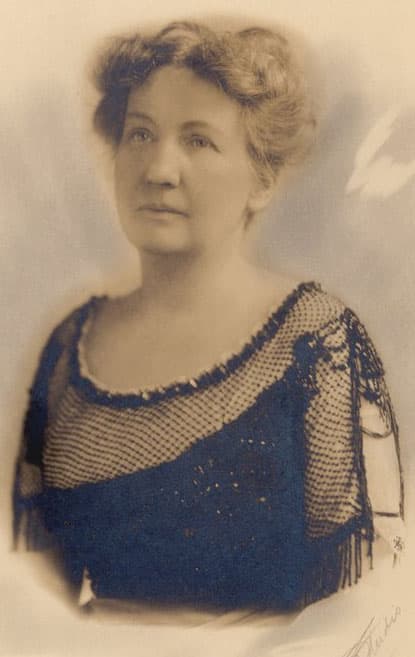
American · Aviation · Medicine
Ellen Church
September 22, 1904 – August 22, 1965
Early Life and Background
Ellen Church was born on 22 September 1904, in the rural community of Cresco, Iowa, United States.[10][7] She grew up in the American Midwest at a time when powered flight was in its infancy—the Wright brothers’ first successful flights at Kitty Hawk occurred just a year before her birth. This coincidence of timing meant that her formative years unfolded in parallel with the rapid development of aviation, a field that would eventually define her public legacy.
Sources note that Church trained as a registered nurse, gaining professional medical qualifications during the 1920s.[1][7] She also earned a pilot’s license, a remarkable achievement for a woman in that period, though civil aviation did not yet offer cockpit careers to women.[1][11] The combination of nursing and piloting skills positioned her uniquely: she understood both the technical environment of the aircraft and the medical needs of passengers, an intersection that very few professionals of any gender occupied.
Detailed information about her parents, childhood schooling, or family structure is sparse in the available historical record, which focuses primarily on her professional achievements. Still, the surviving accounts suggest a determined and ambitious woman, willing to leave Iowa and relocate to larger urban centers to pursue her career, including San Francisco, where crucial parts of her story would later unfold.[11] Her early commitment to nursing and aviation indicates that she was drawn to fields that were simultaneously modern, demanding, and service‑oriented.
Career Beginnings and Development
By the late 1920s, Church was living in San Francisco, having completed nurse training and obtained her pilot’s license.[7][11] At that time, the U.S. airline industry was consolidating around companies like Boeing Air Transport, a forerunner of United Airlines, which operated transcontinental routes primarily for mail and a small number of passengers.[4][11] Passenger air travel was noisy, turbulent, and still widely feared by the public. Airlines employed male cabin attendants in some contexts, and German steward Heinrich Kubis had served aboard airships as early as 1912, but no woman had yet been hired as a passenger‑cabin attendant in scheduled fixed‑wing airline service.[1][10][11]
Church aspired to be a commercial pilot and approached the San Francisco district office of Boeing Air Transport seeking such a position. According to later historical reconstructions, Steve Stimpson (also known as Simpson), the district manager, rejected her application because the airline hired only male pilots.[4][11] Rather than accepting this exclusion, Church turned to creative negotiation. Drawing on her nursing background, she proposed that Boeing hire registered nurses as stewardesses, arguing that trained medical personnel in the cabin could provide care for airsickness, respond to emergencies, and, crucially, reassure nervous passengers.[4][7][11]
Boeing Air Transport agreed to test her idea and offered Church a three‑month trial position that included both service duties and responsibility for recruiting and training additional nurses.[4] She developed the job description and training program for the first group of stewardesses—later celebrated as the "Original Eight"—who included nurses such as Jessie Carter, Cornelia Peterman, Inez Keller, Alva Johnson, Margaret Arnott, Ellis Crawford, and Harriet Fry.[4][11] This phase of her career transformed her from applicant to architect of a new aviation profession.
Major Accomplishments in Aviation
Church’s most historically significant accomplishment came on 15 May 1930. On that date, she served on a Boeing Air Transport flight from Oakland, California, to Chicago, Illinois, as the world’s first female airline stewardess.[1][10][13] The aircraft, a Boeing 80A tri‑motor, carried 14 passengers and made 13 intermediate stops on the roughly 20‑hour journey, reflecting the logistical realities of early long‑distance air travel.[10][13]
On board, Church wore a tailored uniform and performed a wide range of tasks that went far beyond contemporary notions of service. She assisted passengers with boarding and baggage, served meals, managed airsickness and minor medical issues, and provided continuous reassurance to travelers unaccustomed to the sensations of flight. Her presence as a nurse signaled a level of professionalism and care that helped to counteract public anxiety about aviation.[1][11]
In doing so, Church became the first woman to serve as a passenger‑cabin attendant on a scheduled airline flight, a milestone often described as the birth of the female flight‑attendant profession.[1][10][11] It is important to distinguish her achievement from that of male predecessors: Heinrich Kubis had served as a flight attendant on German airships in 1912, but Church’s role was the first to establish women as stewards in the passenger cabin of commercial airplanes.[1][10] Boeing Air Transport soon hired seven additional nurse‑stewardesses under the program she helped design, and the concept of cabin nurses spread rapidly.
Historical accounts from museums and aviation historians indicate that Church also contributed to early cabin safety procedures and practices. The Museum of Flight notes that she was involved in creating some of the first flight safety regulations and even inventing or popularizing the jump seat—a fold‑down seat near the main cabin door that allowed crew to monitor and assist passengers during boarding and emergency situations.[12] This innovation facilitated safer movement around the cabin and later became a standard fixture in commercial aircraft, illustrating how her practical problem‑solving had lasting technical impact.
Church’s career as a stewardess was relatively brief. Several sources report that an automobile accident about 18 months after her first flight forced her to leave flying duties.[3][11] Following her recovery, she completed further college studies and returned full‑time to nursing, closing the initial chapter of her aviation career but leaving the stewardess profession firmly established.[11]
World War II Service and Medical Career
With the onset of World War II, Church’s professional life entered a second phase that again linked medicine and aviation. She joined the U.S. Army Nurse Corps and attained the rank of captainevacuation nurse, working aboard aircraft that transported wounded soldiers from combat zones to rear‑area hospitals.
Historical narratives describe her participation in evacuation flights from Africa and Italy, where she helped stabilize and move injured servicemen under hazardous conditions.[3][7] In addition to direct flight duties, Church played a key role in preparing other nurses for airborne medical work. She trained evacuation nurses for the D‑Day invasion of Normandy, contributing to the Allied capacity to manage casualties during one of the war’s largest and most complex operations.[3]
For her service in the European theater, Church received the Air Medal, awarded for "meritorious achievement in aerial flight."[3][7] She also earned the European–African–Middle Eastern Campaign Medal with seven bronze service stars, the American Theater Campaign Medal, and the Victory Medal, reflecting sustained and distinguished participation in wartime medical aviation.[3] These honors underscore that her contributions were recognized not only in commercial aviation but also within military structures, where evacuation nurses played a critical role in survival rates among wounded troops.
After World War II, Church resumed a civilian nursing career, settling in Terre Haute, Indiana.[1][6] While the details of her day‑to‑day work are less extensively documented, available sources present her as a respected hospital administrator and nurse, continuing to apply her skills in institutional healthcare. Her wartime decorations and remembered competence suggest that she brought to postwar nursing the same professionalism and calm under pressure that had characterized her earlier work in aircraft cabins.
Awards, Honors, and Recognition
Church’s awards and honors can be grouped into two broad categories: military decorations and commemorative recognitions.
- Air Medal: Awarded for meritorious achievement in aerial flight, recognizing her service as an evacuation nurse in the European theater during World War II.[3][7]
- European–African–Middle Eastern Campaign Medal with seven bronze service stars: Signifying participation in multiple campaigns across those regions.[3]
- American Theater Campaign Medal: Marking her service related to the American theater of the war.[3]
- World War II Victory Medal: Awarded to all members of the U.S. armed forces who served during the war, including Church.[3]
Beyond formal decorations, Church has been recognized in numerous historical and institutional contexts as a pioneer of women’s roles in aviation. The Smithsonian National Air and Space Museum highlights her as the nurse from Iowa whose idea of placing women nurses aboard airliners led to the establishment of female flight attendants.[11] The Museum of Flight describes her as "America’s first stewardess" and credits her with contributing to early flight safety regulations.[12]
Her hometown airport in Cresco, Iowa, has been named Ellen Church Field, a civic honor that symbolically ties her pioneering aviation role back to the rural community where she was born.[7] Historical blogs, newspapers, and educational websites frequently feature her in "on this day" and anniversary pieces, emphasizing her influence on both aviation history and women’s professional opportunities.[6][9][13]
Personal Life
The surviving historical record about Church’s personal life is relatively limited compared with the detail available on her professional career. Some aviation and historical sources refer to her as Ellen Church Marshall, suggesting that she may have married at some point, though the specific identity of a spouse, date of marriage, and any information about children are not clearly documented in widely cited references.[10] Where this married name appears, it is usually in the context of later-life references rather than detailed biographical narratives.
Church’s personal choices, insofar as they can be inferred from the public record, reflect a strong commitment to professional engagement. She relocated across states—from Iowa to California and later to Indiana—to pursue opportunities in nursing and aviation. Her willingness to seek a pilot’s job in a male‑dominated industry and to negotiate a new professional role for herself indicates a personality oriented toward challenge and innovation rather than conforming to conventional domestic roles for women of her era.
Accounts of her life also mention her continued interest in outdoor activities, including horse riding, which she pursued later in life and which ultimately contributed to the accident that led to her death.[6][5] This dimension suggests an enduring appreciation for physical activity and perhaps a temperament inclined toward controlled risk and adventure, consistent with her early attraction to flying.
Legacy and Historical Impact
Ellen Church’s legacy is anchored in her role as the world’s first female airline stewardess and extends into broader questions about women’s integration into technologically advanced, public‑facing professions. Her 1930 flight from Oakland to Chicago demonstrated that women—particularly trained nurses—could play central roles in the safety, comfort, and psychological reassurance of airline passengers.[1][10][13] In an era when airlines marketed flights as adventurous and elite experiences, the presence of professional women in the cabin helped normalize air travel and expand its clientele.
By conceptualizing and then occupying the stewardess role, Church created a new occupational category for women in aviation. The profession quickly evolved from nurse‑stewardesses to flight attendants with broader service and safety responsibilities. The "Original Eight" she helped recruit and train became the founding cohort of what would soon be thousands of women worldwide working in cabins.[4][11] This shift opened a pathway for women to participate in the industry at a time when the cockpit remained closed to them, making cabin work one of the few available aviation careers for women through mid‑century.
Church’s influence also touched early cabin safety standards. By insisting on medical qualifications and developing structured training programs, she helped professionalize the role of cabin crew. Accounts that attribute innovations such as the jump seat and early flight safety regulations to her work suggest that she contributed materially to the operational framework that kept passengers safer.[12] As flight attendants later became central to safety briefings, emergency procedures, and evacuation drills, her initial insistence on competence and training resonates strongly.
Her World War II service as an evacuation nurse further broadened the historical significance of her career. By evacuating wounded soldiers by air and training other nurses for D‑Day operations, Church helped demonstrate the effectiveness of aeromedical evacuation as a standard military practice.[3][7] Postwar developments in both military and civilian medical transport increasingly relied on air travel, and the professional model she embodied—medical personnel working in airborne environments—became widely accepted.
From the perspective of women’s history, Church stands as a figure who navigated structural gender barriers with strategic creativity. Denied the pilot’s role she initially sought, she reframed her nursing expertise as an asset to the airline and thereby created a new professional space rather than accepting exclusion.[4][11] Her story illustrates a broader pattern in which women used existing qualifications to negotiate entry into emerging fields, sometimes reshaping those fields in the process.
Today, her name appears in encyclopedias, scholarly blogs, museum exhibits, newspaper retrospectives, and educational videos as an emblem of early female participation in commercial aviation.[1][7][11][5][6] The naming of Ellen Church Field in Cresco and continued popular interest in the origins of flight attendants ensure that her contributions remain visible. She is often invoked not only as "first stewardess" but also as an example of how professional women helped make modern air travel safer, more accessible, and more trusted.
Later Life and Death
After World War II, Church continued her nursing career in Terre Haute, Indiana, reportedly working in hospital administration and clinical care.[1][6] While detailed records of her positions and responsibilities are limited, the broad outlines suggest a stable professional life grounded in healthcare practice. Her wartime decorations and longstanding experience would have made her an asset in any medical institution, particularly as postwar medicine increasingly incorporated lessons from military trauma care and evacuation.
Church’s later years also included recreational activities such as horse riding. Accounts in popular and historical media state that she suffered a serious horse‑riding accident which led to injuries that ultimately caused her death.[6][5] On 22 August 1965, she died in Terre Haute at the age of 60.[1][10][7] The accident underscores the contingent nature of her life’s end: a woman who had safely navigated the risks of early aviation and wartime evacuation flights succumbed to injuries sustained in a leisure pursuit.
Following her death, recognition of her contributions continued to grow. As aviation history matured as a scholarly and museum field, researchers and curators increasingly highlighted the origins of cabin crew and the role of nurses in early passenger flights. Church’s story became a focal case in these narratives. The naming of Cresco’s airport as Ellen Church Field symbolizes how her hometown came to embrace and memorialize her achievements.[7]
In the decades after her passing, she has been the subject of articles in mainstream publications, blog essays, museum posts, and video documentaries, all of which emphasize her dual identity as nurse and aviator and her pioneering status as the first female flight attendant.[1][3][6][11][5] These posthumous representations ensure that Ellen Church remains part of the broader story of how women helped shape modern aviation and medical evacuation, even when official pilot roles were denied to them. Her life, ending in 1965, continues to inform contemporary discussions about gender, work, and technological change.
Dated achievements
4 indexed.
- Sep221904Science
Birth of Ellen Church
Ellen Church was born in Cresco, Iowa, later becoming a nurse, pilot, and the world's first female flight attendant.
View details Ellen Church - Catalan Wikipedia - May151930Aviation
First flight as the world's first female airline stewardess
Ellen Church flew as the world's first female airline stewardess aboard a Boeing Air Transport flight from Oakland to Chicago.