← All women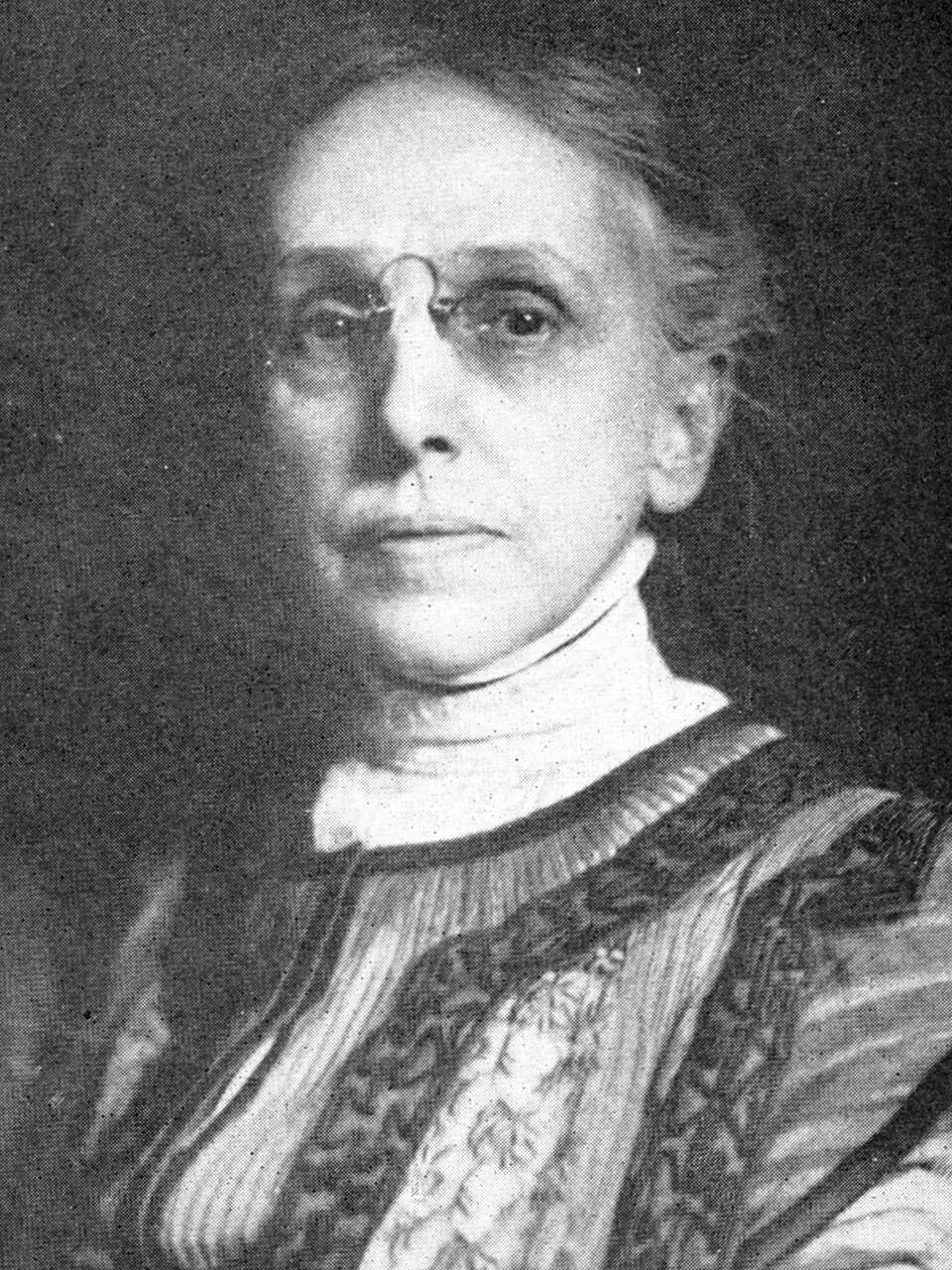
American · Politics · Activism
Ella Flagg Young
January 15, 1845 – October 26, 1918
Early Life and Background
Ella Flagg Young was born on January 15, 1845, in Buffalo, New York, to Theodore Flagg, a skilled metal worker, and Jane Reed Flagg.[7][11] Most major reference works give January 15 as her birth date, though some secondary sources list January 16; scholarly consensus and leading encyclopedias support January 15 as the accurate date.[1][11] Young’s family moved to Chicago while she was still a child, placing her within a rapidly growing urban environment that would later become the focus of her professional life.[7]
Young reportedly had little or no formal schooling in her early years and taught herself to read before entering school.[7][18] When she did enroll, she advanced quickly, demonstrating strong intellectual ability and a keen interest in teaching and learning. She completed her teacher training at the Chicago Normal School, graduating in the early 1860s.[7] This institution, created to prepare teachers for the city’s expanding public school system, exposed her to emerging ideas about pedagogy and the social role of education.
Her formative influences included both personal experience as a student and the broader context of mid‑19th‑century educational reform. As a girl, she encountered a school system in which women were concentrated in classroom teaching but excluded from high‑level decision‑making. These gendered barriers would become central targets of her later work. By the time she entered the profession, debates over common schooling, normal schools, and professional training for teachers were reshaping American education, providing opportunities for ambitious educators like Young to carve out new forms of leadership.
Career Beginnings and Development
Young began her teaching career in Chicago at about age seventeen, around the early 1860s.[9][7] She first taught in elementary classrooms, quickly gaining a reputation for effective instruction and thoughtful management of students. After only a few years, she shifted from teaching children to teaching teachers, becoming an instructor in methods and pedagogy for other educators.[7][10] This transition into teacher education marked the start of a long career focused on strengthening the profession and expanding teachers’ voice in school governance.
In the later 1860s and 1870s, Young advanced into administrative roles. Contemporary biographical accounts note that she became one of the earliest women principals of a large school, a development facilitated by an 1873 Illinois law allowing women to hold elected school offices.[7] During this era she was appointed to principalships in increasingly prominent schools in Chicago, including one of the city’s largest and most visible institutions by the mid‑1870s.[2][7] While exact dates for these promotions are typically reported by year rather than specific day, they collectively represent her emergence as a pioneering woman administrator in urban public schooling.
By the late 1880s, Young had risen further in the Chicago hierarchy, becoming an assistant superintendent of district schools.[7][12] Sources note that she and another woman were among the first women to reach this level in Chicago and likely among the earliest in the country.[2] Around the same period she was appointed by the governor of Illinois to the state Board of Education, where she served for approximately twenty‑five years and is widely credited as the first woman member of the board.[2] Through these roles, Young gained extensive experience in system‑level administration and developed strong views about the relationship between teachers and central office leadership.
University of Chicago and Scholarly Work
Young’s career took a decisive turn toward higher education and scholarly work in the 1890s. In 1899 she resigned from her position in the Chicago public school system and was appointed associate professor of pedagogy at the University of Chicago.[10] At the university she worked closely with philosopher and educational reformer John Dewey, becoming both his colleague and, by Dewey’s own account, one of his most influential interlocutors on school matters.[12]
Young pursued formal academic study while teaching, completing undergraduate coursework at the University of Chicago between 1895 and 1899 and earning her Ph.D. in 1900 at about age fifty‑five.[7][10] Her doctoral dissertation formed the basis of her book Isolation in the School, an early and influential critique of the organizational and social dynamics that left teachers isolated from one another and from meaningful participation in decision‑making.[10] The work examined how school structures and administrative practices could either foster or hinder collaboration, professional growth, and democratic culture within schools.
In the early 1900s Young published two additional books, Ethics in the School and Some Types of Modern Educational Theory, both appearing in 1902.[10][17] These works expanded her analysis to include moral education and the philosophical foundations of schooling, engaging with contemporary debates about discipline, character formation, and the purpose of public education in an increasingly industrial and diverse society. Together, her books established Young as a significant contributor to educational theory as well as practice.
At the University of Chicago, Young held one of the earliest professorships in education occupied by a woman at a major American university.[2][12] Dewey later described her as the "wisest person in school matters" he had ever encountered, underscoring her stature among Progressive Era intellectuals.[12] Her university work solidified her reputation as both a practitioner and theorist, uniquely positioned at the intersection of classroom experience, system administration, and philosophical reflection.
Superintendent of Chicago Public Schools (1909–1915)
Young’s most visible and historically significant role began with her appointment as superintendent of Chicago Public Schools on July 30, 1909.[4][13] Newspapers nationwide covered the decision, emphasizing that she was the first woman to head a large metropolitan school system in the United States.[1][4][5] Chicago at the time enrolled roughly 290,000 students and was one of the country’s largest urban districts, making the superintendent’s position both powerful and politically charged.[18]
As superintendent from 1909 to 1915, Young pursued an ambitious agenda of democratic school administration.[12][13] She organized school councils and advisory bodies that gave classroom teachers a greater voice in shaping curriculum, governance, and working conditions.[12] She challenged the emerging "cult of efficiency" in school administration, which sought to model educational management on business practices focused on quantifiable outputs and centralized control.[12] Young argued instead that schools were communities requiring participatory decision‑making and professional judgment.
Under her leadership, Chicago schools introduced innovations including expanded teacher training, experimentation with school‑based committees, and curricular changes such as early sex hygiene programs around 1910, among the first such efforts in American schools.[6] She advocated for smaller class sizes, better compensation and status for teachers, and greater respect for pedagogical expertise. Young’s reforms brought her into conflict with some business‑oriented board members and administrators who favored stricter hierarchical control and standardized procedures.[3][13]
Young’s tenure was marked by both achievement and controversy. She navigated complex political dynamics within the Chicago Board of Education, labor organizations, and civic reform groups. After seven turbulent years, she retired from the superintendent’s post in 1915, but remained active in educational and political circles until her death.[3] Despite resistance, her time as superintendent demonstrated that a woman could effectively lead a major city school system and implement a sophisticated reform agenda, reshaping national perceptions of women’s capacity for high‑level educational leadership.
President of the National Education Association
In 1910, the year after her appointment as superintendent, Young’s national stature was further cemented when she was elected president of the National Education Association (NEA).[12][10] The election, occurring during the NEA’s annual convention—often associated with early July meetings—made her the first woman president in the organization’s history.[12] Newly enfranchised women teachers played a crucial role in this outcome, organizing to support her candidacy and challenging the long‑standing male dominance of the association’s leadership.[4]
Young’s presidency was symbolically powerful. The NEA was the leading national professional association for educators, and its presidency carried significant influence over educational policy debates. Her election "shocked" parts of the existing power structure but simultaneously established permanent places for women in the organization’s leadership and governance.[4] It demonstrated that women educators could shape national agendas rather than merely implement policies devised by male administrators.
As NEA president, Young advanced themes consistent with her work in Chicago and at the University of Chicago: teacher empowerment, democratic participation, and skepticism toward rigid administrative centralization.[10][12] She supported measures to strengthen professional autonomy, opposed purely mechanical applications of efficiency doctrines, and emphasized the importance of moral and civic dimensions of schooling. Her public speeches and writings during this period encouraged teachers to see themselves as professionals with collective responsibilities and rights, not simply employees carrying out orders from superiors.
Awards, Honors, and Recognition
Throughout her career, Young received significant recognition from academic institutions and contemporaries. In addition to her Ph.D. from the University of Chicago, sources indicate she received an honorary LL.D. from the University of Illinois, reflecting formal acknowledgement of her contributions to educational theory and practice.[17] Her appointment as superintendent in Chicago made her, according to one scholarly account, "the most powerful and best‑paid woman executive in the country" at the time.[4]
John Dewey’s characterization of Young as the "wisest person in school matters" he had encountered stands as a major intellectual tribute, situating her among the top tier of Progressive Era thinkers.[12] After her death, reformers such as Jane Addams praised her "intelligence and character," emphasizing her role in advancing opportunities for women and in defending democratic principles in school governance.[8][15] Her leadership in the NEA and her pioneering role on the Illinois state Board of Education further signify the esteem in which she was held.
Personal Life
Young’s personal life intersected with, but did not dominate, her public career. In 1868, she married William Young, a merchant.[7][17] The marriage lasted only a few years; William Young died in 1873.[7] The couple had no children.[7] After her husband’s death, Ella Flagg Young did not remarry, devoting herself instead to her professional and civic work.
Biographical accounts portray Young as intensely committed to education, spending more than fifty years in the field and devoting much of her time to teaching, administration, and writing.[8][10] She participated in organizations such as the Political Equality League and the Illinois Equal Suffrage Association, reflecting her engagement with the broader women’s rights movement and the struggle for political equality.[17] These affiliations underscore that her advocacy for women extended beyond professional advancement in education to include civic and political participation.
Legacy and Historical Impact
Ella Flagg Young’s legacy is multifaceted, encompassing gender, governance, pedagogy, and professionalization in American education. As the first woman superintendent of a major city school system and the first woman president of the NEA, she broke key institutional barriers that had kept women from top leadership in public schools and professional associations.[1][4][12] Her success demonstrated that women educators could manage complex, politically charged systems and lead national organizations.
Equally important was Young’s substantive contribution to theories and practices of democratic school administration. She opposed efforts to treat schools like factories, governed by strict hierarchies and quantitative efficiency metrics, and instead argued for participatory structures that gave teachers a voice in decision‑making.[12][13] Her advocacy for school councils and her critique of "isolation" in the school anticipated later movements for site‑based management, teacher leadership, and collaborative professional cultures.[10][12]
Her writings, including Isolation in the School, Ethics in the School, and Some Types of Modern Educational Theory, influenced contemporaries and contributed to the broader Progressive Era discourse on education.[10] By engaging with questions of moral education, professional ethics, and the social organization of schools, she helped shape responses to industrialization, urbanization, and immigration, all of which were transforming American society and its educational needs.
From a women’s‑history perspective, Young stands as a pioneering figure whose career illustrates both the possibilities and limits of women’s advancement in the early 20th century. Despite her breakthroughs, women remained rare in top administrative posts for decades after her tenure, highlighting the structural persistence of gender inequality.[3] Yet her achievements provided precedents and inspiration for later generations of women educators, administrators, and scholars, and she is increasingly recognized in modern scholarship as a "trailblazer" for women in education.[2][19]
Later Life and Death
After retiring from the superintendency in 1915, Young did not entirely withdraw from public life. She continued to write, lecture, and engage with educational issues and civic causes, maintaining connections to organizations devoted to equal suffrage and political equality.[3][17] Her ongoing work kept her at the center of debates over school governance and women’s roles in public institutions.
Young’s life ended on October 26, 1918, when she died in Washington, D.C., from pneumonia associated with influenza.[7] Her death occurred during the devastating influenza pandemic, which claimed numerous lives across the United States and the world. She was 73 years old. Major reference works, including Encyclopaedia Britannica and education biographical sources, consistently report October 26, 1918, as her date of death.[1][7]
Obituaries and memorials emphasized her pioneering status and her intellectual contributions. Colleagues and reformers recalled her as a leader who combined administrative skill with deep concern for teachers’ professional autonomy and students’ welfare. Her passing marked the end of a career that had spanned more than fifty years and had left a lasting imprint on both the structure of school systems and the expectations for women’s leadership within them.
Today, historians of education and women’s history continue to study Young’s career, drawing on archival materials, scholarly articles, and biographical accounts to understand how she navigated the gender politics of her time and articulated a distinctive vision of democratic schooling.[12][13][14] Her life story remains a key case study in the intersection of gender, professionalization, and public administration in the Progressive Era.
Dated achievements
4 indexed.
- Jan151845Activism
Birth of Ella Flagg Young
Ella Flagg Young was born in Buffalo, New York, beginning the life of a future pioneering educator.
View details Encyclopaedia Britannica - Jul301909Activism
Appointed first woman superintendent of Chicago's public schools
Ella Flagg Young became the first woman superintendent of a major U.S. city school system.