← All women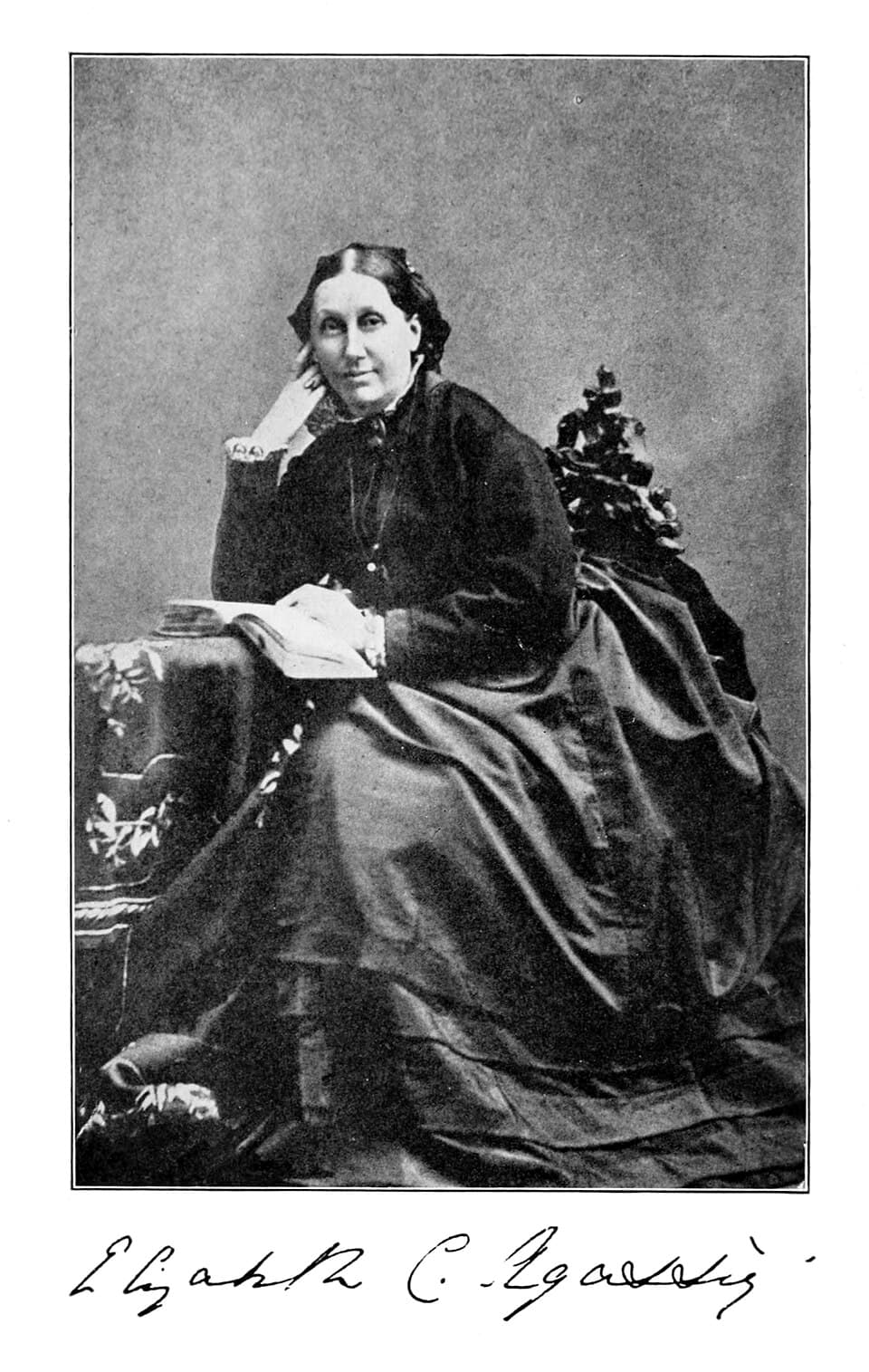
American · Science · Literature · Activism
Elizabeth Cabot Agassiz
December 5, 1822 – June 27, 1907
Early Life and Background
Elizabeth Cabot Cary was born on December 5, 1822, in Boston, Massachusetts, into a prominent and affluent family. Her upbringing in an intellectually stimulating environment laid the foundation for her lifelong passion for education. Elizabeth was exposed to the rich cultural and intellectual milieu of Boston, which was characterized by an emphasis on scholarly pursuits and societal reform.
Career Beginnings and Development
Elizabeth's foray into education began alongside her marriage to naturalist Louis Agassiz in 1850, a union that had a profound impact on her intellectual and social engagements. She played a pivotal role in supporting her husband's scientific endeavors, accompanying him on expeditions and assisting in organizing scientific activities. Elizabeth's organizational skills and intellectual insights made her an invaluable partner in Louis's scientific career.
Major Works, Discoveries, or Accomplishments
Elizabeth co-founded the Cambridge School for Young Ladies in 1855, which was an innovative institution aimed at providing high-quality education for women. Her most significant contribution was the establishment of the "Harvard Annex" in 1879, which later became Radcliffe College. As the first president of Radcliffe, Elizabeth championed the cause of higher education for women, advocating for their intellectual growth and academic recognition at par with men.
Awards, Honors, and Recognition Received
Elizabeth's leadership at Radcliffe garnered substantial recognition, as she navigated societal norms to create a respected academic institution. Her efforts significantly expanded opportunities for women in higher education, earning her a prominent place in the annals of educational reformers.
Personal Life
Elizabeth's marriage to Louis Agassiz was a partnership rooted in mutual respect and intellectual collaboration. They had three children, and together, they cultivated a household that was a haven for scientists and intellectuals. Elizabeth's nurturing yet rigorous support of academic pursuits within her family is a testament to her commitment to education.
Legacy and Historical Impact
Elizabeth Agassiz's legacy lies in her pioneering efforts to elevate women’s status in academia. Her work laid the groundwork for future generations of women scholars who could pursue knowledge unrestricted by gender-based limitations. Her leadership at Radcliffe College forever altered the educational landscape, providing women access to rigorous academic opportunities.
Later Life and Death
In her later years, Elizabeth continued to advocate for education and women’s rights, maintaining her role as a guiding force at Radcliffe until her death. Elizabeth Cabot Agassiz passed away on June 27, 1907, leaving behind a luminous legacy of educational reform and advocacy for women.
Dated achievements
2 indexed.
- Dec051822Science
Birth of Elizabeth Cabot Agassiz
Elizabeth Cabot Agassiz was born on December 5, 1822, in Boston, Massachusetts.
View details Wikipedia - Elizabeth Cabot Agassiz - Jun271907