← All women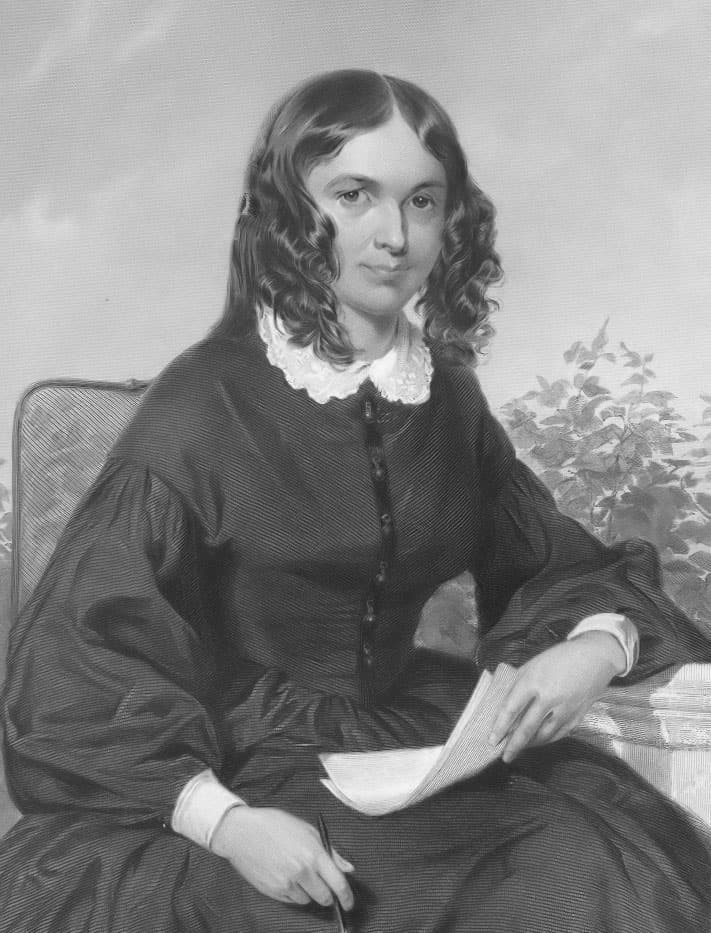
British · Literature · Arts
Elizabeth Barrett Browning
March 6, 1806 – June 29, 1861
Early Life and Background
Elizabeth Barrett Browning was born on March 6, 1806, in Kelloe, Durham, England. She was the eldest of twelve children in the wealthy Barrett family, who owned sugar plantations in Jamaica. From a young age, Elizabeth showed a precocious talent for poetry, writing her first verses at the age of four and engaging with classic texts from authors such as Homer and Dante.
Her early education was deeply influenced by her father, Edward Barrett Moulton Barrett, who encouraged her literary pursuits. Tragically, an illness at the age of 15 left her with a persistent weakness that plagued her throughout her life. Additionally, the family's financial interests in Jamaican slavery had a profound impact on her views, leading her to become a staunch abolitionist.
Career Beginnings and Development
Elizabeth's precociousness continued throughout her youth. By the age of 10, she had read substantial works by Milton and various Greek and Latin authors. Her first published poem, “The Battle of Marathon,” was printed privately by her father in 1820. Her major breakthrough occurred with the publication of "The Seraphim and Other Poems" in 1838. By this time, she had established herself as one of the preeminent poets of her age, recognized for her intellectual depth and mastery of the poetic form.
In the 1840s, Elizabeth’s fame as a poet spread further, largely due to her “Poems” (1844), which garnered the attention of fellow poet Robert Browning. Their subsequent correspondence gave rise to one of the most famed and passionate romances in literary history.
Major Works and Accomplishments
Elizabeth Barrett Browning's literary career was marked by numerous important works, including the deeply personal and romantic "Sonnets from the Portuguese" (1850), a sequence that numbers among the most critically acclaimed sonnets in English literature. Additionally, her political fervor shone through in works like “The Cry of the Children,” which criticized the exploitation of child labor, and "A Curse for a Nation," which was an eloquent condemnation of American slavery.
Awards, Honors, and Recognition
Though formal awards were less common in her time, Barrett Browning was renowned and widely read in Britain and the United States, cementing her status not only as a literary icon but also as a voice for reform and compassion. Her poetry was influential in society, drawing attention to critical social issues.
Personal Life
Elizabeth's relationship with Robert Browning was one of mutual respect and love, marked by over 500 letters exchanged even before their marriage in 1846. The couple eloped against the wishes of Elizabeth’s overbearing father, who thereafter disowned her. They lived much of their married life in Italy, where their only son, Robert Wiedeman Barrett Browning, was born in 1849.
Legacy and Historical Impact
Elizabeth Barrett Browning's impact on both literature and social policy extends beyond her lifetime. Her poetic exploration of themes like faith, love, and political injustice paved the way for future generations of writers and thinkers. She was a key influence on later poets and remains a staple in literary curricula worldwide.
Later Life and Death
In the aftermath of her successful career, Elizabeth lived her last years in Florence, continued to write, and engaged deeply with the political upheavals occurring across Europe during the "Risorgimento." She passed away on June 29, 1861, leaving behind a rich legacy. Her final work, "Last Poems," was published posthumously in 1862.
Dated achievements
2 indexed.
- Mar061806Literature
Birth of Elizabeth Barrett Browning
Elizabeth Barrett Browning was born on March 6, 1806, in Durham, England.
View details Britannica: Elizabeth Barrett Browning - Jun291861Literature
Death of Elizabeth Barrett Browning
Elizabeth Barrett Browning died on June 29, 1861, in Florence, Italy.